
Integrated Pest Management Program (IPM)
Integrated Pest Management Program (IPM)
Lincoln University Cooperative Extension
Vision
To provide credible, research-driven and sustainable pest management solutions for vegetable and small fruit production systems that enhance farm profitability while safeguarding environmental and ecological health.
Mission
The Integrated Pest Management (IPM) Program at Lincoln University Cooperative Extension is dedicated to advancing effective and environmentally responsible pest management through research, education and outreach. The program supports Missouri growers by promoting IPM practices that balance economic performance, environmental stewardship and human health.
The mission of the IPM Program is to:
- Develop and deliver science-based pest management strategies grounded in applied research.
- Strengthening pest management decision-making through monitoring, evaluation and targeted interventions
- Enhance grower knowledge of the ecological principles underlying IPM and their role in sustaining agroecosystems.
- Expand adoption of IPM practices that reduce production inputs and reliance on chemical controls.
- Protect human health and the environment by reducing the risks associated with pesticide use.
- Promote practices that reduce pesticide-related risks while protecting human health and the environment.
Grower-Centered Approach
The LUCE IPM Program focuses on developing and sharing practical, cost-effective insect pest management strategies for vegetable and small fruit crops grown in Missouri. Emphasis is placed on supporting underrepresented and limited-resource farmers by providing clear, research-based guidance that can be readily applied in the field.
Through Extension education, the program works to improve grower awareness and adoption of IPM practices that reduce pest management costs, improve production efficiency, and minimize unnecessary pesticide applications. The program actively engages minority and resource-limited vegetable growers to understand local pest challenges and tailor recommendations to farm-specific conditions. When existing information is insufficient, applied research is conducted to address identified gaps, and results are communicated directly to growers to support the timely adoption of improved IPM practices.
Integrated Pest Management Program Contact:

Anitha Chitturi, Ph.D. (she/her/hers)
Assistant Professor & State Extension Specialist-IPM
Cooperative Extension and Research
Lincoln University of Missouri
212 Allen Hall
Jefferson City, MO 65101
Ofc: 573.681.5634
ChitturiA@lincolnu.edu
SELECT PUBLICATIONS SINCE 2018:
- Harnessing natural enemies for sustainable management of Bemisia tabaci: A review of the role of predators, parasitoids and entomopathogens. Frontiers in Agronomy, 7, 1684672. Jalloh, A. A., Uyi, O., Chitturi, A., Basu, S., Mutiso, J. M., Perier, J. D., Ejomah, A., Owolanke, T. A., Mutyambai, D., & Toews, M. D. (2025). https://doi.org/10.3389/fagro.2025.1684672 (Frontiers)
- An evaluation of insecticide and nitrogen fertility programs in dry bulb onions in the Treasure Valley of Eastern Oregon and Southwest Idaho in 2019 to 2021. Journal of Economic Entomology, 118(5), 2326–2337.Greenway, G. A., Rondon, S. I., Chitturi, A., Buhrig, W., & Reitz, S. (2025). https://doi.org/10.1093/jee/toaf101(Oregon State Blogs)
- The influence of crop and leaf position on thrips (Thysanoptera: Thripidae) oviposition in cotton, soybean, and peanut seedlings. Journal of Economic Entomology, 118(1), 459–464. Rossi, G., Mahas, J. B., Chitturi, A., Graham, S. H., & Jacobson, A. L. (2025). https://doi.org/10.1093/jee/toae294 (academic.oup.com)
- Behavioral responses of thrips (Thysanoptera: Thripidae) and tarnished plant bug (Hemiptera: Miridae) to a new Bt toxin, Cry51Aa2.834_16 in cotton. Journal of Economic Entomology, 112(4), 1695–1704. Graham, S. H., Musser, F. M., Jacobson, A. L., Chitturi, A., & Stewart, S. D. (2019). https://doi.org/10.1093/jee/toz058 (academic.oup.com)
- Insect population dynamics and evaluation of selected organic insecticides against insect pests of organic summer squash in the Southeastern USA. Presented at the 93rd Annual Southeastern Branch Meeting of the Entomological Society of America, Mobile, AL. Chitturi, A., Koirala, S., Quarcoo, F., Davis, J., Barickman, C., Kpomblekou-A., & Mortley, D. (2019, March).
- Performance of selected bio-pesticides against major insect pests in the organic production of summer squash in Alabama. Presented at the 93rd Annual Southeastern Branch Meeting of the Entomological Society of America, Mobile, AL. Koirala, S. K. B., Quarcoo, F. Y., Chitturi, A., Kpomblekou-A., & Mortley, D. (2019, March).
- Insect population dynamics, varietal preference, and performance of organic bio-pesticides against insect pests of organic summer squash in the Southeastern USA. Professional Agricultural Workers Journal, 7(1), 96–111. Chitturi, A., Davis, J., Bloomquist, M., Quarcoo, F., & Kpomblekou-A. (2019). https://doi.org/10.22004/ag.econ.301215
- Insecticide resistance signals negative consequences of widespread neonicotinoid use on multiple field crops in the U.S. Cotton Belt. Environmental Science & Technology, Huseth, A. S., Chappell, T. M., Chitturi, A., Jacobson, A. L., & Kennedy, G. G. (2018). https://doi.org/10.1021/acs.est.7b06015
IPM Success Stories:
Lincoln University’s Pest Management Program Saves Crops, Strengthening Sustainable Farming and Food Security in Southeast Missouri Community
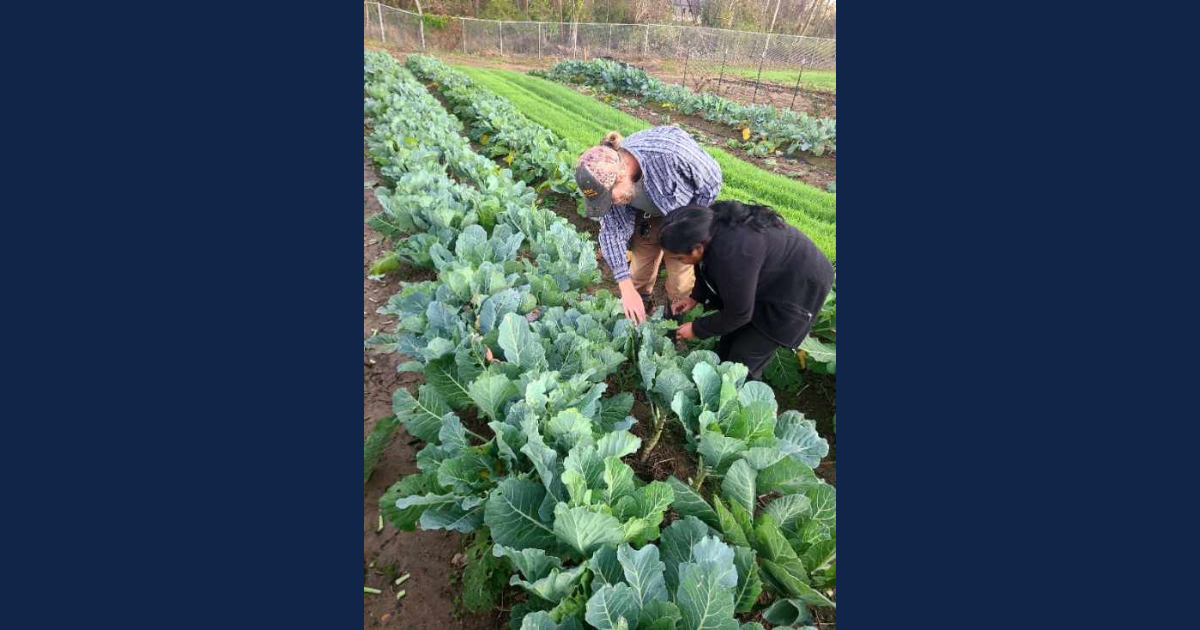
IPM Extension Specialist Anitha Chitturi, Ph.D., examines damaged crops with South Side Farms Manager Jake Smith to assess pest impact and develop tailored solutions for recovery and crop health.
Read more about Lincoln University's Pest Management Program
On-Farm Field Day Strengthens Pest Management and Crop Improvement Skills
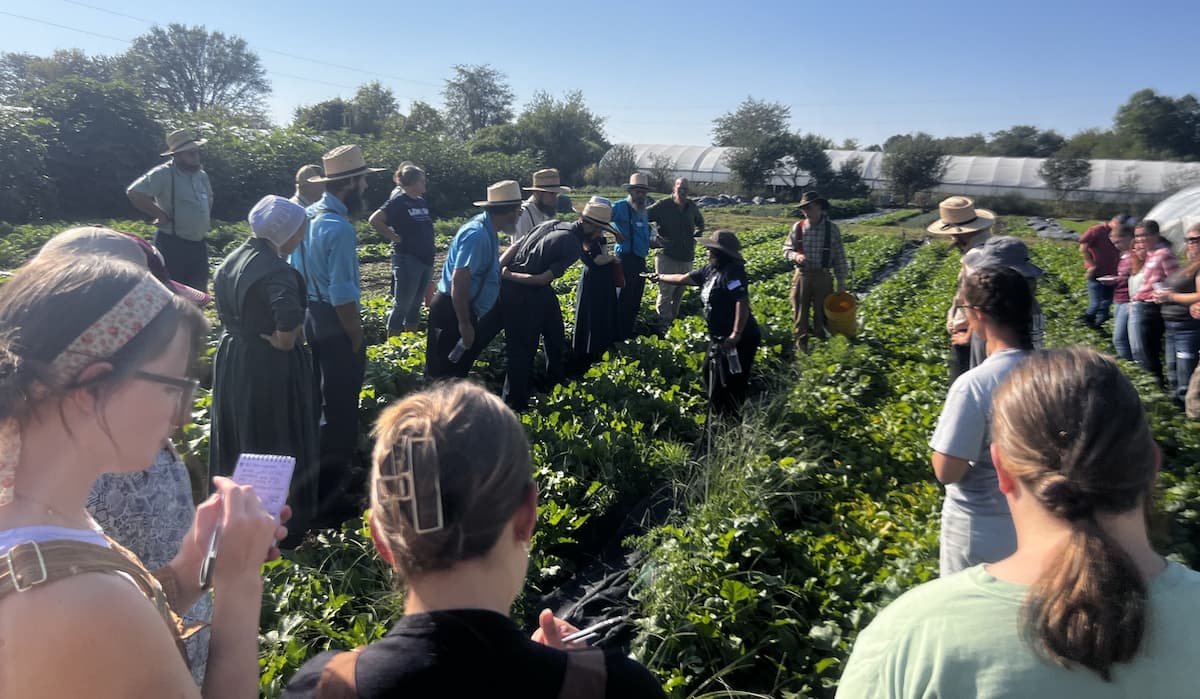
Dr. Anitha Chitturi, State Extension Specialist – IPM Program, demonstrates to participants during the on-farm field day how to identify key cucurbit pests.
Read more about the On-Farm Field Day
Lincoln University and Harvick Farms Partner to Support Missouri Growers
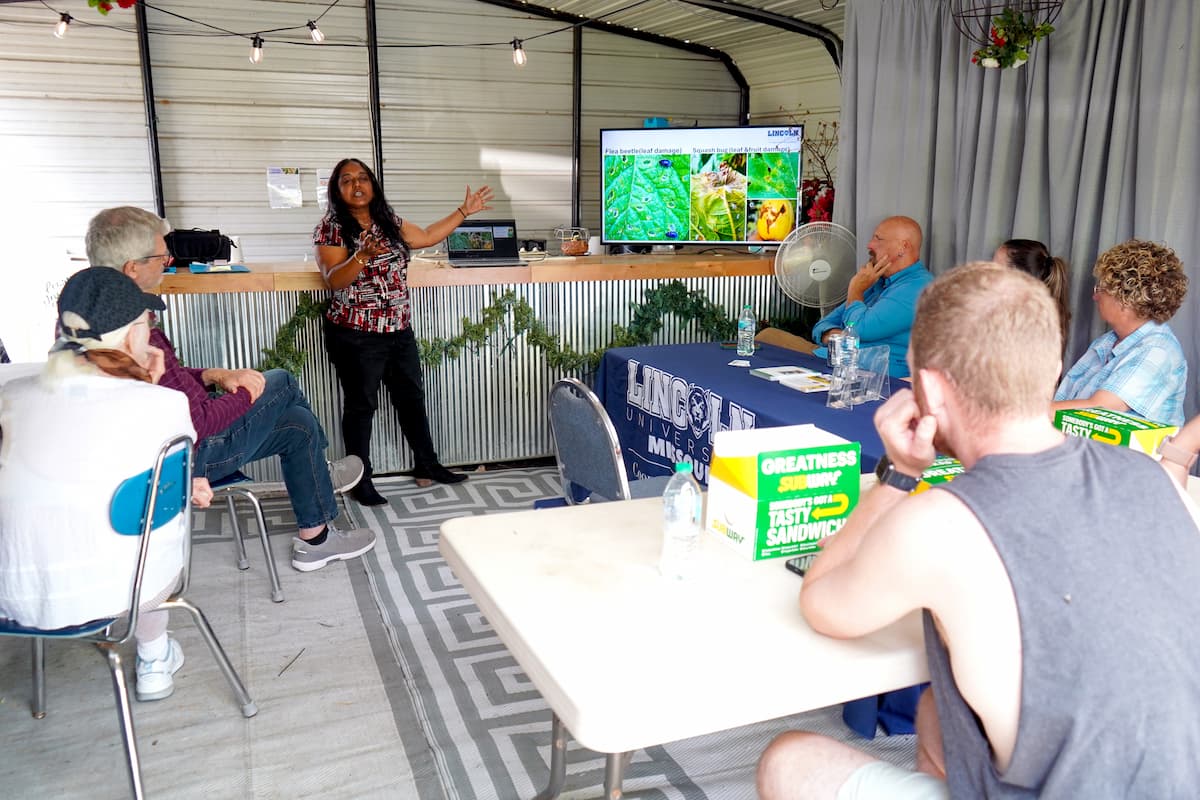
Dr. Anitha Chitturi, assistant professor and state extension specialist for Integrated Pest Management, discusses specific pests and their effects on crops with local farmers during the Know Your Pests and Diseases workshop at Harvick Farms.
Read more about the Lincoln University and Harvick Farms Partnership
Lincoln University of Missouri Brings Pest Solutions and Student Learning to Southeast Missouri
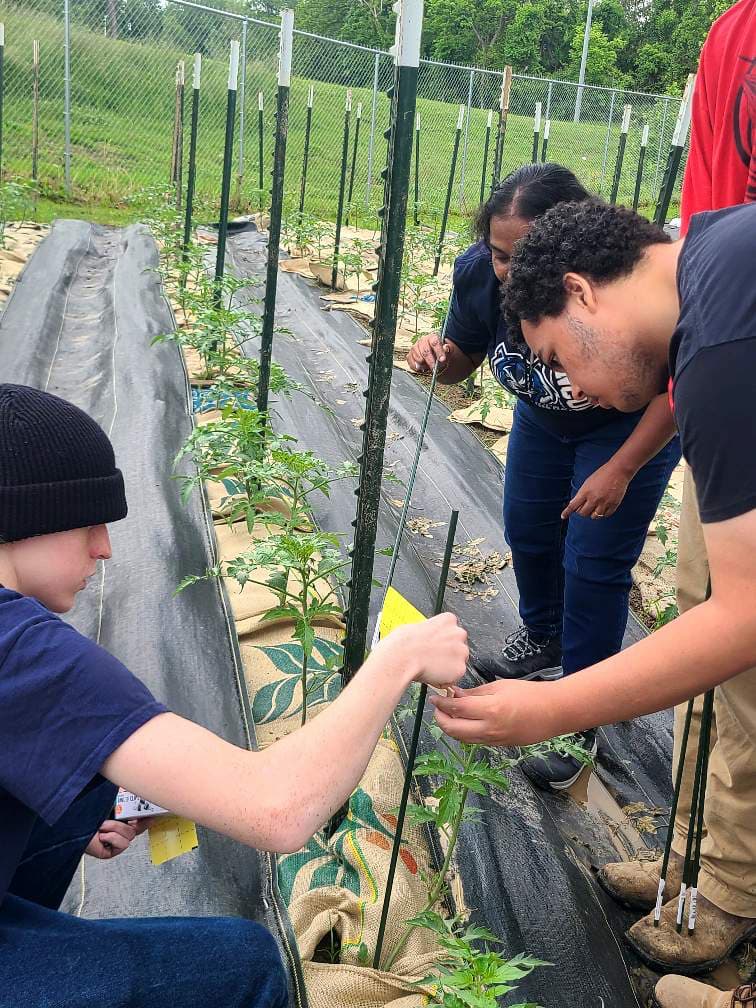
Dr. Anitha Chitturi guides students through the hands-on process of setting yellow sticky traps to track pest populations in vegetable crops.
Read more about Lincoln University of Missouri bringing pest solutions to Southeast Missouri
Related Links
North Central Integrated Pest Management Center
Midwest Vegetable Production Guide
Missouri Department of Agriculture
Tree & Plant Diseases/Pests - Missouri Department of Conservation
