
Finca Fest Blends Flavor and Learning at Lincoln University
Office of Communications and Marketing
Young Hall
820 Chestnut Street
Jefferson City, MO 65101
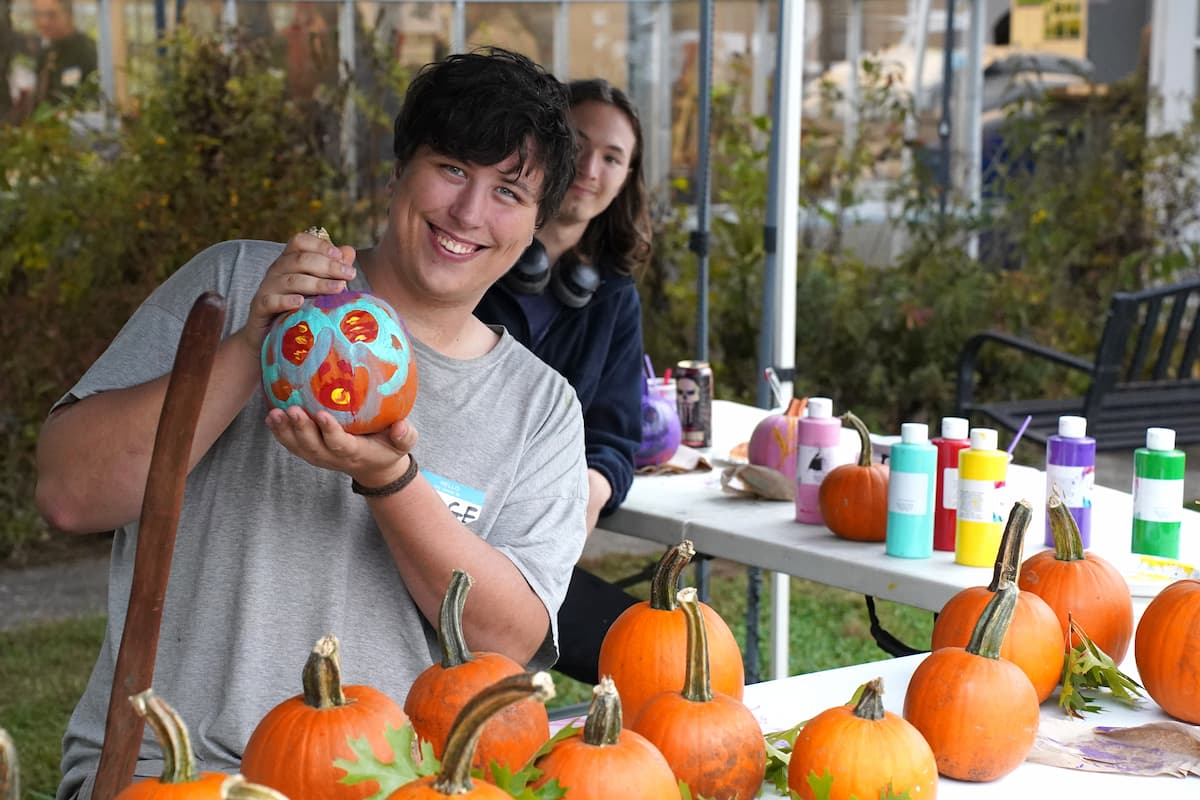 Bright designs emerged at the pumpkin-painting station, where guests added their own artistic touch.
The aroma of simmering pumpkin, native herbs and fresh-baked bread filled the air at Finca Fest 2025, a community event at Lincoln University of Missouri (LU) created to bring visitors together for an afternoon of exploration and connection.
Hosted by LU’s Cooperative Extension Native and Specialty Crops Program, the celebration took place at its two-acre Finca EcoFarm — an on-campus urban farm for hands-on education in sustainable agriculture. The name finca — Spanish for farm — reflects the program’s goal of welcoming diverse communities and fostering connections between people, plants and the environment.
“The Finca Project and the Finca Fest celebration it inspired are supported through funding from Capacity Building Grants from the U.S. Department of Agriculture’s National Institute of Food and Agriculture (NIFA),” said Dr. Nadia Navarrete-Tindall, who leads LU’s Native and Specialty Crops Program. “It continues to grow through partnerships across campus and within the community.”
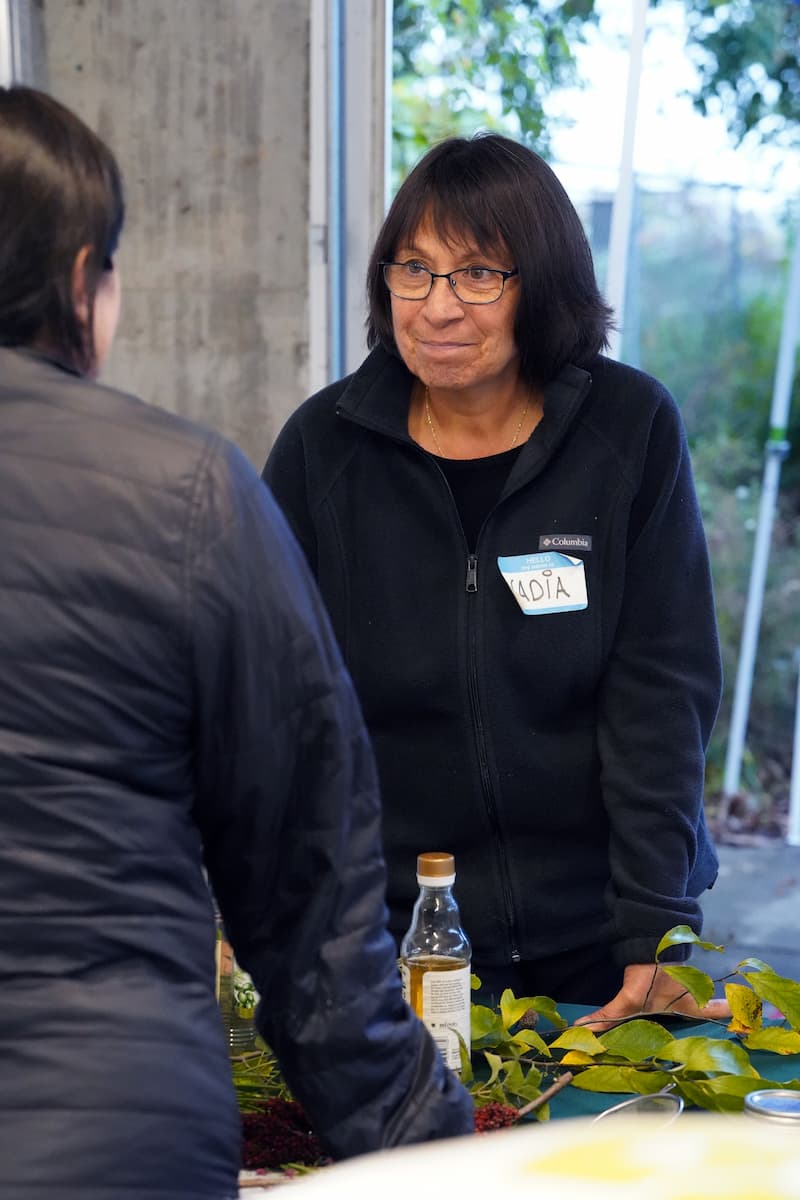 A Missouri Department of Conservation staff member demonstrates ways to use native plants to infuse vinegars with flavor and aroma with Dr. Nadia Navarrete-Tindall.
At Finca Fest, several LU Cooperative Extension and Research programs presented interactive exhibits that turned knowledge into practical learning experiences. The Native and Specialty Crops Program coordinated greenhouse and farm tours while offering native plants for sale. Additionally, guests enjoyed foods prepared with native ingredients, including plumade, apple cider infused with spicebush and Salvadoran-style sweet bread served with wild plum spread or fiddlehead fern dip with ramps. Building on the theme of native edibles, a collaborative project on sochan (Rudbeckia laciniata) highlighted its culinary uses and potential as a nutritious, locally grown crop.
Demonstrations by the Innovative Small Farmers Outreach Program invited attendees to handle different farm tools and compare how each could improve efficiency in their operations. Nearby, the a forest farming project highlighted woodland crops such as ramps and goldenseal, while the Agricultural Economics and Marketing Program shared strategies to help producers grow their businesses. Continuing the theme of practical learning, the plant pathology table engaged participants in identifying and preventing common crop diseases.
The Aquaculture Program drew steady interest as visitors learned about sustainable fish and crawfish production — complete with samples of freshly cooked crawfish prepared on-site. The Human Nutrition and Health Program attracted crowds with its pumpkin nutrition research and offered samples of pumpkin leaves, pumpkin mash, a pumpkin snack and roasted seeds. After trying the samples, guests completed scorecards, and the ratings showed broad appreciation for each part of the pumpkin plant.
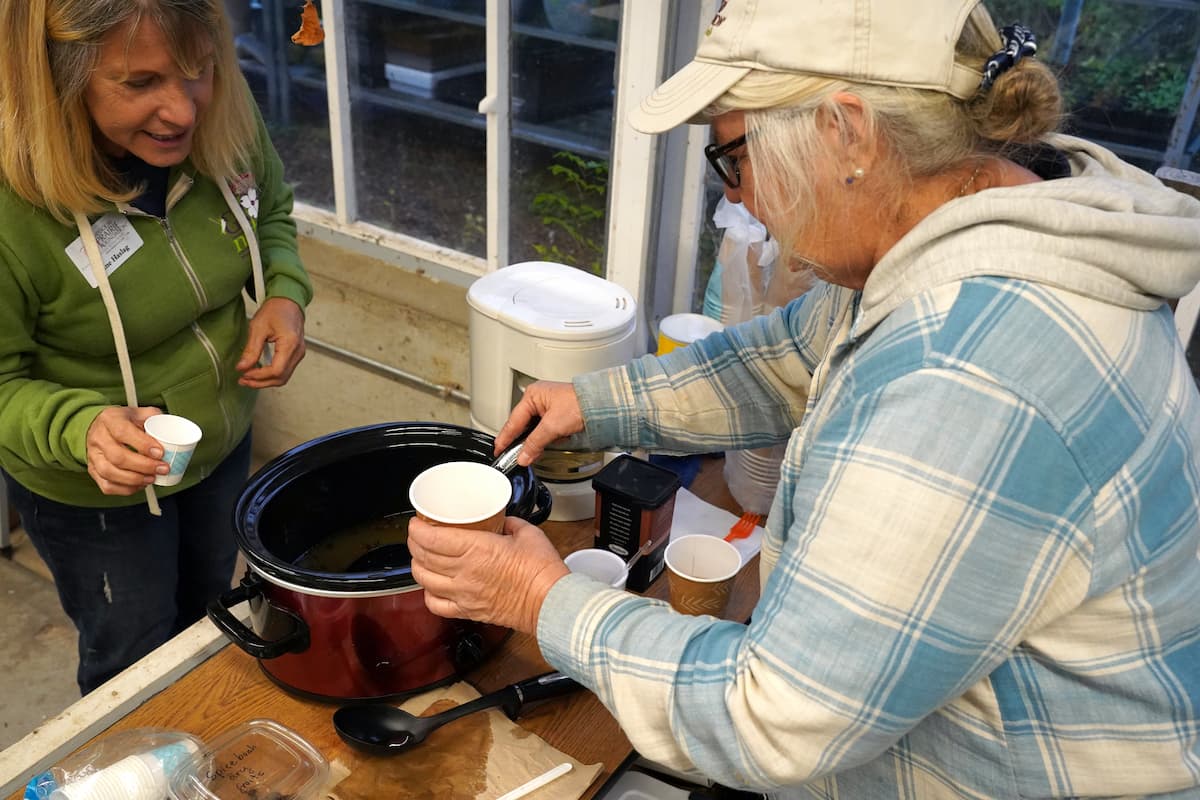 Sue Bartelette (left), landscape designer with the Native and Specialty Crops Program, serves apple cider infused with spicebush to an attendee.
“I always learn something new,” said visitor Sharon Houk, when reflecting on her experiences attending events at Lincoln University. “It was interesting to learn more about pumpkins — I didn’t realize you could eat the leaves.”
Community partners also played an important role in the festival, sharing information on conservation and community outreach. The Missouri Department of Conservation invited guests to explore creative ways to use native plants at home, featuring demonstrations on making vinegar infusions with bee balm, sumac and elderberry. Nearby, the Missouri Prairie Foundation shared educational materials on native habitat restoration and encouraged the use of native plants in landscaping.
The Sustainable Agriculture Research and Education (SARE) program also shared resources through its horticulture educators, who support farmers and community gardeners with specialty crop information and guidance on grants and alternative funding. The Missouri River Bird Observatory booth engaged visitors with information on local bird species, habitat preservation and citizen science opportunities, encouraging attendees to participate in bird monitoring projects that support conservation across the state.
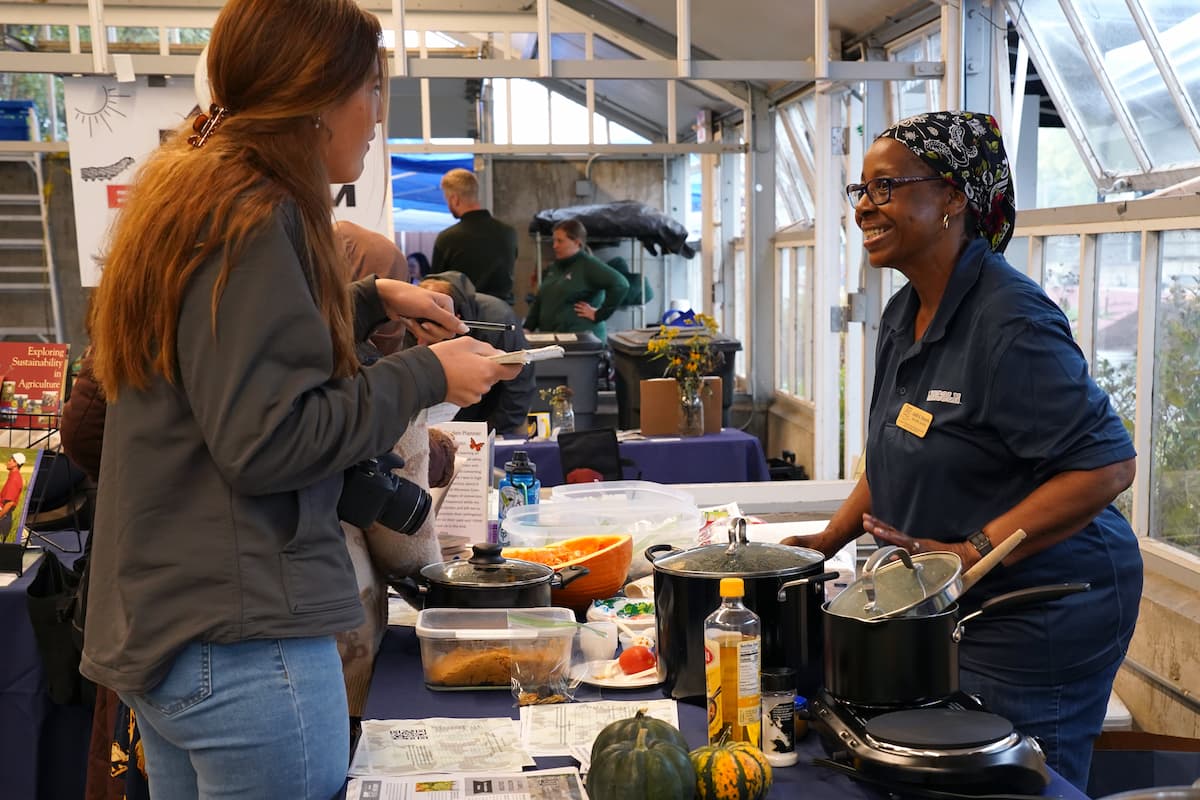 The Health and Nutrition Program provides a selection of pumpkin tastings for visitors exploring the plant’s nutritional uses.
Other partners focused on strengthening community well-being and connection. The Community Health Center of Central Missouri provided information on health education, family programs and neighborhood engagement initiatives, while El Puente-Hispanic Ministry highlighted its outreach services supporting Latino families and individuals with language assistance, education and access to essential resources. Visitors enjoyed homemade chicken tamales prepared by the ministry.
Guests also gathered to sample warm arepas — traditional corn flatbreads from Colombia and Venezuela — prepared by LU Cooperative Research faculty. Another shared a soup made with green luffa grown at the university’s Finca EcoFarm. While mature luffa fruit is typically dried and used as a natural sponge, the young green fruit can be cooked and eaten like a vegetable, expanding its use as a specialty crop.
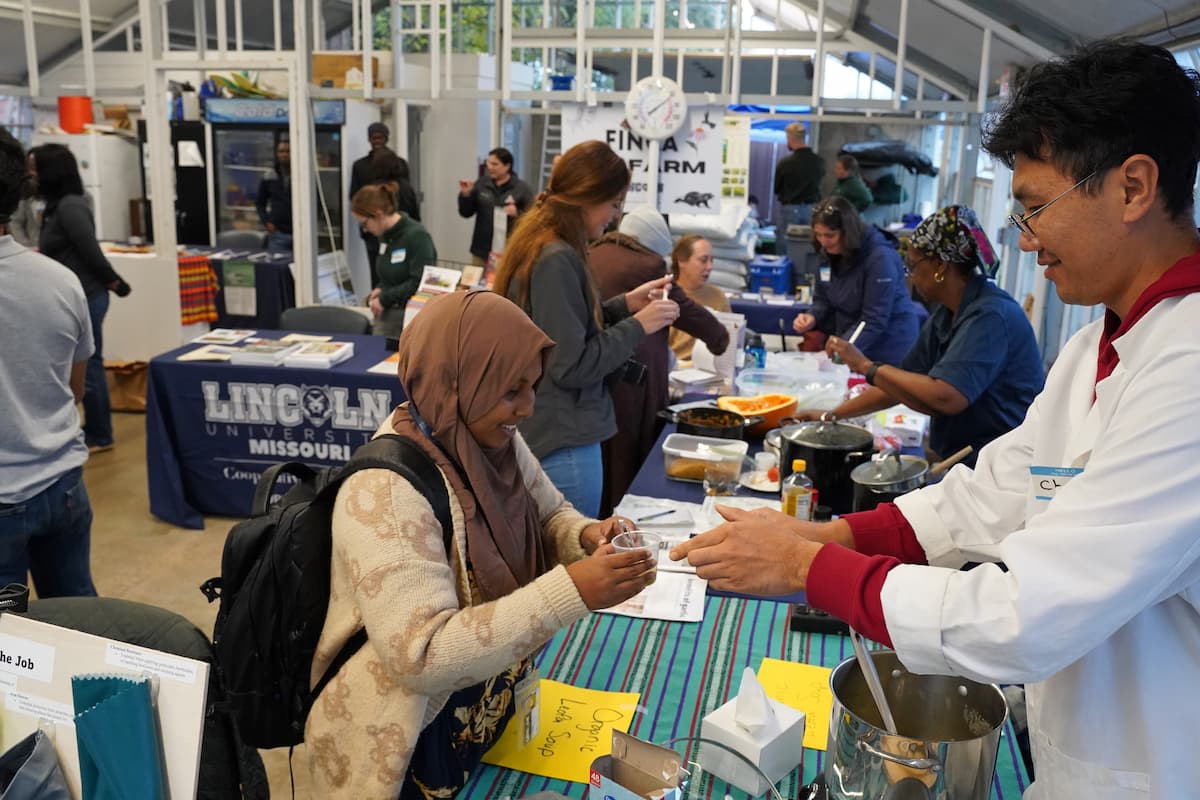 An attendee samples organic luffa soup prepared by Cooperative Research at the event.
Local vendors helped add flavor to the event and reflected LU’s connection to Missouri producers. Both Lucy’s Pecans and All About Lamb are part of the Lincoln University Farmers Market under the Finca Project. Lucy’s Pecans featured a variety of nuts, while All About Lamb offered locally raised lamb cuts and shared information about small-scale meat production. Author Besa Schweitzer also signed copies of her book The Wildflower Garden Planner and spoke with visitors about incorporating native plants around their home.
Children and families gathered around the pumpkin painting booth, where creativity bloomed in every color against an autumn backdrop. The activity gave attendees a fun way to connect with agriculture and the harvest season using pumpkins donated by B&B Pumpkin Stand, a Lincoln University Farmers Market vendor.
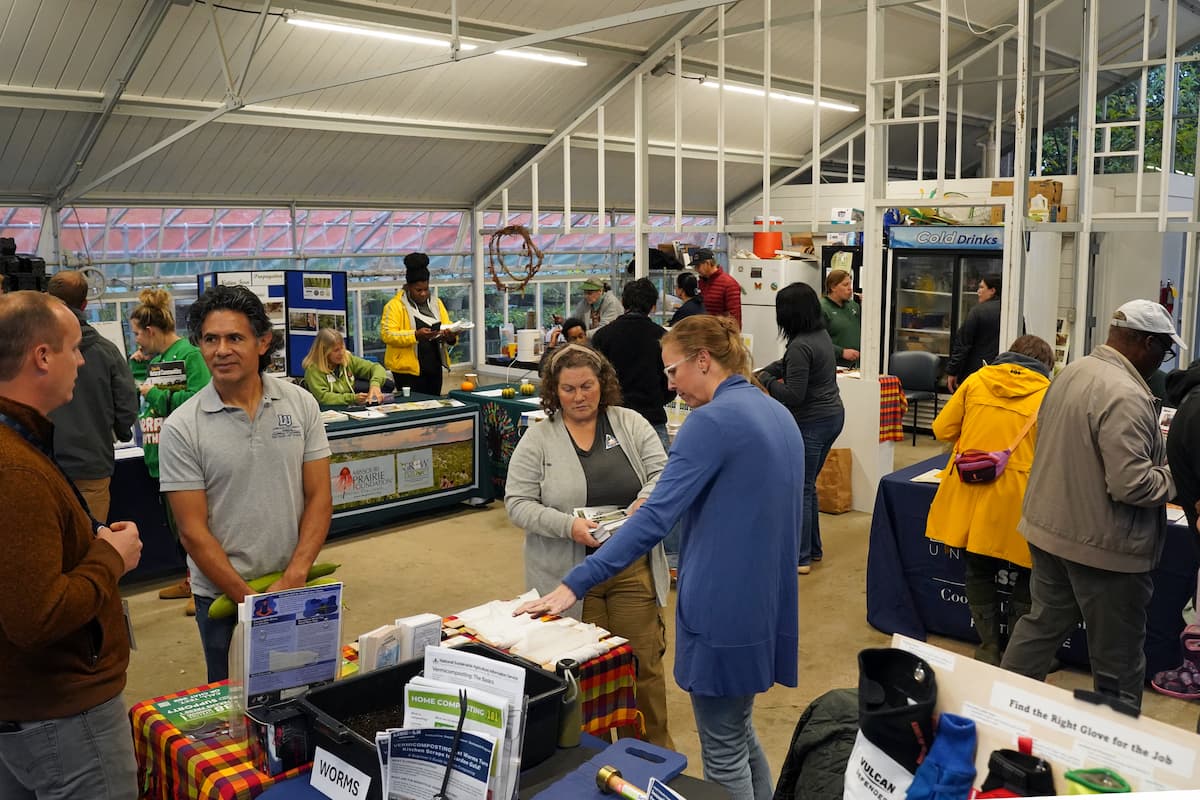 Visitors explore informational booths inside the teaching greenhouse at the Finca EcoFarm during Finca Fest.
“I’m pretty excited I’ve tried multiple new things here that I’ve never tried in my life. I’ve never tried luffa soup before, and I’ve never had arepas or fried crawdad before,” said attendee Susie Van de Riet.
Finca Fest was free and open to the public. With an abundance of activities and exhibits, the event encouraged attendees to ask questions, discover new ideas and engage directly with specialists — fostering connections between science and community while celebrating a shared vision for a more sustainable future in Missouri agriculture.
For more information about the Native and Specialty Crops Program, please email Dr. Nadia Navarrete at navarrete-tindalln@lincolnu.edu. Article photo credit: Lynne Holsapple.