
Lincoln University Farms Evaluate Virtual Fencing
Office of Communications and Marketing
Young Hall
820 Chestnut Street
Jefferson City, MO 65101
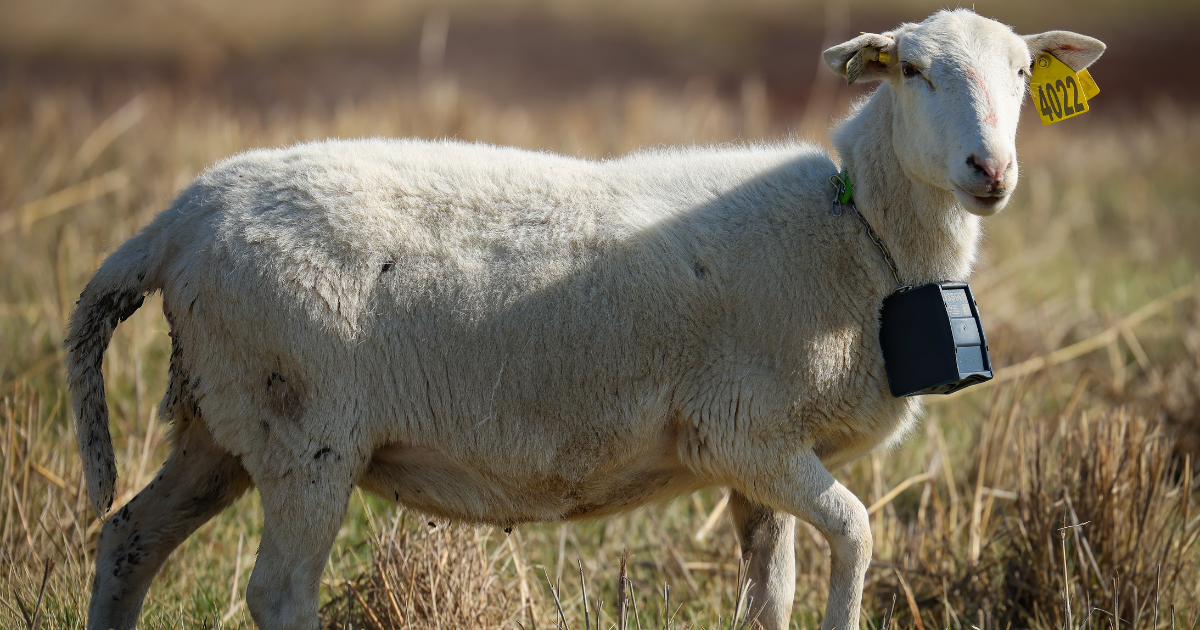 A sheep equipped with a GPS-trackable collar at LU’s George Washington Carver Farm.
Lincoln University of Missouri (LU) began experimenting with virtual fencing in March.
Using new software and solar-powered collars, LU’s farm staff are evaluating the effectiveness and economic feasibility of virtual fencing technology for small ruminant production.
The collars are small box-shaped devices attached to chains and worn around the animals’ necks, allowing producers to use an app to track their animals and set pasture boundaries without the use of physical fences.
Those boundaries are enforced by an escalating series of noises, which trigger when animals venture too close. If an animal continues to approach a boundary, the collar will administer an electric shock.
“Virtual fencing is a topic that’s creating a lot of buzz in the livestock world right now,” said Chris Boeckmann, superintendent of LU’s farms. “However, there are also a lot of questions and reservations about the technology. Ultimately, producers want to know what the technology has to offer in terms of pasture management and profitability.”
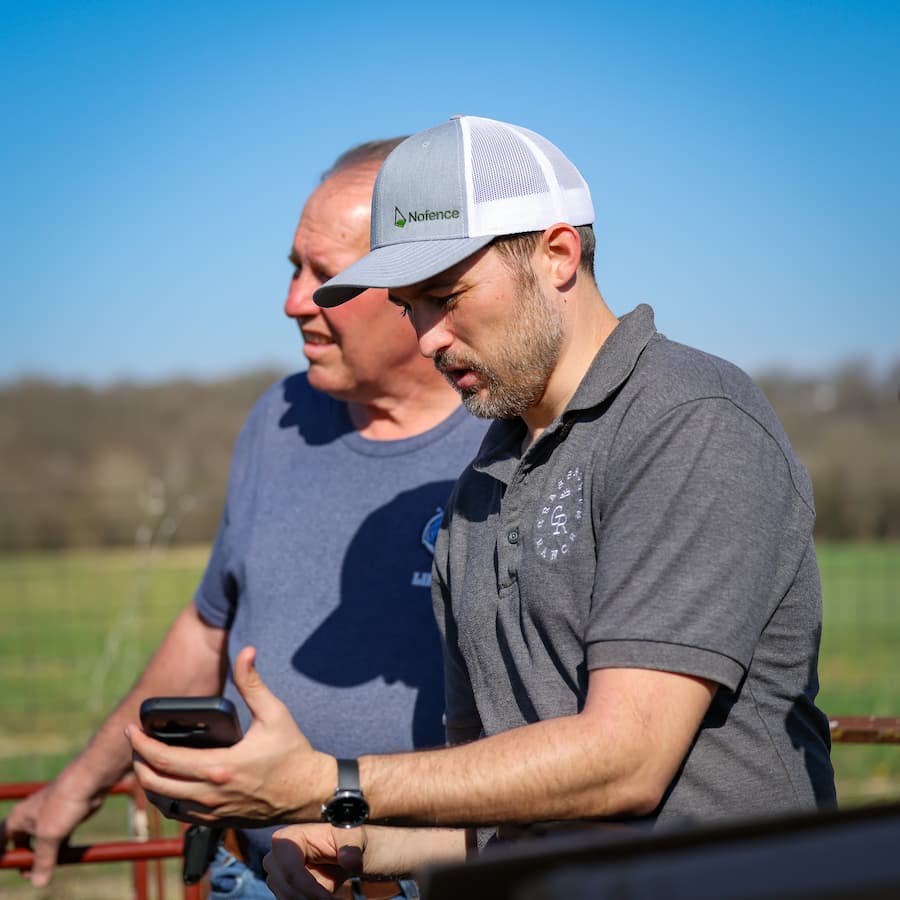 Nofence sales representative Daniel Rose teaches LU farm staff how to manage their virtual fencing system.
The new collars and supporting software were purchased from Nofence, a Norwegian company specializing in virtual fencing.
Farm staff began by equipping a small group of sheep with collars at LU’s George Washington Carver Farm on March 26. They were joined by Nofence sales representative Daniel Rose, who provided training and technical assistance for the collars.
Boeckmann said the plan is to equip all 550 sheep and goats across LU’s farms with the collars.
“As a land-grant institution, I believe our role is to help producers get answers and to demonstrate the technology in action,” Boeckmann said. “Since we are the lead institution for small ruminant production in Missouri, it seemed logical to incorporate the technology into our pasture management systems for small ruminants.”
He added a yet-to-come second phase will switch cattle to the virtual fencing system as well.
According to Rose, virtual fencing presents several opportunities for enhanced livestock operations.
Take rotational grazing, for example. Rotational grazing involves moving animals between sections of a pasture, allowing available forage to regrow while animals eat in another area. These rest periods improve soil and plant health while also reducing parasites in livestock.
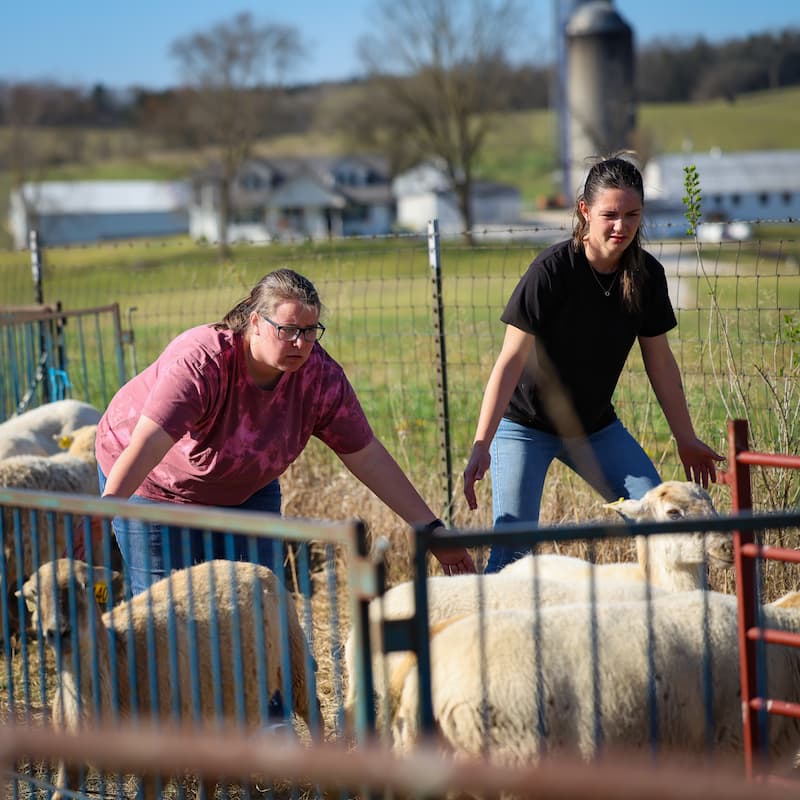 LU farm workers corral sheep into a chute to receive new virtual fencing collars.
Traditionally, rotational grazing is achieved by dividing pastures into separate paddocks using temporary fencing. With virtual fencing, however, a producer could use the Nofence app to establish virtual boundaries within their pasture, cutting out the need for temporary fences altogether.
“I’m confident virtual fencing will enhance our ability to better manage forages on Lincoln’s farms while also saving labor related to our historic use of polywire in our rotational grazing system,” Boeckmann said.
Rose said virtual fencing also gives producers increased access to land. He said terrain often restricts available grazing areas, but with no need to put up extra physical fences, producers can utilize more of their pastures.
While virtual fencing could eliminate the need for traditional fencing within pastures, Rose recommended maintaining perimeter fences to discourage predators.
As this exploration continues, Boeckmann said his team will host field days and workshops to discuss their challenges and successes with virtual fencing systems, making all their findings available to producers and the public.
To find out about upcoming events, visit LU’s event calendar.
Learn more about Lincoln University’s research farms here.