
Beyond the Harvest: Native Fruits Benefit People and Wildlife
Office of Communications and Marketing
Young Hall
820 Chestnut Street
Jefferson City, MO 65101
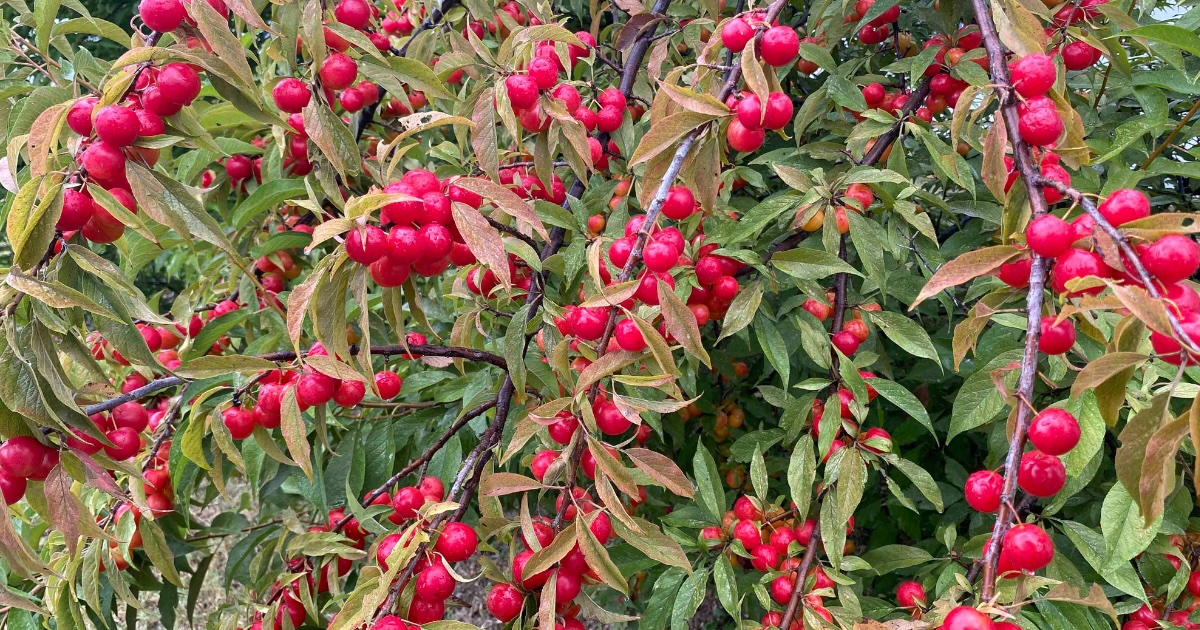 Clusters of wild plums ripen on the branch at LU, where the trees have produced strong seasonal yields in recent years.
Native fruits offer more than a seasonal harvest. During a recent Grow Native! webinar, Nadia Navarrete-Tindall of Lincoln University of Missouri (LU) Cooperative Extension discussed how these plants benefit both people and the environment around them.
Because native plants have long grown alongside local wildlife, they continue to provide the food and habitat that pollinators and other animals depend on. Navarrete-Tindall, who leads LU’s Native and Specialty Crops Program, highlighted several species grown in Missouri, including wild plums, persimmons, pawpaws, spicebush and elderberries.
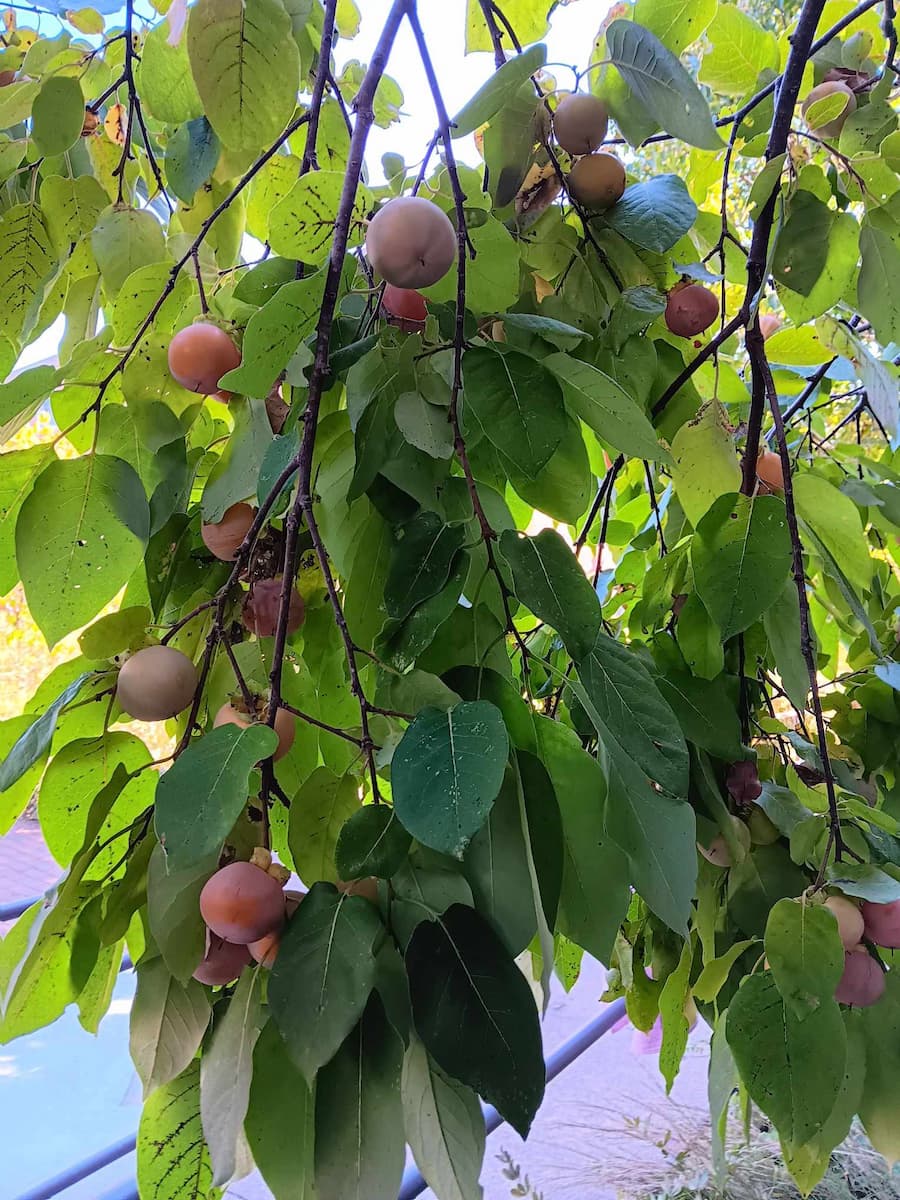 A persimmon tree on campus bears fruit that can reach high seasonal production at LU.
Wild plums received particular attention in the presentation. At Lincoln University, about a dozen plum trees produced more than 400 pounds of fruit in 2025, with peak production reaching 1,000 pounds in 2024. Yields can vary from year to year due to climate conditions. In addition to fresh use, the fruit can be turned into jams, jellies and other value-added products.
Persimmons also stood out for their production potential. Navarrete-Tindall noted that a single tree at Lincoln University can yield around 120 pounds of fruit. Select persimmons are sold for $4 per dozen through LU’s Farmers Market.
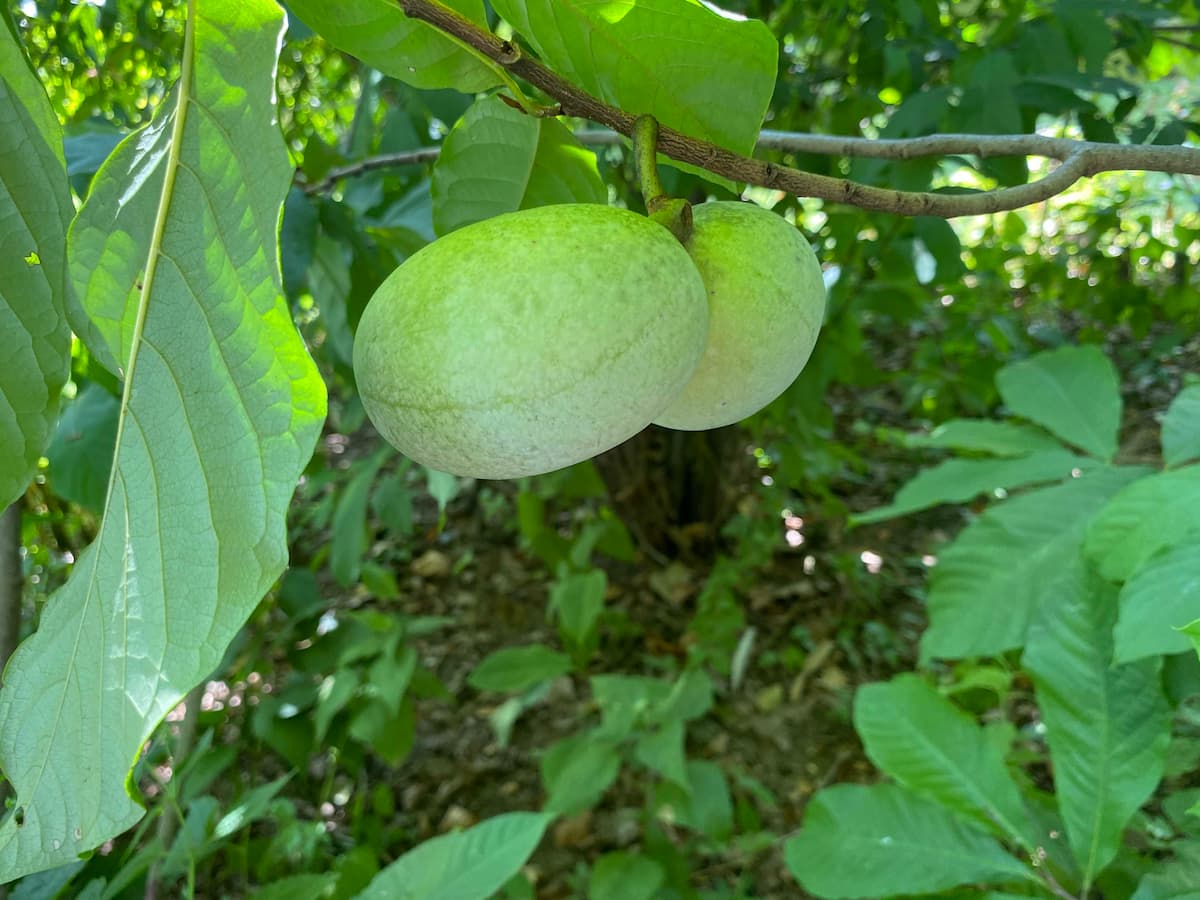 Pawpaws hang from a branch at LU, one of the native fruits discussed during the webinar.
Pawpaws hold market value as well. The fruit can sell for $1 to $2 each, giving growers another crop with sales potential. The tree serves as a host plant for the zebra swallowtail butterfly, adding ecological value beyond the harvest.
“I initially planted pawpaws because I knew they were good for the butterflies,” Navarrete-Tindall said.
She also highlighted spicebush, a native shrub that supports the spicebush swallowtail butterfly. Its berries provide food for animals and can be dried and used as a spice in the kitchen.
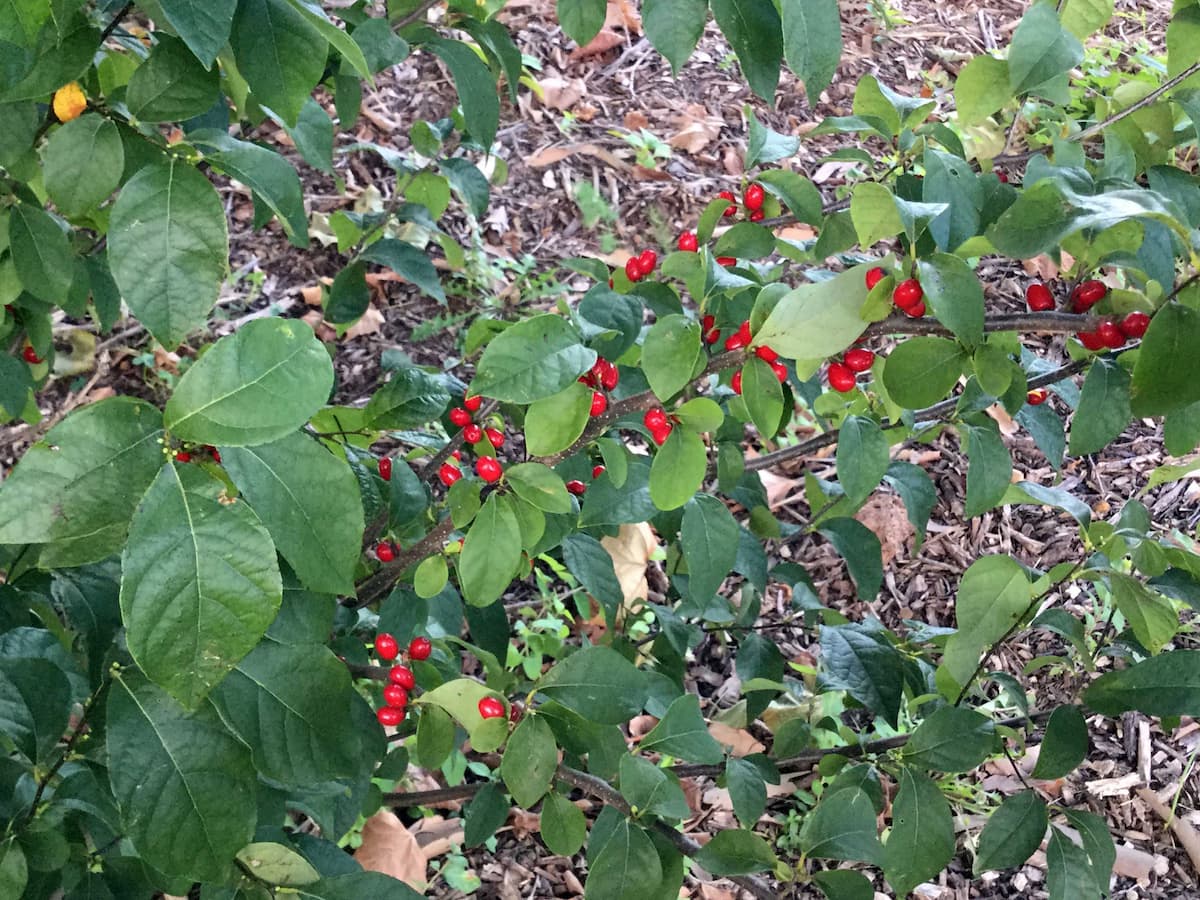 Bright red spicebush berries line the stem of a native shrub and can be dried for use in cooking.
Elderberries added another example of how native fruits serve both practical and ecological purposes. The plant’s dense growth creates a private living fence or natural screen in yards or on farms while also supporting pollinators and wildlife. Navarrete-Tindall said part of her personal elderberry harvest is left for birds and other animals.
The partnership between the Missouri Prairie Foundation’s Grow Native! program and Lincoln University’s Native and Specialty Crops Program reflects a shared commitment to public education and outreach around native plants. Through efforts such as the webinar, the two groups help people learn how native species support both ecological health and practical use.
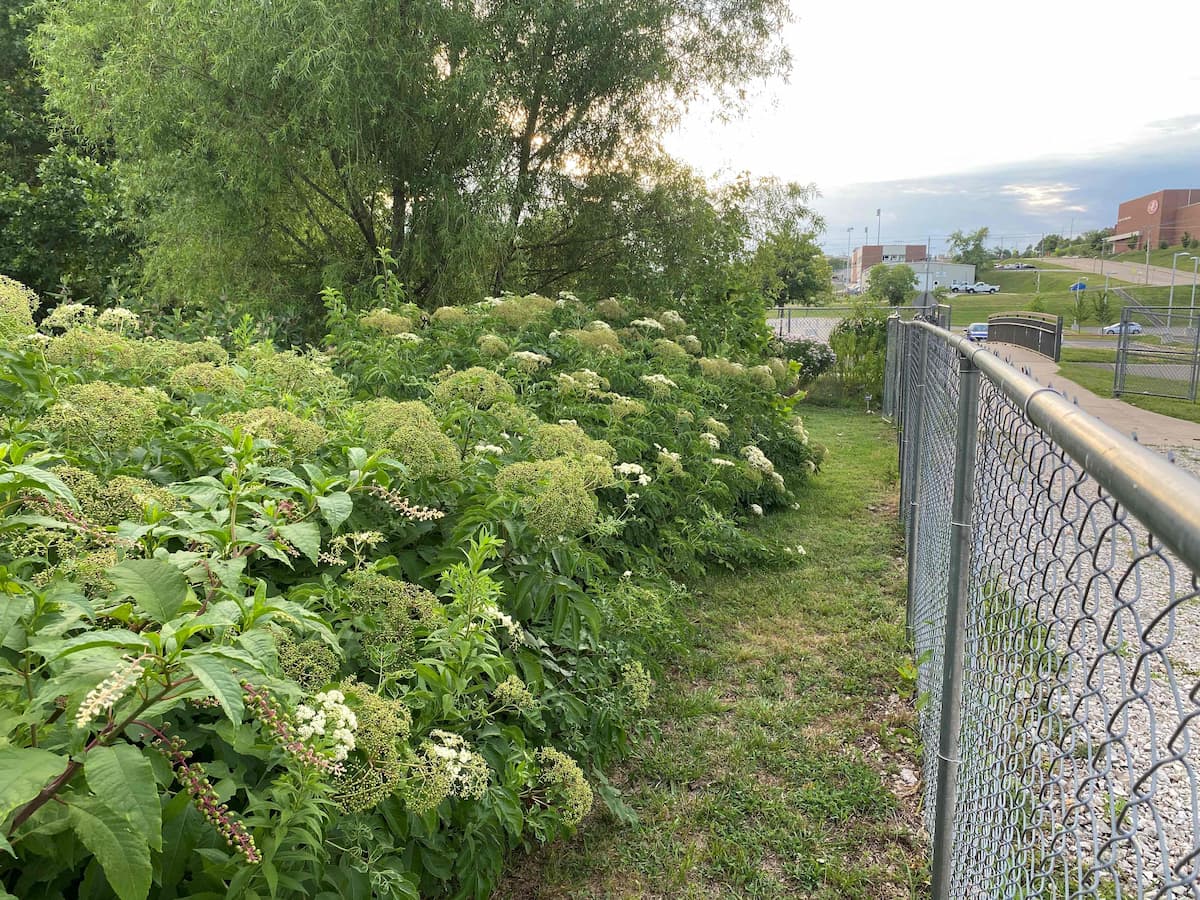 A thick stand of elderberries grows along a fence line at LU, illustrating how the plant can function as a natural screen.
For more information on LU’s Native and Specialty Crops Program, contact State Extension Specialist Nadia Navarrete-Tindall at navarrete-tindalln@lincolnu.edu.
To view the full webinar, click here.