
Taking Quinoa Research to New Heights
Office of Communications and Marketing
Young Hall
820 Chestnut Street
Jefferson City, MO 65101
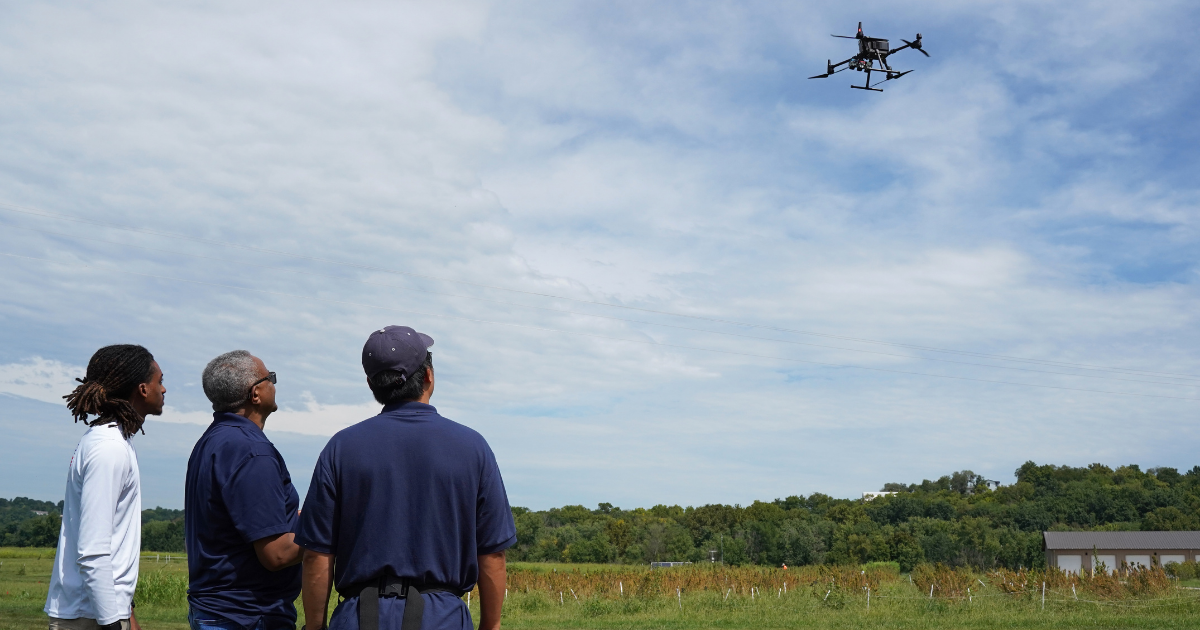 Members of LU’s GIS team monitor a drone flight over quinoa research plots at George Washington Carver Farm.
Every crop leaves clues about what it needs. The challenge is learning how to read them.
At Lincoln University of Missouri (LU), scientists with Cooperative Research are looking for those clues at ground level and from above. Direct plant measurements provide a close-up view of crop conditions, while drone data analyzed using geographic information systems (GIS) reveal patterns across the field that can guide nutrient management.
One crop at the center of that work is quinoa, a nutrient-rich plant LU researchers are studying for its potential to expand domestic production.
“Our goal is to help farmers by developing the tools and management practices they need to grow quinoa successfully here,” said Addissu Ayele, Ph.D., assistant professor of plant physiology and a member of LU’s quinoa research program. “Most of the quinoa consumed in the U.S. is still imported from South America. The demand is high, but domestic production is low.”
LU began studying quinoa’s potential for Missouri in 2016, testing different varieties and examining the crop’s performance under Midwestern conditions. In December 2025, that work expanded through a nearly $600,000 USDA National Institute of Food and Agriculture Capacity Building Grant.
“Our project is integrating drone technology, GIS and crop physiology to improve nutrient management and crop productivity,” said Ayele, who leads the initiative.
For farmers, that research comes down to practical decisions about how much water and fertilizer quinoa needs.
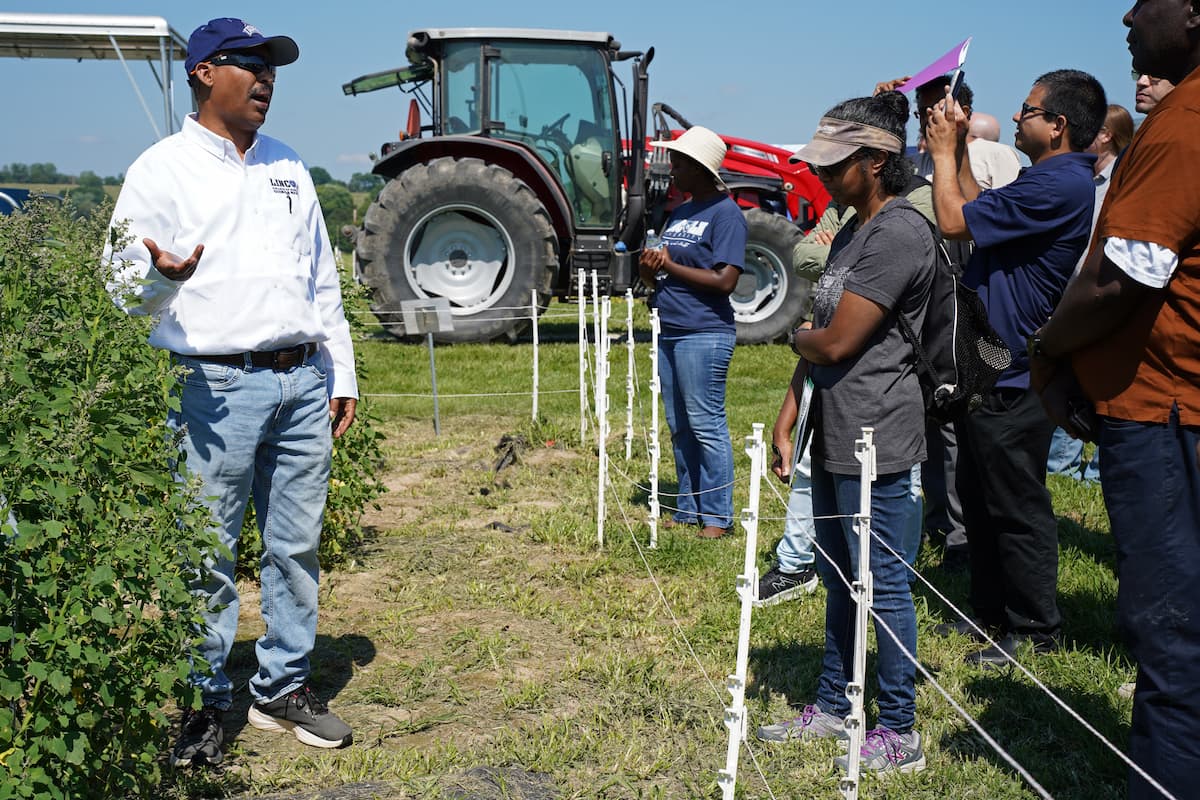 Addissu Ayele discusses LU’s quinoa research with attendees during a field day at George Washington Carver Farm.
“Some of the first questions growers ask at our field days are, ‘How much fertilizer do I have to apply?’” Ayele said. “And how do you manage irrigation?”
At LU’s George Washington Carver Farm, researchers from the quinoa and GIS programs are putting those questions to the test. In separate experimental plots, they apply different levels of irrigation and fertilizer to see how changes in water and nutrients affect quinoa growth.
“In our research, we have three nutrients: nitrogen, phosphorus and potassium,” Ayele said. “These three nutrients are very important for plant growth and development. They help the plant grow, produce higher yields and quality seed.”
But finding the right balance depends on understanding how plants respond throughout the growing season, not just at harvest. To capture those changes, LU’s GIS team flies drones over the experimental plots every one or two weeks from planting through harvest.
What those flights reveal depends on the sensor carried by the drone.
LiDAR uses laser pulses to measure plant height across the study area, allowing researchers to compare quinoa’s response to different water and fertilizer treatments.
"With LiDAR, we can collect data across the whole experimental field in about 10 to 15 minutes and then generate plant height measurements for the entire area," said Xukai Zhang, Ph.D., assistant professor of geospatial technology and co-principal investigator on the project. "If you do field sampling, you can only sample specific plants."
Multispectral and hyperspectral sensors provide a different view. They capture wavelengths of light beyond what the human eye can see, giving researchers information about plant health and stress that may be associated with water or nutrient conditions.
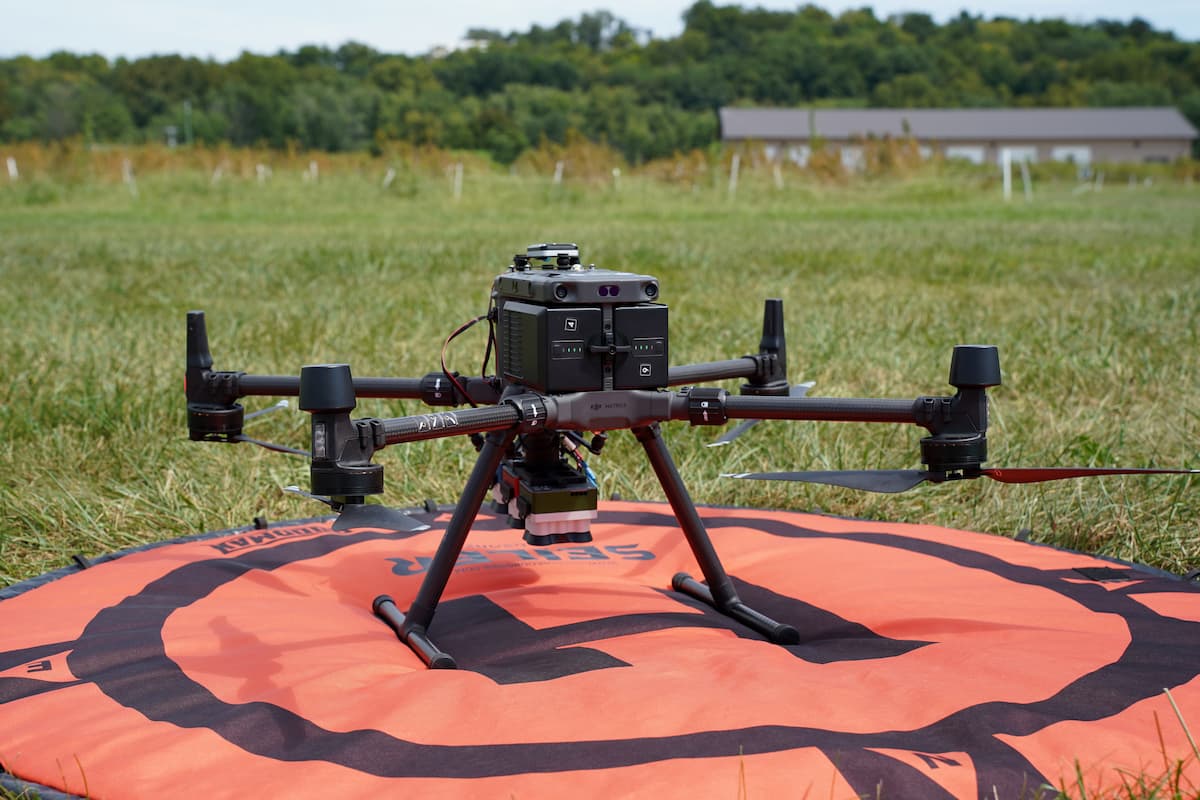 A research drone equipped with specialized sensors rests on a landing pad before a flight over LU’s quinoa research plots at George Washington Carver Farm.
GIS helps researchers connect those sensor readings to specific locations across the field.
“Drone imagery is transformed into geospatial maps that support crop monitoring, nutrient assessment and decision-making,” Ayele said.
Those maps help pinpoint where nutrient levels, weed pressure or other signs of stress vary across the field, helping reduce unnecessary inputs.
Expected to continue through 2028, the USDA-funded project builds on 2024 and 2025 LU research examining quinoa’s response to irrigation and nitrogen.
Fatema Tuj Johora conducted much of that research as part of her master’s thesis in sustainable agriculture at LU. She served as lead author on the resulting paper, “Physiological, canopy, and yield responses of quinoa to irrigation and nitrogen management in the U.S. Midwest,” published in Frontiers in Plant Science in March 2026.
“Publishing the paper was one of the most valuable experiences I’ve had,” Johora said. “My supervisor, Dr. Ayele, encouraged me from the beginning. He helped me throughout the entire process, from conducting the research to publishing the paper.”
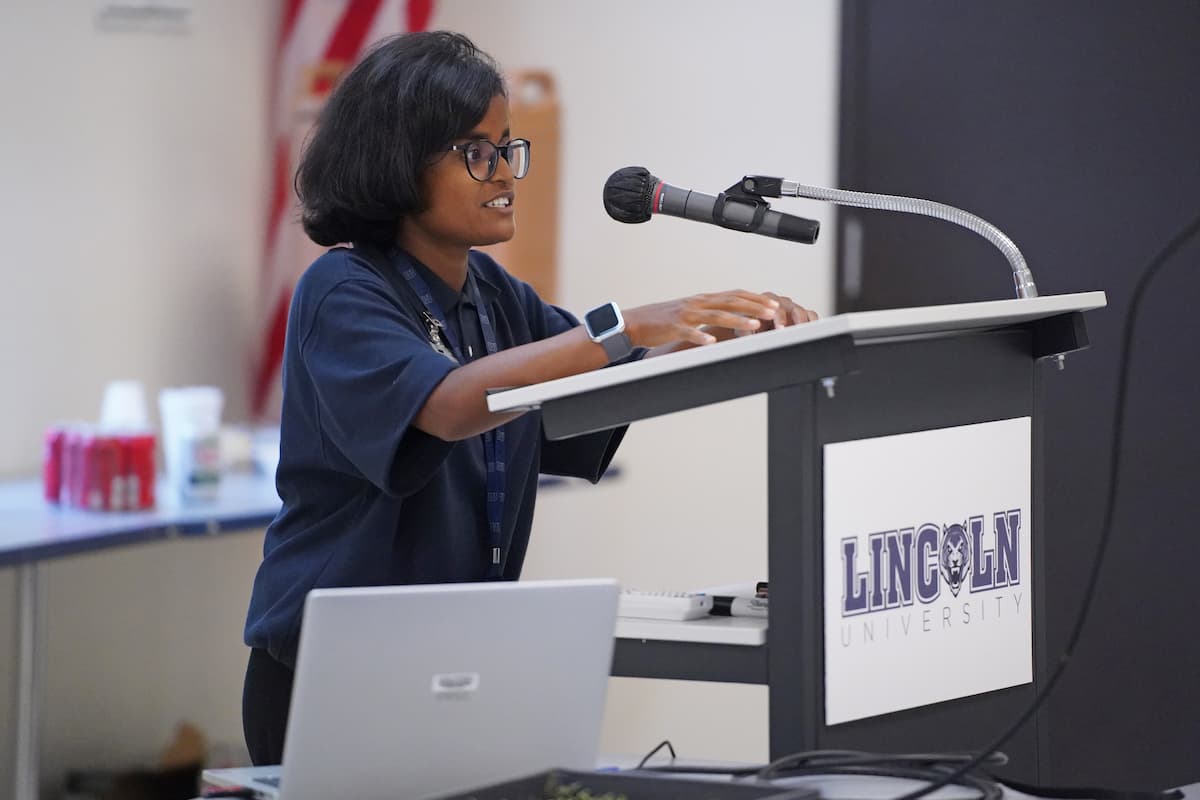 Fatema Tuj Johora discusses quinoa research during a past field day at LU.
Comparing plant-level measurements with drone data gave the team a fuller picture of how quinoa responded to irrigation and nitrogen.
“The interesting part was it actually fit together,” Johora said. “Combining physiological and aerial data actually helped us to find the best possible combination of irrigation and nitrogen.”
The study found that more was not necessarily better. Moderate irrigation paired with an intermediate nitrogen rate supported strong plant responses while using both resources more efficiently.
Researchers also tracked nutrient levels as the quinoa developed.
“Plants use nutrients up to a certain point,” Ayele said. “As the plant grows, nutrient levels increase, reach a plateau and then begin to decline. That can help us identify the optimal level of fertilizer to apply.”
Building on these findings, the current USDA-funded effort expands the focus to nitrogen, phosphorus and potassium while continuing to study irrigation and incorporating a broader range of drone sensors and geospatial tools.
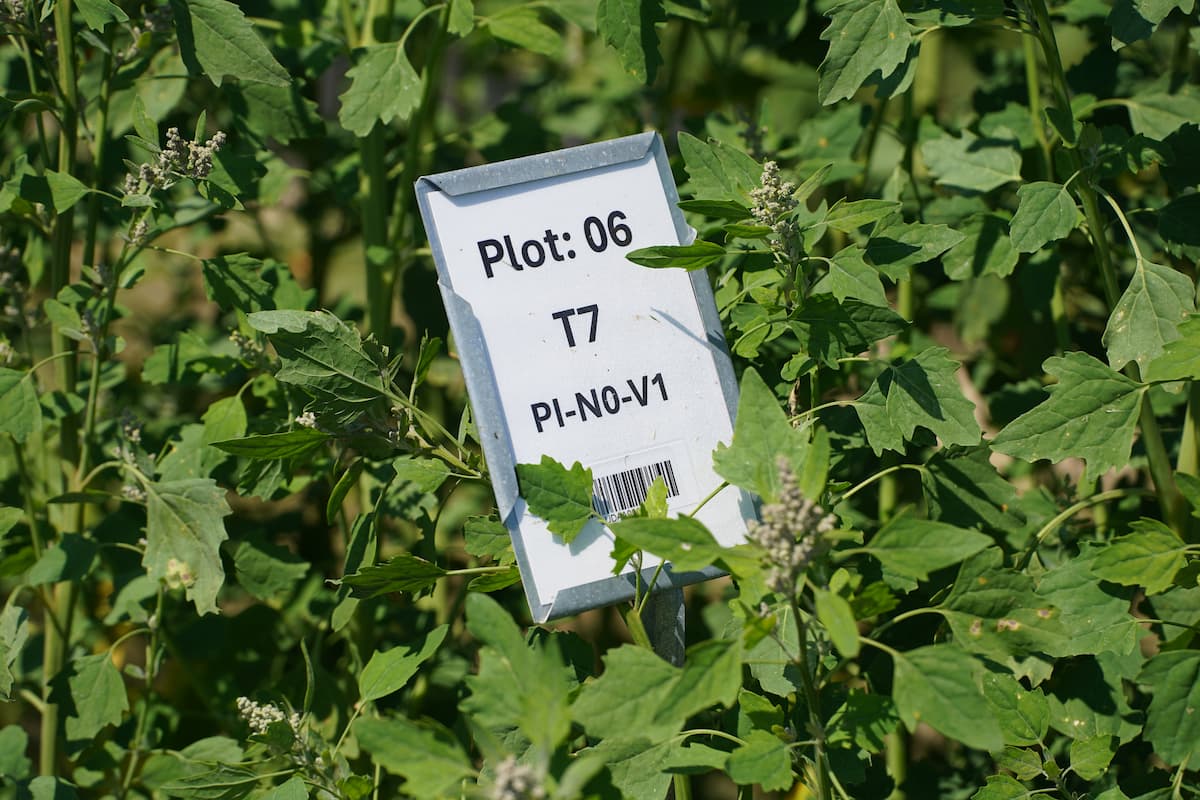 A quinoa research plot at LU’s George Washington Carver Farm is marked for one of the experimental treatments used to study nutrient management and crop response during summer 2026.
As the research continues, the findings will help the team refine recommendations for how much water and fertilizer quinoa needs under Missouri conditions and how those resources can be managed more efficiently.
“Drone technology enables precision management of quinoa by helping us optimize water and nutrient use, increase crop productivity and reduce production costs,” Ayele said. “This is one of the technologies that could help support U.S. agriculture and food security.”
With clearer guidance on water and nutrient management, LU researchers hope to give more U.S. growers the information they need to successfully produce quinoa closer to home.
For more information about this project, please contact Addissu Ayele at AyeleA@LincolnU.edu.
Photos by Lynne Holsapple.