
Research Examines Plant-Based Approaches to Parasite Management in Sheep
Office of Communications and Marketing
Young Hall
820 Chestnut Street
Jefferson City, MO 65101
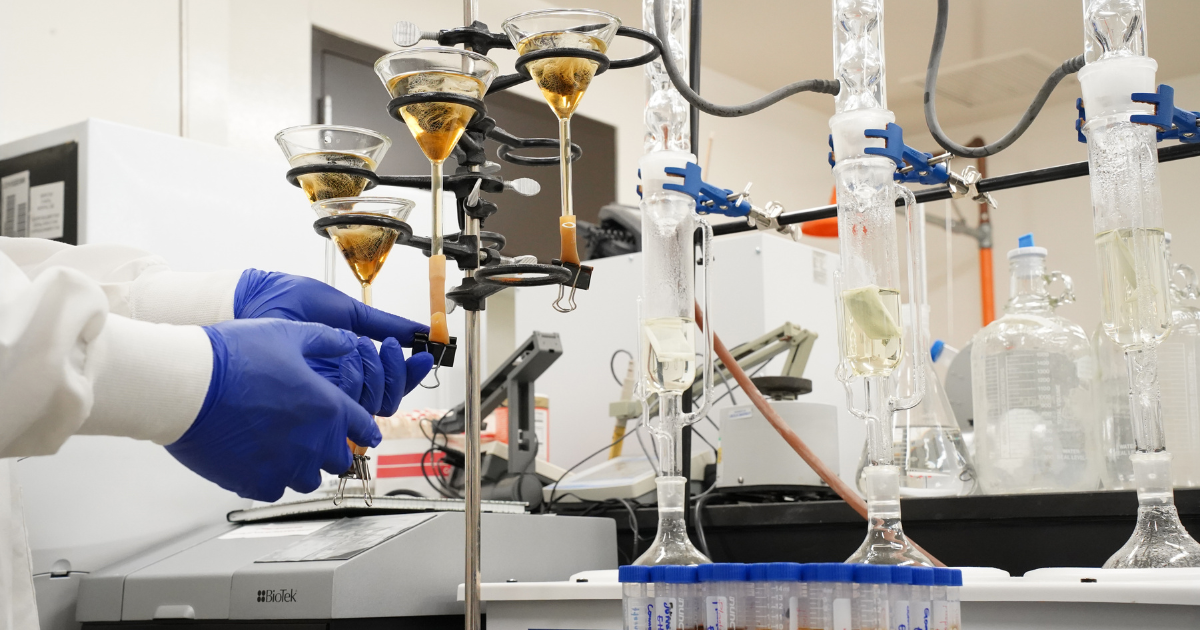 Laboratory work conducted as part of Lincoln University’s research on plant-based approaches to parasite management in sheep.
Recently published research in Frontiers in Veterinary Science highlights a Lincoln University of Missouri (LU) and University of Missouri (MU) collaboration examining plant-based approaches to managing internal parasites in sheep.
For Tumen Wuliji, a professor of animal science with LU Cooperative Research, the search for additional parasite-control options began several years ago at the university’s certified organic Alan T. Busby Farm. His work with small ruminants in the farm’s organic production system led him to explore plant-based alternatives to conventional chemical treatments.
Wuliji received funding for the project through a 2021 USDA National Institute of Food and Agriculture Capacity Building Grant.
“The goal was to find ways to help control parasites in small ruminants by studying bioactive compounds found in different plants, which can be components of pasture forage,” Wuliji said.
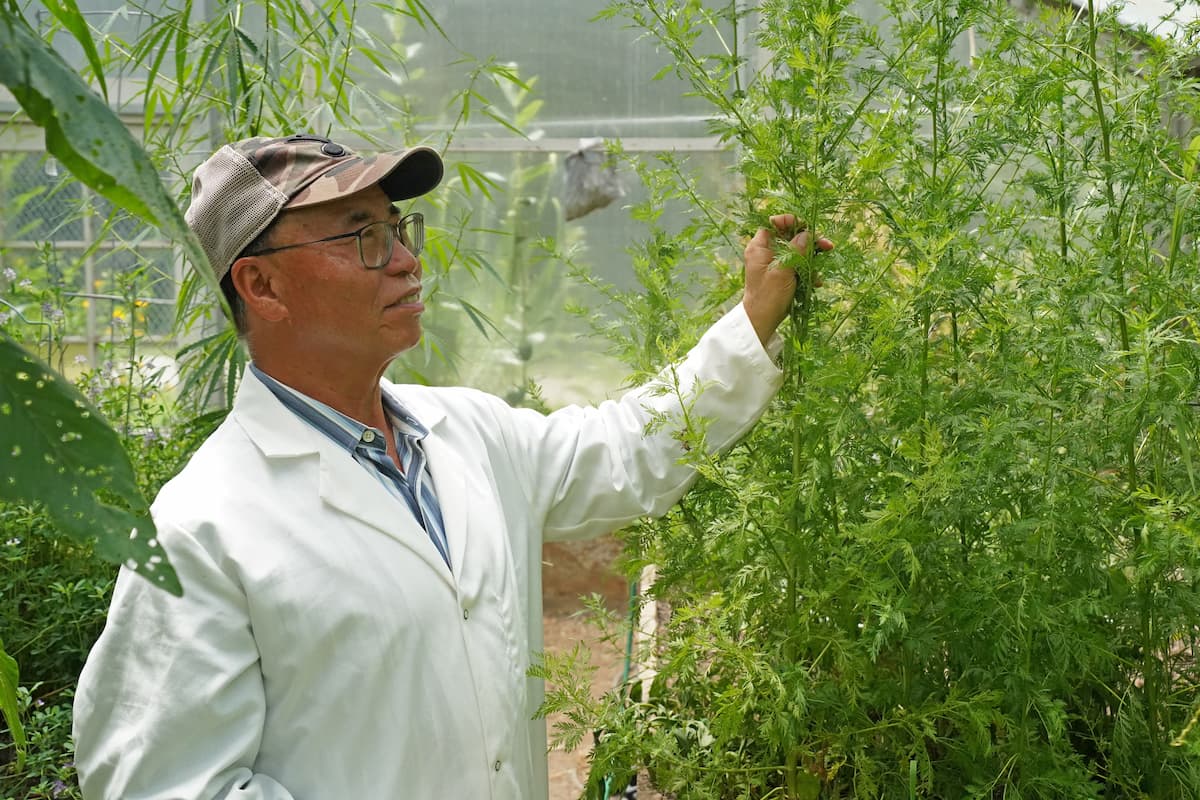 Tumen Wuliji examines a plant in a Lincoln University greenhouse as part of his research on plant-based approaches to parasite management in sheep.
Bioactive compounds are naturally occurring chemicals in plants that can affect living cells or organisms. In this study, a team of researchers examined whether those compounds could affect parasite larvae before they develop into adult worms that live in a sheep’s digestive tract and produce thousands of eggs shed through the animal’s feces.
The study tested 24 plant species, including forages, herbs and common weeds. Researchers used water to draw naturally occurring compounds from dried plant material, creating extracts for laboratory testing.
Chao Ke, who recently completed his Ph.D. at MU, conducted much of the study’s laboratory work at LU under Wuliji’s supervision. He tested plant extracts on parasite larvae cultured from sheep fecal samples and measured their survival.
The team checked the larvae after 12, 24 and 48 hours, allowing researchers to compare the extracts and identify those with the strongest effects.
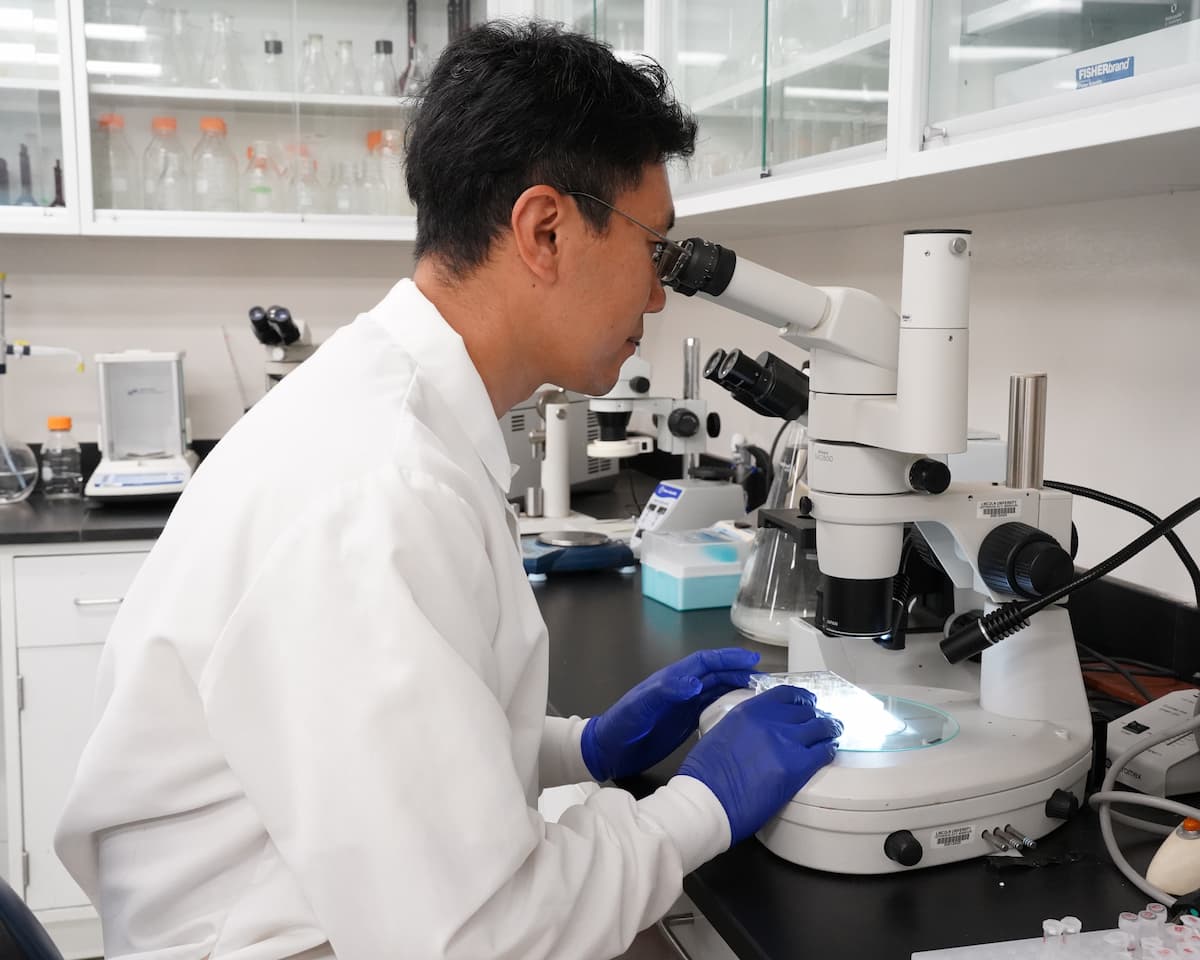 Chao Ke examines samples under a microscope during laboratory work for Lincoln University’s sheep parasite study.
Mortality generally increased with both exposure time and extract concentration. At the higher concentration, goatweed, spurge weed, goosefoot, velvetleaf and tall boneset each produced larval mortality rates of 90% or higher after 48 hours, giving the team several plant candidates to examine more closely in future research.
Wuliji said tall boneset and velvetleaf stood out because their strong activity against sheep parasite larvae had not been widely reported before.
The findings give researchers a foundation for the next phase of the work.
“Whether this result actually happens when you feed animals, that is another matter to be verified,” Wuliji said.
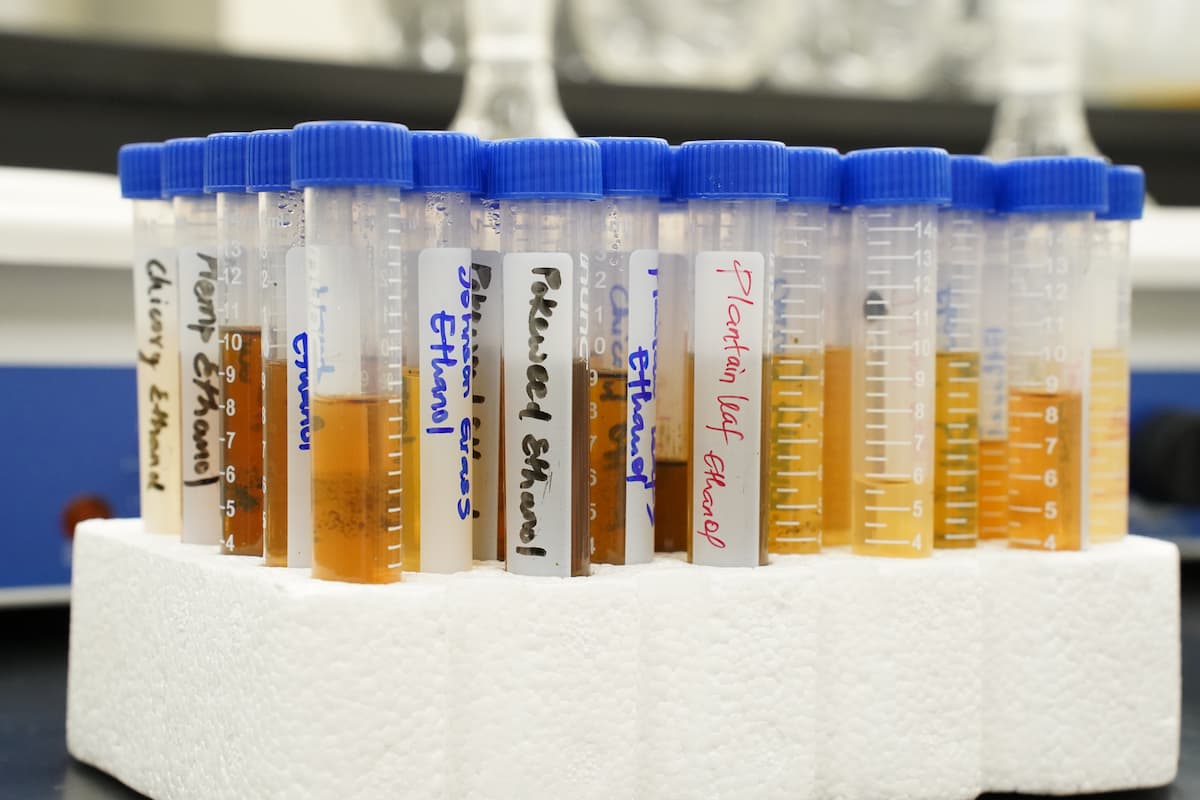 Plant samples prepared for laboratory testing as part of Lincoln University’s research on plant-based approaches to parasite management in sheep.
The next phase will vary by plant, with some pasture species studied in concentrated plots and others harvested and processed into pellets or feed supplements for further evaluation.
Animal health remains a central concern in small ruminant production. When internal parasites go unmanaged, they can cause anemia and weight loss, slow growth and leave animals more vulnerable to additional health problems. The findings mark an early step toward expanding parasite-management options for sheep producers.
For more information, email Tumen Wuliji at wulijit@lincolnu.edu.
Photos by Lynne Holsapple.