
Lincoln University Workshop Helps Springfield Residents Turn Food Scraps Into Healthy Soil
Office of Communications and Marketing
Young Hall
820 Chestnut Street
Jefferson City, MO 65101
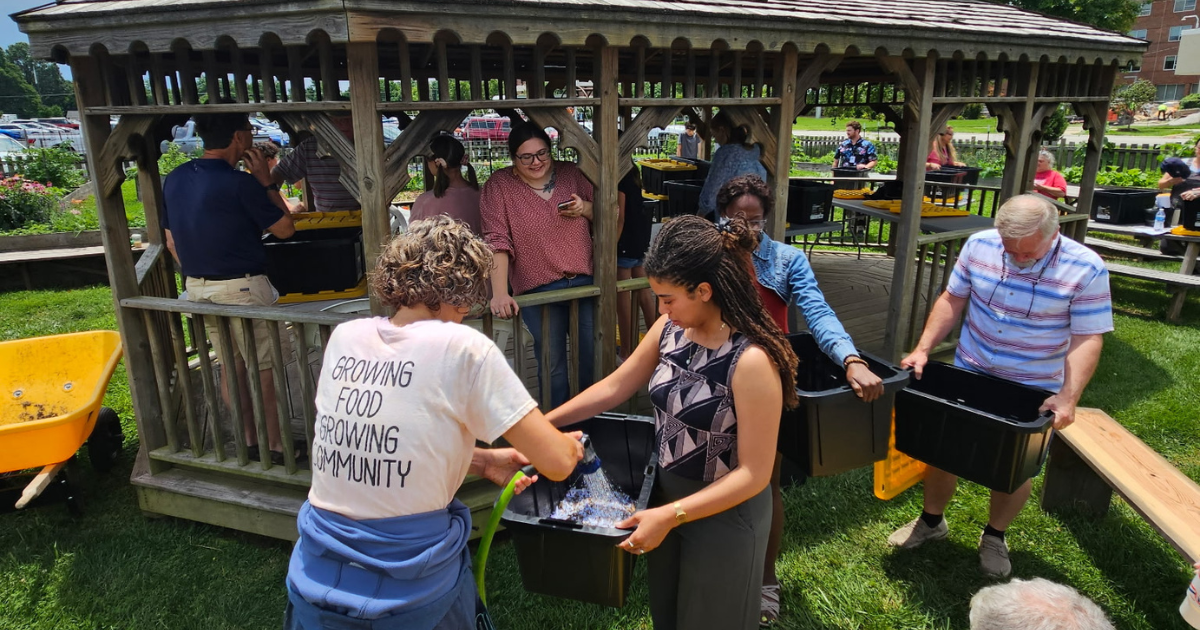 Vermicomposting workshop participants moisten shredded paper bedding to create ideal conditions for their new composting worms.
Food scraps found new purpose during a vermicomposting workshop hosted by Lincoln University of Missouri’s (LU) Horticulture Program on June 16 in Springfield, Missouri. Participants learned how to transform everyday kitchen waste into nutrient-rich compost using red wiggler worms while building practical skills for sustainable gardening at home.
“Finding red wiggler (Eisenia fetida) worms and setting up a system can often be the most challenging part of getting started,” said Bleu Moore, horticulture educator. “People are unsure where to find the necessary materials or how to begin.”
The day featured sessions on the fundamentals of healthy soil and an introduction to vermicomposting, the practice of using earthworms to convert food scraps into a natural fertilizer for gardens. Topics included soil benefits, bin setup, worm selection, feeding, moisture management, maintenance and strategies for preventing common issues. Participants also explored ways to turn vermicomposting into a source of income before completing a hands-on demonstration of building a working system.
Moore highlighted growing public interest in soil health, composting, food waste reduction and environmentally responsible gardening. Healthy soils support stronger plants and often improve resistance to diseases and pests, making vermicomposting a valuable tool for gardeners with yards as well as residents living in apartments or other small spaces.
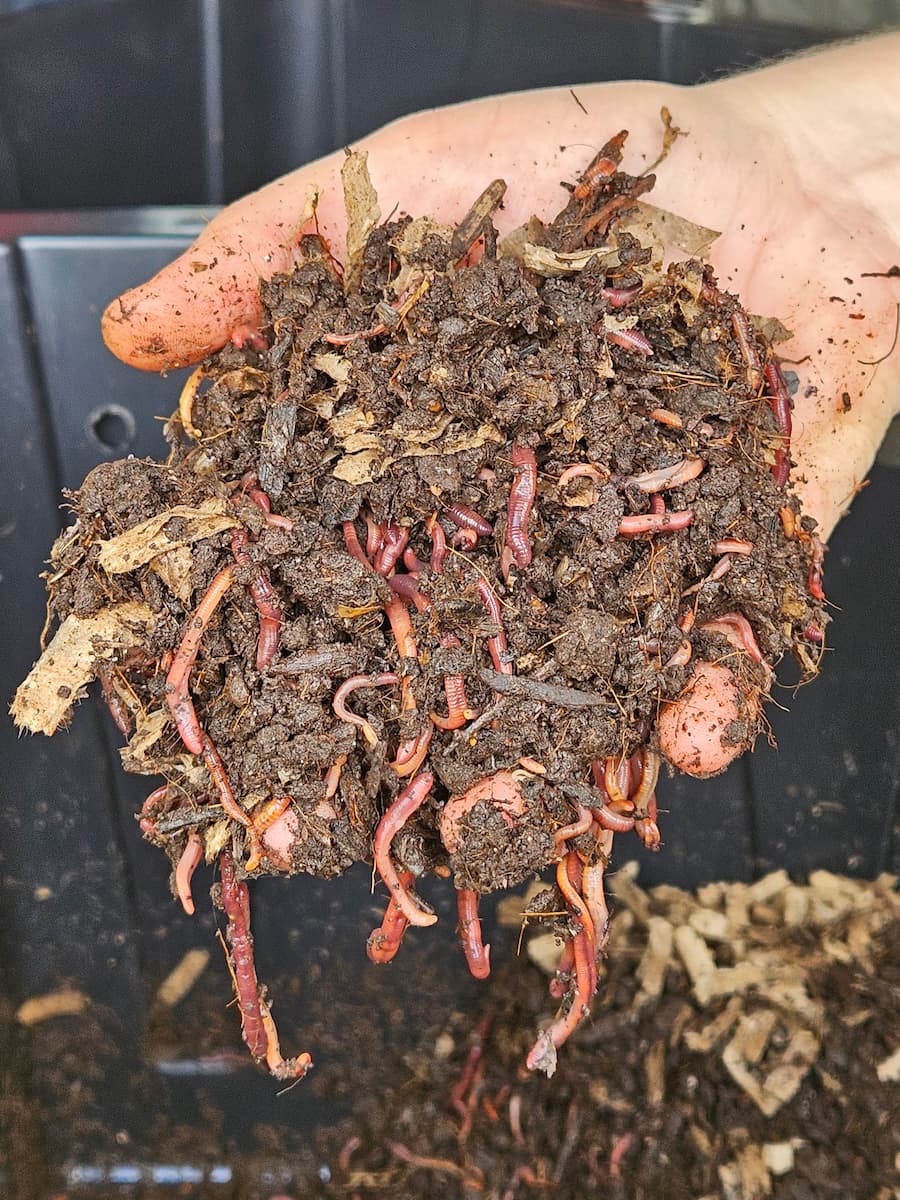 A thriving population of red wiggler composting worms.
“Unlike traditional compost piles, vermicomposting systems can be kept in relatively small areas,” Moore said. “So, residents of space-limited environments can recycle food scraps into valuable compost.”
Workshop leaders guided participants through every step of the process, helping them build confidence before continuing at home. Each participant assembled a starter vermicomposting system and received a bin, bedding, red wiggler worms and educational materials from LU. Guide sheets included step-by-step instructions for expanding a system, caring for worms and troubleshooting future challenges.
Attendee Gracie Helterbrand appreciated having an opportunity to bring her child to the event and encouraged others to try vermicomposting, regardless of experience or available time.
“People can start their own systems and invest all their time into it, or if they’re like me and have things that demand more time and attention, their worms will most likely be okay,” Helterbrand said. “And there are resources out there like this workshop — it was great and very involved.”
The workshop demonstrated LU’s commitment to community education by providing attendees with practical skills to convert food scraps into a valuable soil amendment. Through hands-on learning, LU’s Horticulture Program equipped participants with knowledge to support healthier soils, reduce household waste and promote greater self-sufficiency while strengthening community connections through skills they can continue applying long after the workshop ends.