
Participants Talk, Tour and Taste at Native Edible Plants Symposium
Office of Communications and Marketing
Young Hall
820 Chestnut Street
Jefferson City, MO 65101
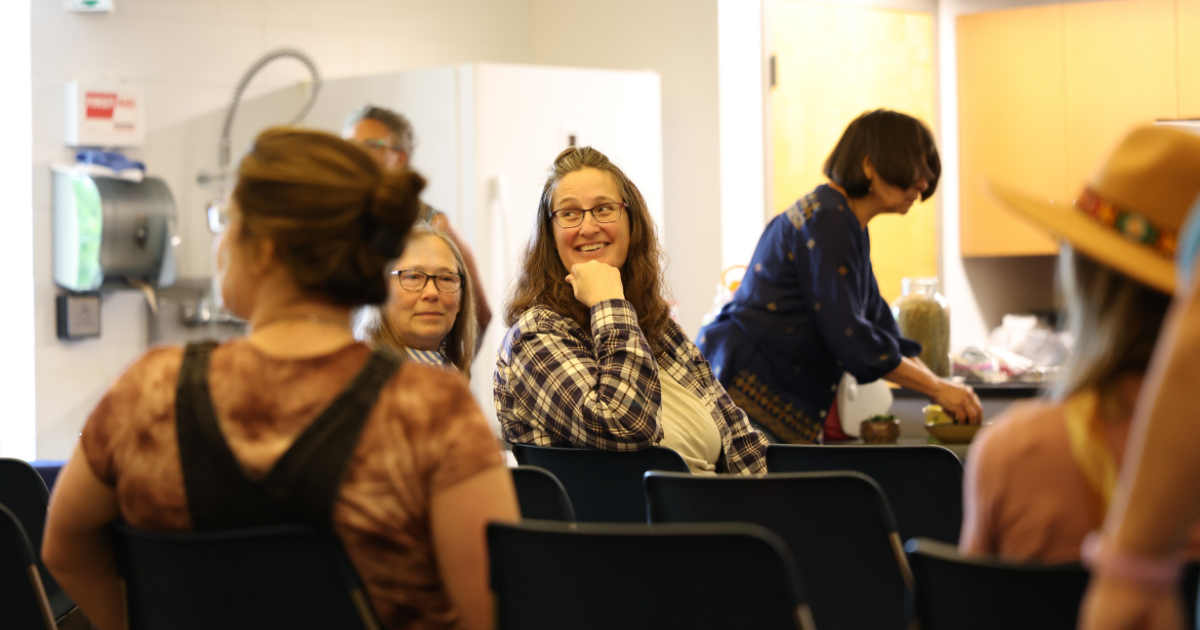 Attendees gather at the Anita B. Gorman Conservation Discovery Center in Kansas City on May 23 for LU’s Native Edible Plants Symposium.
Lincoln University of Missouri’s (LU) Native and Specialty Crops Program wrapped up its five-part Native Plants Academy on May 23 with a Native Edible Plants Symposium at the Anita B. Gorman Conservation Discovery Center in Kansas City.
The symposium invited participants to explore the center’s gardens, see exhibits and taste dishes created with native plants during food demonstrations. The event, which drew some 25 people, allowed participants to gain hands-on experience with knowledge they’d received during a series of webinars leading up to the symposium.
Nadia Navarrete-Tindall, the head of LU’s Native and Specialty Crops Program, led the symposium, along with extension educator Tina Wurth and Missouri Department of Conservation (MDC) educator Ginger Miller.
Participants began by perusing the exhibits, which featured books and guides, seeds, plant samples, dried herbs, recipes and more. Navarrete-Tindall, Wurth and Miller answered questions about each area and discussed ways to use native edible plants with attendees.
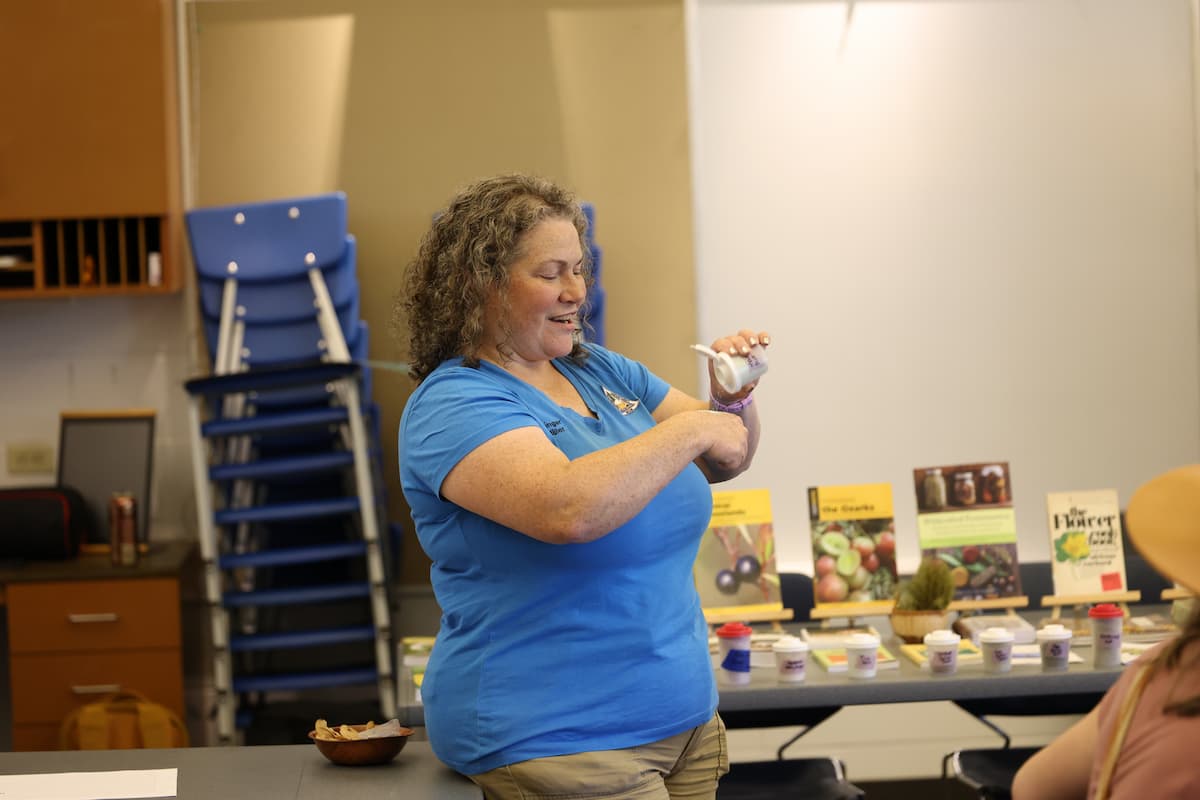 MDC’s Ginger Miller shows attendees how to taste salts and sugars flavored with native edible plants.
One exhibit featured homemade salts and sugars flavored with native plants, such as horseweed, bee balm, hairy mountain mint and rose petals. As participants explored the exhibits, many stopped to taste several of the salts and sugars.
“Lick the side of your hand, pour some salt or sugar on, then have a taste,” Miller told participants.
At another exhibit, Wurth explained how different herbs and greens, such as hairy mountain mint, can be used to make teas.
“You just put the mint in the water, soak it, then drain it. You can leave it in there as long as you want, because the longer you leave it in, the stronger it will get,” Wurth said. “You know how our grandmothers said, ‘a little bit of this, a little bit of that?’ Just taste it and make it to your liking.”
In addition to learning about native edible plants, attendees also learned about crawfish from Jim Wetzel, state extension specialist for aquaculture at LU.
Wetzel had several crawfish (also known as crayfish or crawdads) on display and spoke with attendees about their anatomy, care and consumption.
After about an hour, the group transitioned outdoors to tour the Gorman Discovery Center’s gardens. The gardens feature a variety of plants, many of which are native and edible. Miller, joined by MDC naturalist Elie Roddy, led attendees through the gardens, pointing out plants and explaining how to use them.
Participants saw a mix of native and non-native plants, including cup plant, pawpaw, mulberry, bush cherry, elderberry, day lilies, bee balm, sumac, black walnut and prickly pear cactus.
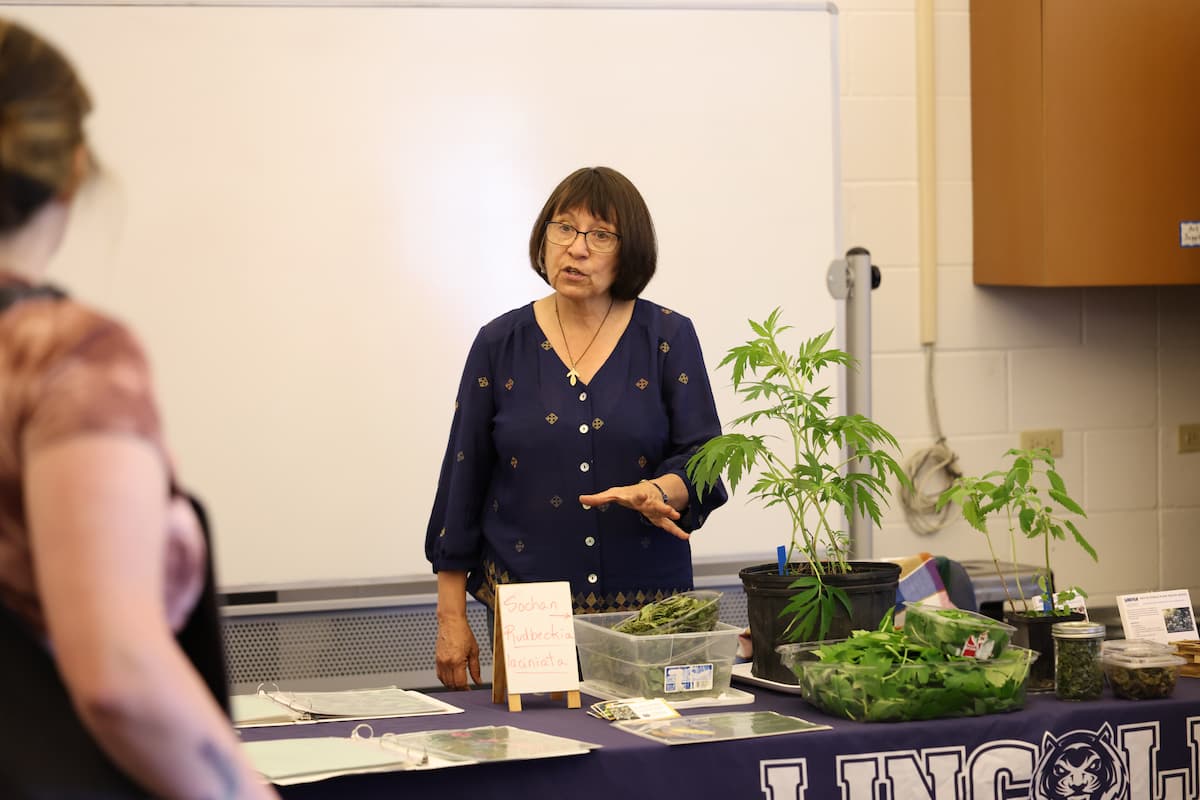 LU’s Nadia Navarrete-Tindall, head of the Native and Specialty Crops Program, talks to attendees about sochan during the Native Edible Plants Symposium on May 23.
The group stopped to get hands-on with some of the plants along the way — feeling, smelling and tasting leaves, roots and berries.
Following the garden tour, attendees returned inside for a food demonstration, where Navarrete-Tindall, Wurth and Miller prepared several dishes for participants to see and taste. Each recipe required minimal preparation, making them accessible to try at home.
Wurth showcased two dishes — chickweed pesto and a purslane herb spread — both served with crackers.
“It’s so tasty. It’s rich with garlic, and the parmesan really comes through,” Wurth said of the pesto. “I hope your mouths like it, because I love doing this stuff.”
Navarrete-Tindall prepared a sochan dip, similar to artichoke dip, paired with tortilla chips. She also made a sochan soup, though participants did not sample the dish.
Miller showed attendees how to make and store sauerkraut using garden-grown cabbage, horseweed salt and juniper berries.
“This is a great way to extend the harvest and throw some wild flavors in there,” Miller said.
Wetzel also demonstrated some cooking, showing attendees how to make a crawfish dish he calls “Crispy Critters.”
“Typically, when you eat crayfish in this country, you’re only eating about 20% of what was alive. Not very efficient,” Wetzel said. “We’re going to eat at least 70% of the animal.”
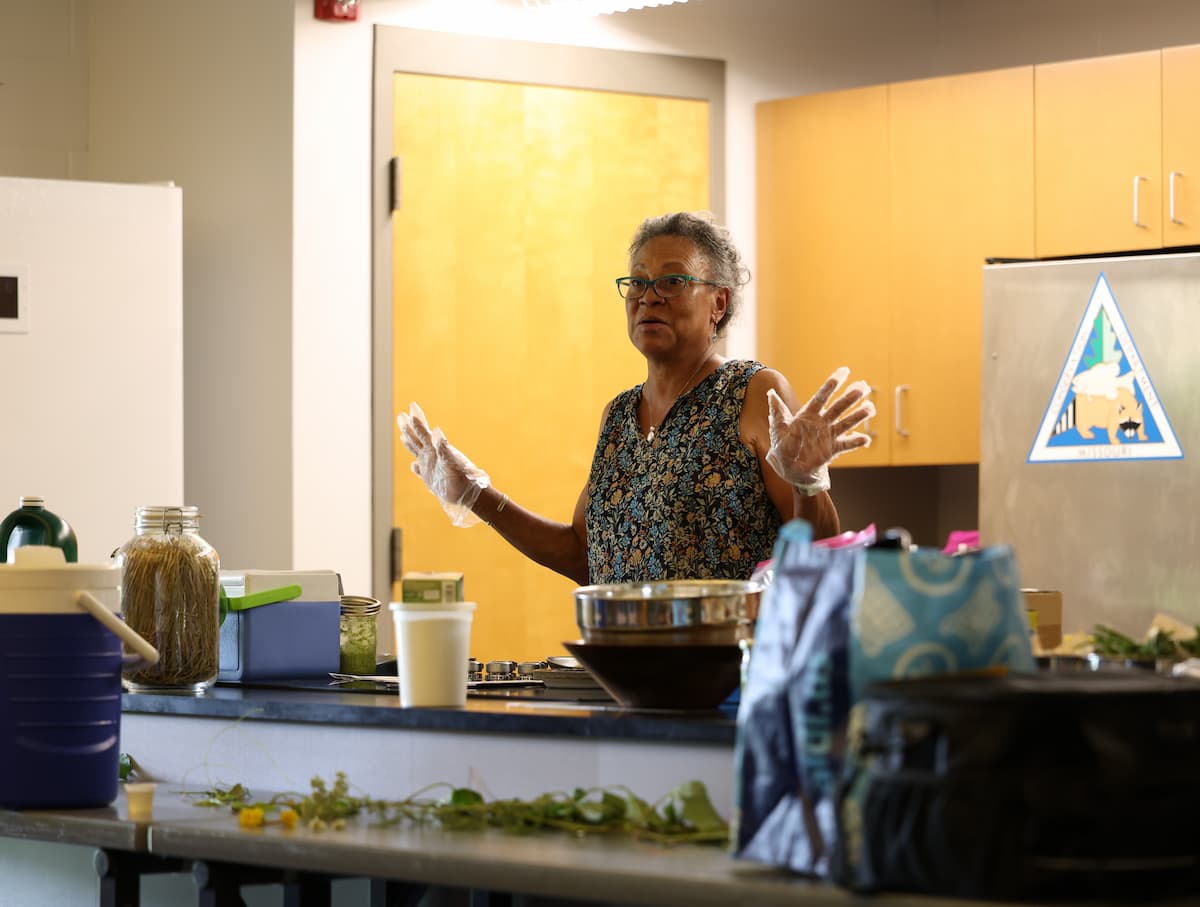 Tina Wurth, an educator with LU’s Native and Specialty Crops Program, shares a chickweed pesto recipe with attendees.
Wetzel’s recipe allows for the consumption of nearly the entire crawfish, minus the head and carapace. The result is a deep-fried crawfish able to be eaten in one bite — legs and all.
The symposium was a learning experience for everyone. As attendees sampled the various dishes, they asked questions and engaged in discussions with organizers and each other, sharing knowledge and discovering new ways to cook with native plants.
Participants also left with recipe cards, empowering them to try native plant dishes at home.
Attendee Bob Ogle said he didn’t know much about native plants and came to the symposium to learn more.
“I really found it interesting. I’m always looking to learn more about edible wild plants,” Ogle said.
Ogle attended the symposium with his wife. While he doesn’t garden himself, he said his wife grows elderberries and other native plants and kept pointing out plants she recognized during the garden tour.
Another attendee, Jim Thaxter, said he particularly enjoyed the food demonstration but learned a lot from the garden tour as well.
“It was neat hearing about all the different things you can do with these plants,” Thaxter said.
He added that many native plants grow in his yard at home, but he’s never eaten any before. Now, with new knowledge and recipes to follow, that may change.
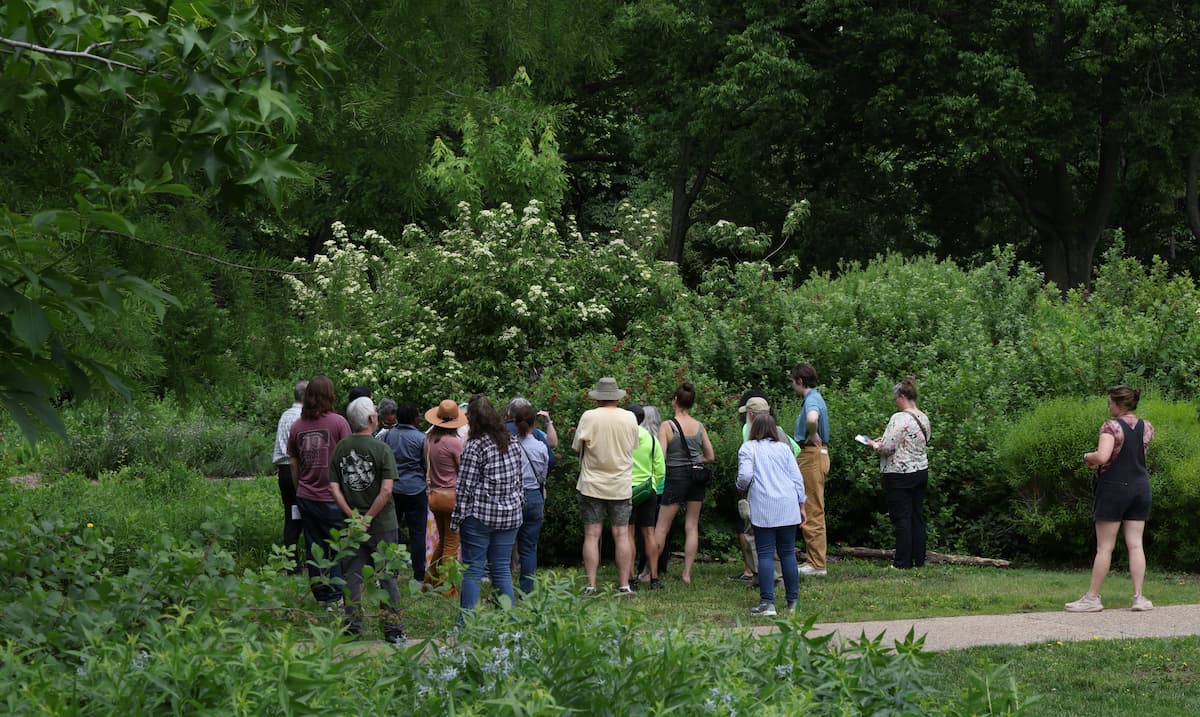 MDC’s Ginger Miller and Elie Roddy lead attendees on a tour of the Gorman Discovery Center’s gardens.
The Native Edible Plants Symposium represents the heart of the Native and Specialty Crops Program: using education, hands-on activities and sensory experiences to encourage people to grow and use native plants in their farms and gardens.
While this iteration of the Native Plants Academy has finished, Navarrete-Tindall is already looking to the future. She said the next academy is planned for the fall. Miller said the webinars are expected to begin in September, with the symposium set for October.
“This is only the beginning,” Navarrete-Tindall said.
To learn more about the Native Plants Academy or other Native and Specialty Crops Program activities, contact Nadia Navarrete-Tindall at Navarrete-TindallN@LincolnU.edu.