
Visitors Explore Innovation and Agriculture at Carver Field Day
Office of Communications and Marketing
Young Hall
820 Chestnut Street
Jefferson City, MO 65101
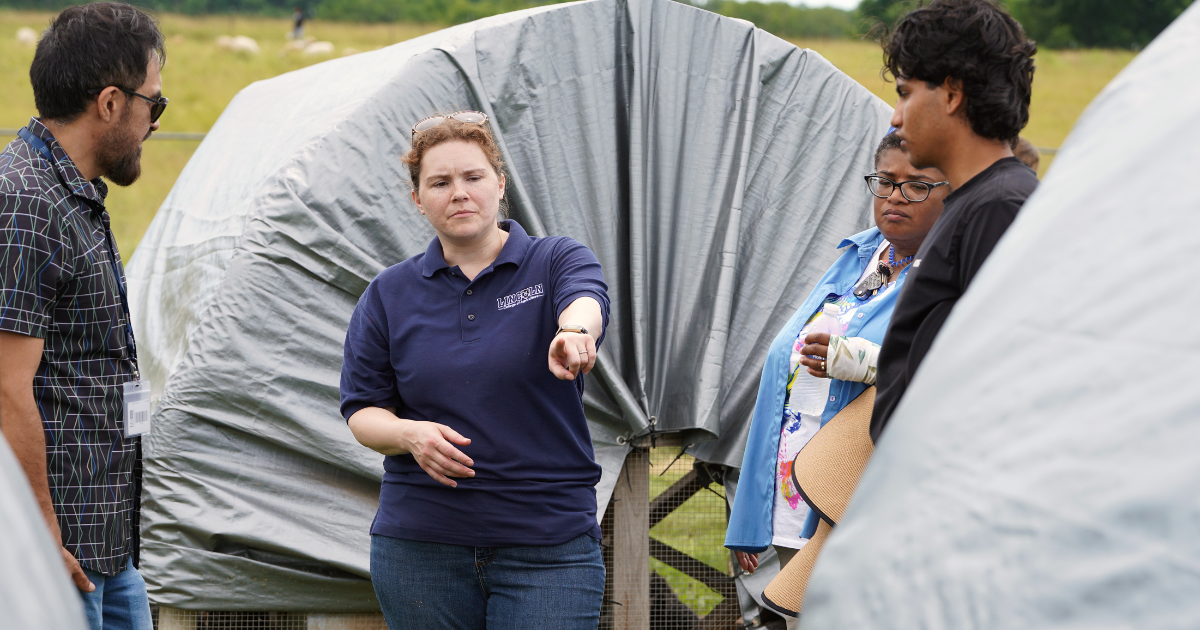 Lincoln University State Extension Specialist Tatijana Fisher shows Carver Field Day guests how the farm’s chicken coops have been set up.
Community members explored research, production agriculture and Cooperative Extension programming during Carver Field Day on June 9 at Lincoln University of Missouri's (LU) George Washington Carver Farm. The 4th annual event invited visitors to tour farm facilities, interact with specialists, and learn about ongoing research projects across the university.
Guests boarded trolleys for guided tours of the farm, with stops at multiple locations where researchers and specialists shared insights into their work.
LU President John Moseley welcomed attendees before tours began.
"As a boy, I grew up on a farm, so I have a sincere appreciation of what they do here," Moseley said.
Moseley highlighted collaboration between LU and the University of Missouri and discussed how research and Extension efforts benefit communities, agricultural producers and industries across Missouri.
The first tour stop featured the farm's greenhouses and high tunnels. Michael Tarka, LU’s greenhouse manager, guided visitors through the facilities and explained how each structure supports research and production.
He described features inside the greenhouse complex, including movable raised benches and a timed irrigation system designed to meet varying plant needs.
"I've spent my life in greenhouses, and I can tell you this would qualify as a very technologically advanced greenhouse," Tarka said. "Number one, it has cement floors with a center drain."
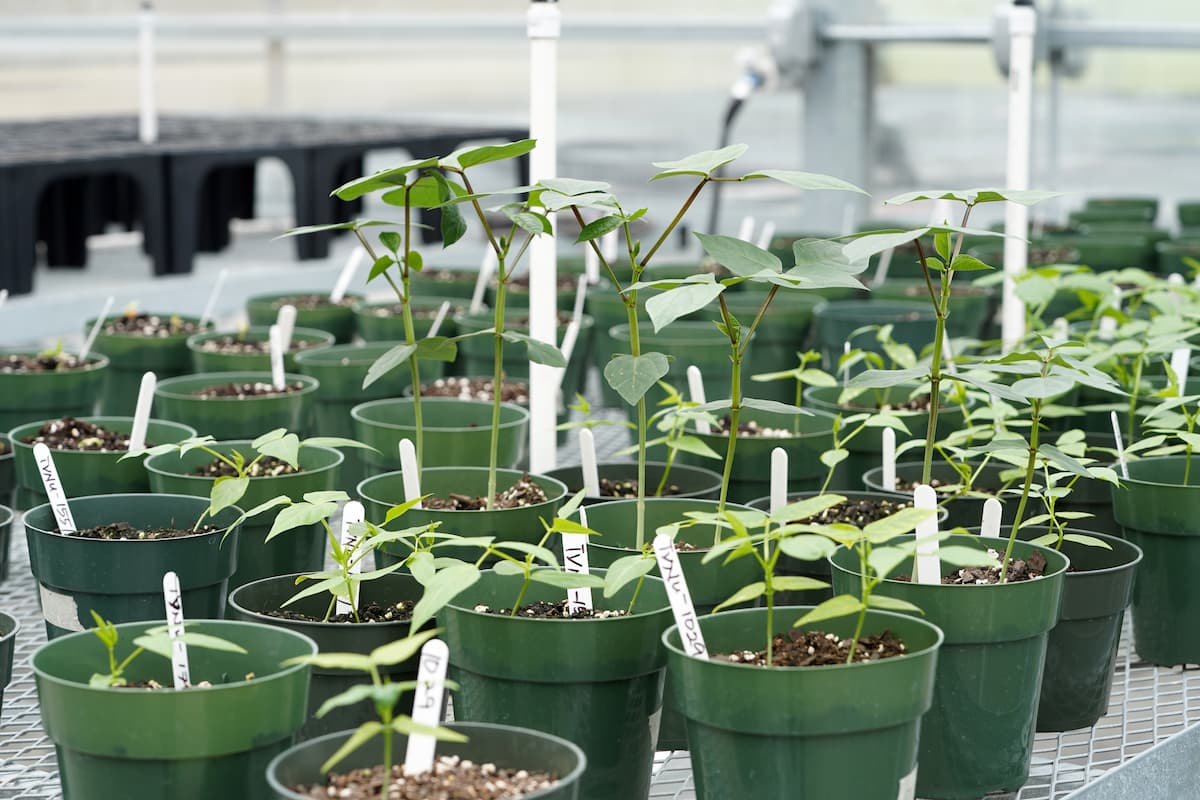 Cow pea plants in the Lincoln University greenhouses.
The greenhouse facilities currently support cowpea research. Researchers study both brown and white cowpea varieties. Brown cowpeas commonly serve as livestock feed, while white cowpeas often enter human food markets.
"Unfortunately, the white variety has a lot of disease issues that the brown one is resistant to," Tarka said.
Tarka also explained how researchers access greenhouse space. After securing grant funding, researchers coordinate with greenhouse staff to reserve available areas for projects.
Near the farm's poultry facilities, Tatijana Fisher, state Extension poultry specialist, and graduate student Dylan Knipker shared management practices and ongoing research with visitors.
Knipker began by explaining how chickens naturally produce more eggs during longer daylight periods in spring and summer. Purchasing chicks in fall allows them to reach laying age during months when mature hens produce fewer eggs.
"If you don't learn anything else today, remember to buy your chickens in the fall," Knipker said.
Fisher discussed coop design and construction, emphasizing efficient use of materials and solutions for predator control.
"There is zero waste on the overall design," Fisher said. "It is 25 feet around, why? Because that's how long a roll of the hardware flap is."
Each coop also includes a two-foot wire mesh perimeter designed to prevent predators from reaching birds.
Current poultry projects include trays of alfalfa, clover and sprouted oats inside pens to provide nutrition and enrichment. Future research will examine hemp seed cake as a feed ingredient for meat birds.
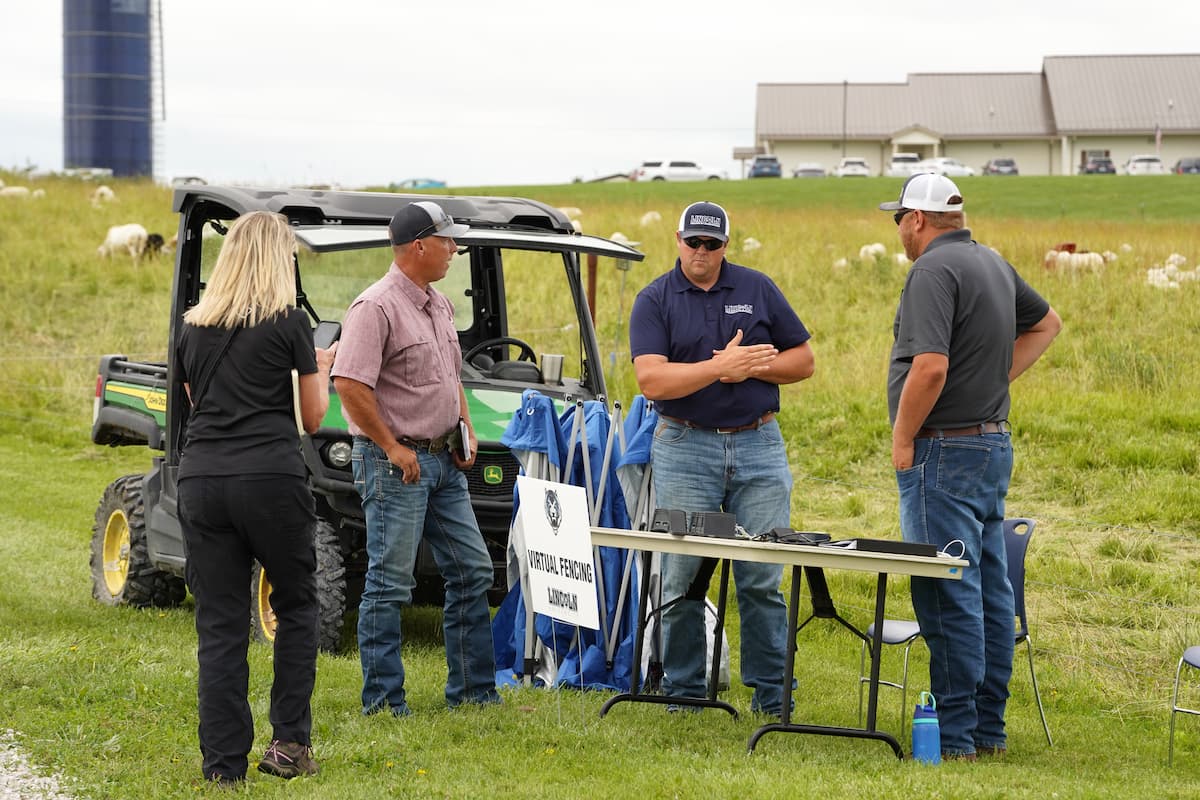 Lincoln University farm managers Eric Groose and Michael Reinkemeyer teach Carver Field Day attendees about the new virtual fencing being implemented on the farms.
At another stop, LU’s Industrial Hemp Program displayed a variety of hemp products, including seeds, raw fibers, textiles and construction materials. Researchers shared information about efforts to reduce seed loss during harvest and their studies on how hemp roots capture carbon and distribute sugars throughout plants.
Long-term goals include genetic research focused on encouraging earlier flowering and increasing harvest potential.
Additional LU programs represented during the event included integrated pest management, quinoa, native plants, plant pathology, livestock grazing, virtual fencing, small ruminants and hydroponics. Visitors also toured the university's aquaculture facility and learned about aquatic animal research.
Among approximately 100 visitors, Jefferson City resident Richard Allen attended primarily to explore the aquaculture program.
"I like to learn about how they're raising the fish and experimenting with different kinds of food to see how they grow," Allen said. "It was cool to see how the setup worked and how they manage it."
Carver Field Day demonstrated how LU research, teaching and Extension programs advance agricultural practices across Missouri. By engaging directly with researchers and viewing projects across the farm, visitors gained a clearer understanding of how applied science, education and Extension outreach work together to address agricultural challenges and support communities statewide.
For more information on what’s happening at the farm, contact Chris Boeckmann at BoeckmannC@lincolnu.edu.
Click here to view more photos of the event.