
Educators Learn from Experts at Collaborative Train-the-Trainer Event
Office of Communications and Marketing
Young Hall
820 Chestnut Street
Jefferson City, MO 65101
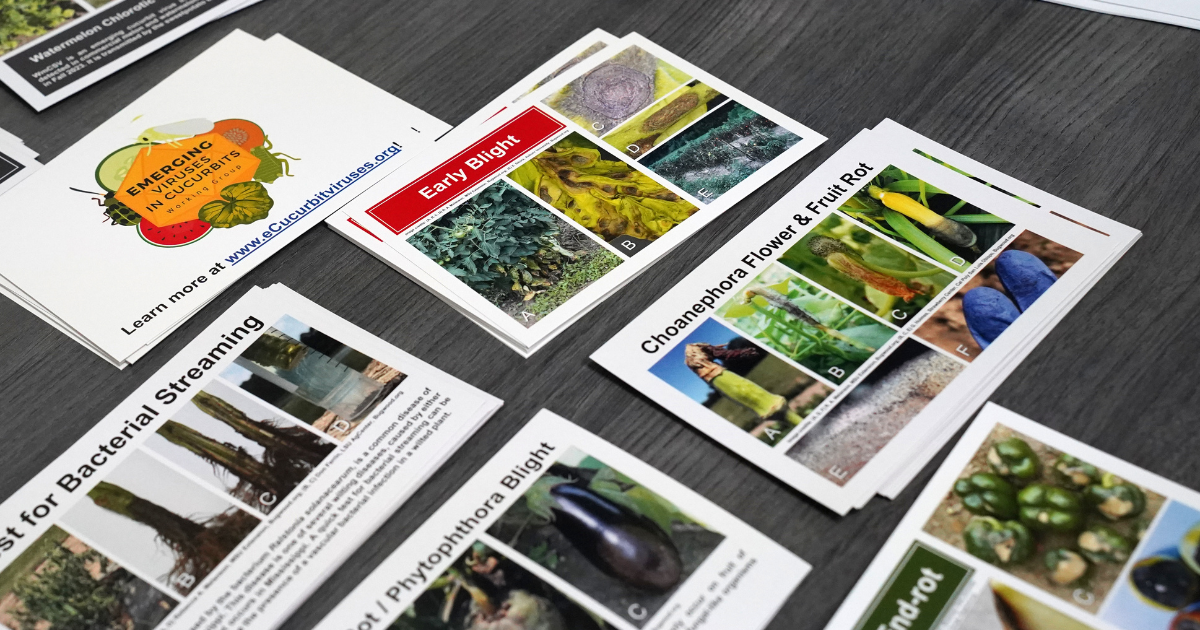 The Identification and Management of Vegetable and Fruit Diseases training offered several educational resources for attendees to take home.
A mixed group of educators gathered at Lincoln University of Missouri’s (LU) George Washington Carver Farm on April 27 to hear from experts about the best and newest practices in fruit and vegetable disease identification and management.
Aimed at equipping agricultural educators with knowledge they can pass on to the growers and communities they serve, the train-the-trainer event drew about 35 attendees from LU Cooperative Extension, University of Missouri (MU) Extension and the Columbia Center for Urban Agriculture.
Featured speakers included:
- Waana Kaluwasha, assistant professor of plant pathology at LU.
- Peng Tian, assistant extension professor and director of the MU Plant Diagnostic Clinic at MU.
- Touria Eaton, associate professor of horticulture and state horticulture specialist at LU.
- Rebecca Melanson, associate professor and extension specialist at Mississippi State University.
- Nicole Gauthier, professor and extension specialist at the University of Kentucky.
- Mohammad Babadoost, professor and extension specialist at the University of Illinois at Urbana-Champaign.
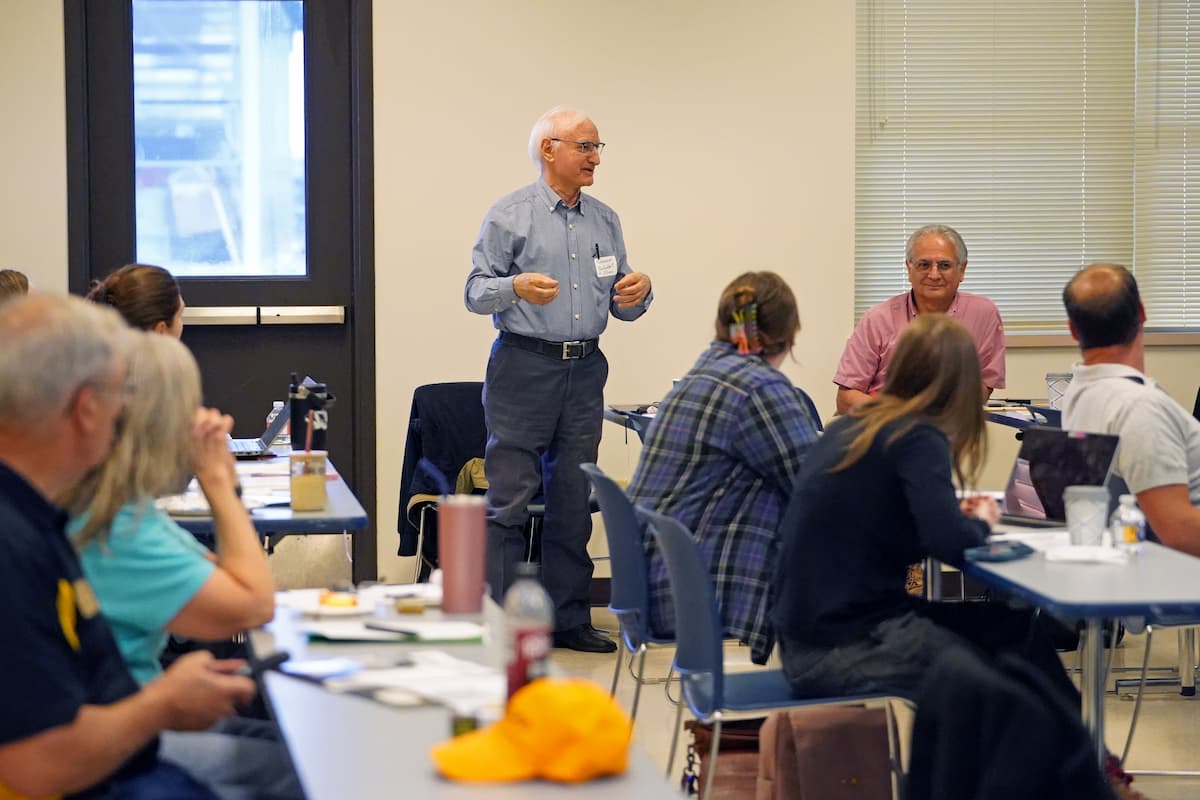 Fellow educators listen to Mohammad Babadoost, professor and extension specialist at the University of Illinois, share his perspective on a topic.
Kaluwasha and Tian organized the event, which was made possible by a North Central Region Sustainable Agriculture Research and Education (NCR-SARE) grant coordinated by Eaton.
The speakers covered a range of topics, including NCR-SARE grants available for farmers, an introduction to plant diseases, diseases of cucurbits and tomatoes, diseases of cool season vegetables, development of disease management strategies and plant disease diagnosis.
Outside of the classroom, a wealth of resources — including fact sheets, guidebooks, pocket magnifiers and other educational materials — were available for participants to take home.
Attendees also engaged in a hands-on activity where they worked together to diagnosis diseases using what they’d learned from the day’s speakers. Kaluwasha said the activity was her favorite part of the event.
“It went quite well,” Kaluwasha said. “Attendees were cooperative and worked well together, and they seemed to appreciate this exercise as it reinforced some of the concepts learned throughout the day.”
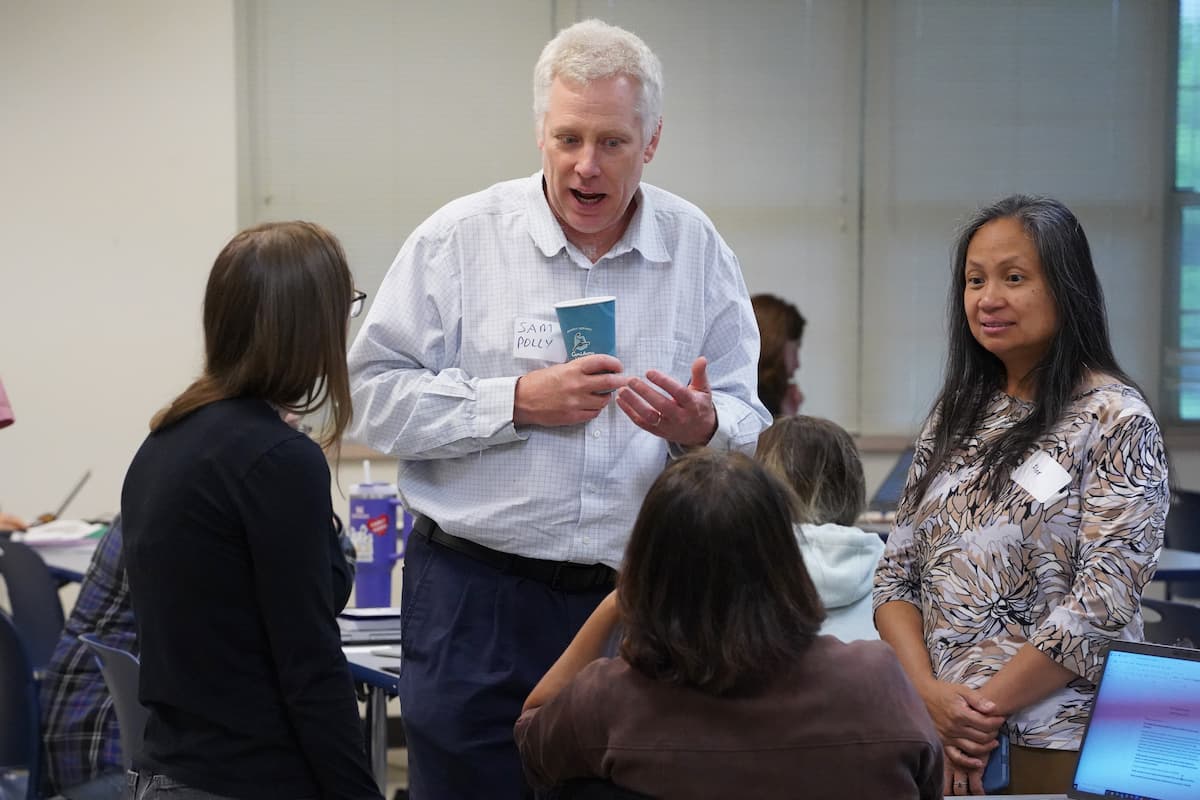 Attendees chat during a break between speakers at the Identification and Management of Vegetable and Fruit Diseases training on April 27.
One attendee, Sam Polly, said he enjoyed hearing from experts from various states, allowing him to receive the latest information and witness collaboration between MU, LU and other organizations.
Polly, extension specialist and director of pesticide safety education at MU, said he learned about the critical nature of up-front disease prevention, such as rotating crops and seeking disease-resistant plant varieties.
In line with the event’s goal, Polly said he’ll now be able to pass on information about new strawberry diseases and disease prevention techniques to the growers he works with.
Kaluwasha said she learned some new things, too.
“I certainly learned a lot on other topics by listening to the other speakers and attendees, like diseases in crops I don’t work with and management strategies that have worked for others,” Kaluwasha shared.
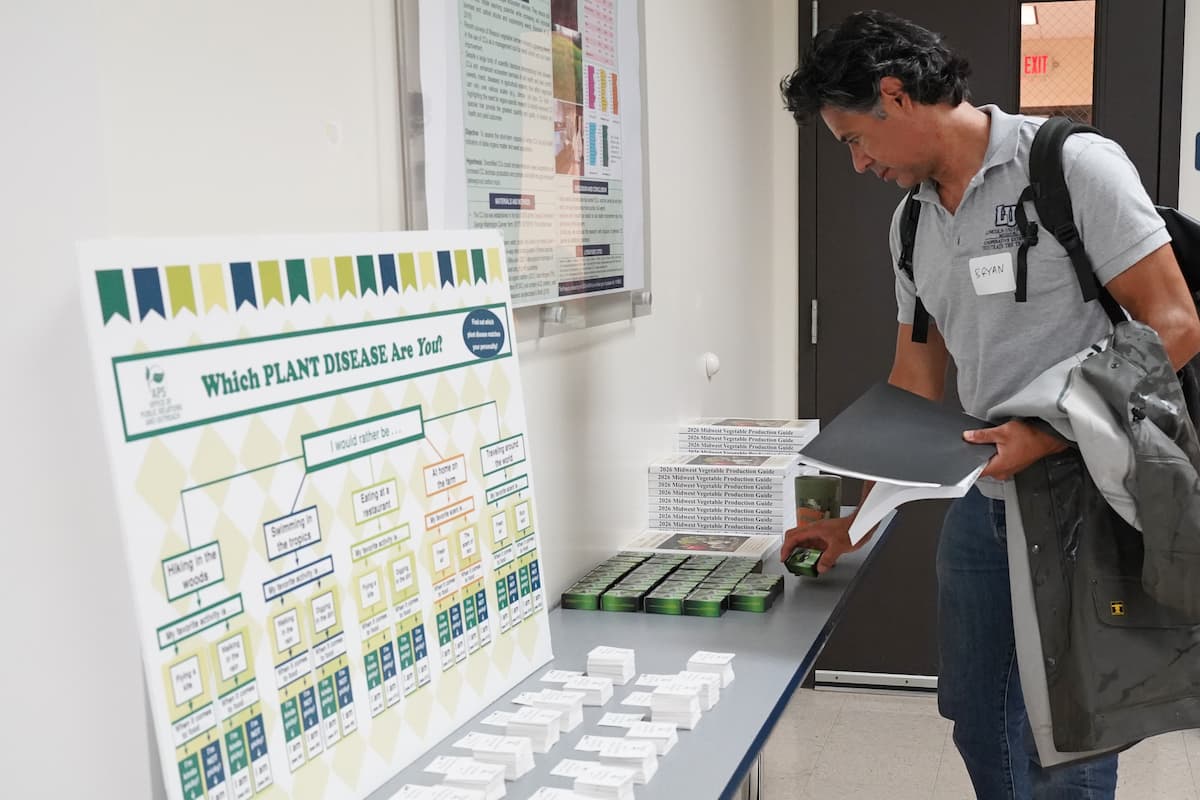 The event featured several resources for attendees, including a “Which Plant Disease Are You?” activity.
This training marked the third workshop put on by Kaluwasha focused on plant disease education. Looking toward the next iteration, she said she may add more time for Q&A, include talks on emerging diseases growers can watch for and tailor recommendations for different types of growers.
Kaluwasha’s workshop series aligns with Lincoln University’s broader mission to equip growers with the tools and knowledge needed to farm effectively and sustainably. Whether interacting with growers directly or equipping other educators with the latest knowledge, LU remains committed to supporting farmers and the communities they serve.
Read about last year’s event here, or visit Lincoln University’s event calendar to learn about future workshops and training opportunities.