
Lincoln University and NuTerra Farms Partner on Soy-Based Fish Feed Study
Office of Communications and Marketing
Young Hall
820 Chestnut Street
Jefferson City, MO 65101
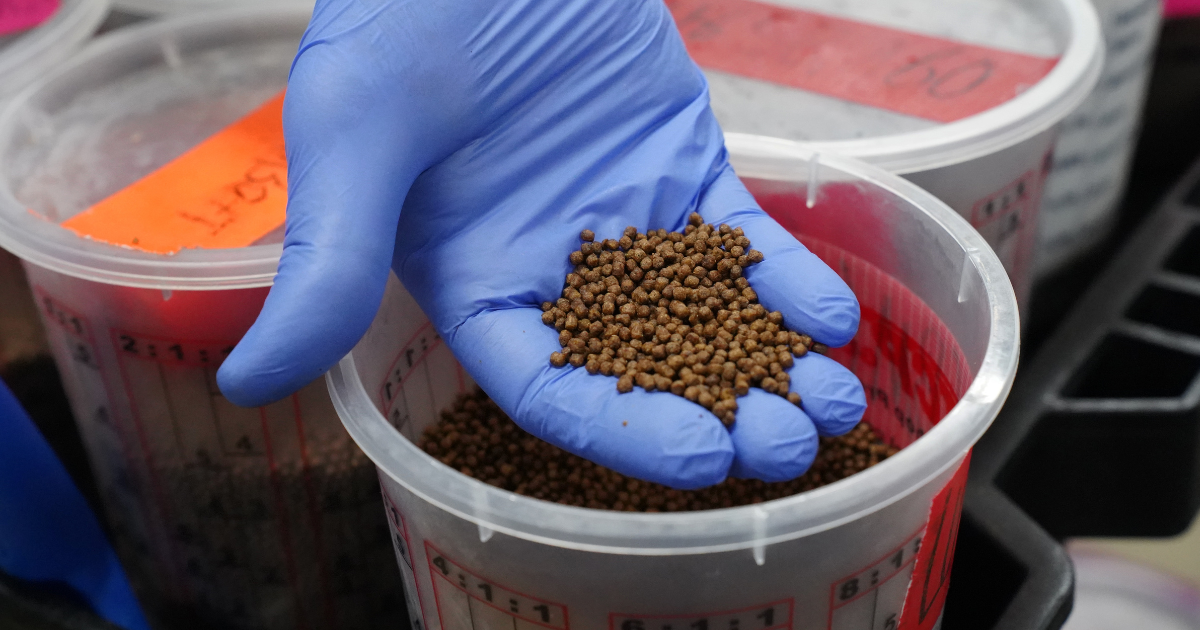 Soybean-based feed pellets are prepared for use in aquaculture diets as part of a study evaluating alternatives to traditional fish meal.
Lincoln University of Missouri (LU) is partnering with NuTerra Farms in Dexter, Missouri, to move soybean-based fish feed studies for largemouth bass beyond the lab. The research explores whether these diets can offer aquaculture producers a more affordable alternative to traditional fish meal while maintaining growth performance, feed efficiency and product quality.
“The goal is to develop practical, science-based solutions for aquaculture producers while also supporting local soybean farmers,” said Moureen Matuha, who leads fish nutrition studies in LU’s Aquaculture Program. “What makes our work different is that we are not only working in the lab, we are validating our findings on farms to ensure they are practical for producers.”
Researchers are evaluating soybean meal as an alternative to traditional fish meal because of its high protein content, favorable amino acid profile, availability and lower market cost. Fish meal, typically made from wild-caught fish, remains one of the most common and expensive protein sources used in aquaculture feeds.
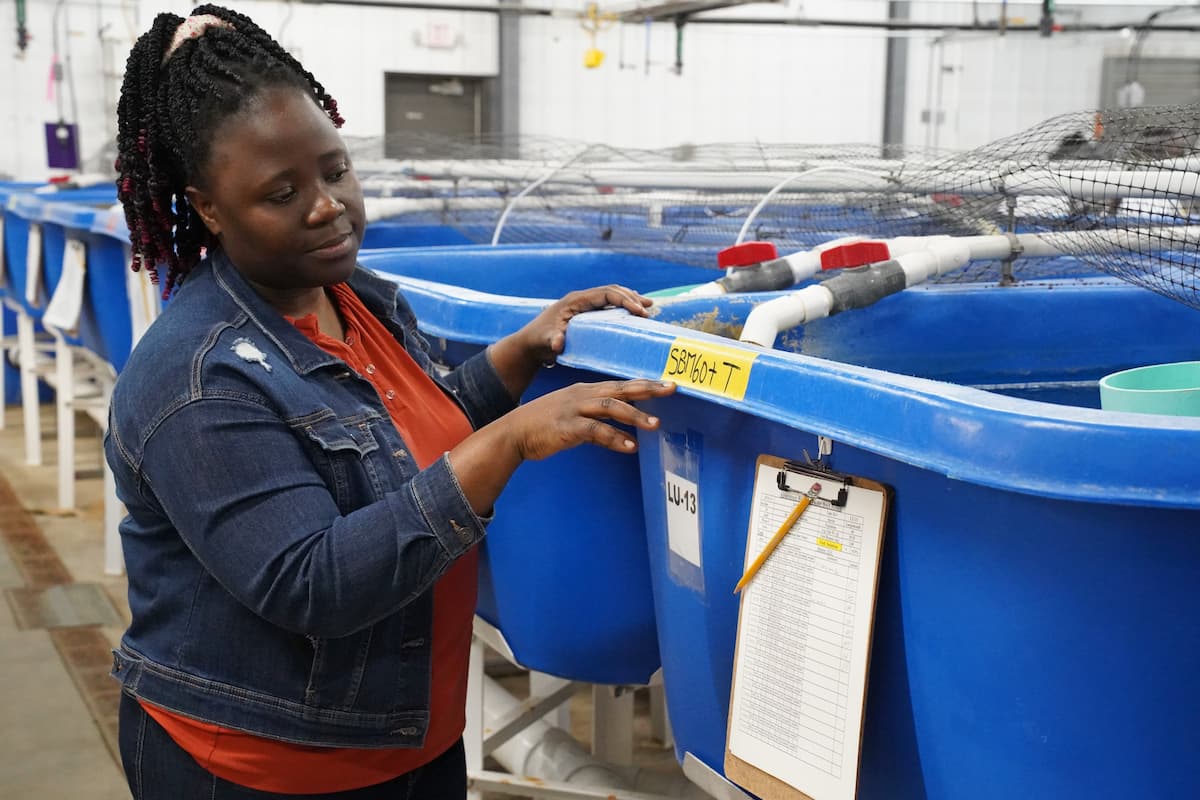 Moureen Matuha checks research tanks at LU’s Aquaculture Research Facility, where soybean-based diets are being tested in largemouth bass feeding studies.
“Feed accounts for the highest operational cost in aquaculture — often 50 to 70% of total production costs,” Matuha said. “Using soybean meal as an alternative protein source could lower production costs for fish producers while creating new demand opportunities for soybean growers.”
Previous research at LU’s Aquaculture Research Facility tested soybean-based diets in juvenile largemouth bass for more than 12 weeks. Early findings showed conventional soybean meal could replace up to 60% of fish meal without negatively affecting growth performance, feed efficiency, product quality or water quality.
At NuTerra Farms, researchers are now testing those findings under real-world farm conditions during a six-month feeding study. The Dexter-based operation has expanded from greenhouse production into aquaculture and includes multiple ponds stocked with largemouth bass and other species, including catfish, fathead minnows, bluegill and black crappie.
 Howard Magill (center) speaks with attendees during a field day at NuTerra Farms in Dexter, Missouri, where Lincoln University of Missouri researchers and partners discussed on-farm feeding trials for largemouth bass.
The on-farm feeding trial is part of the project "Optimizing Soy Inclusion in Largemouth Bass Feeds: Balancing Fish Performance, Economic Viability and Environmental Impact," an initiative funded in part by the Soy Aquaculture Alliance and Missouri Soybean Merchandising Council through Missouri soybean farmers and their checkoff. The checkoff program invests in research and market development, including opportunities to build new markets for soybeans.
An April 11 field day marked the transition to the on-farm feeding trial, bringing together fish farmers, soybean producers and feed manufacturers. The event opened with presentations at the Dexter Chamber of Commerce before continuing at NuTerra Farms with on-site demonstrations on water quality testing, feeding practices and pond management.
Howard Magill, who operates NuTerra Farms with his family, said the partnership came at the right time. They were already preparing ponds for largemouth bass when LU researchers began looking for a producer willing to host a long-term study.
“There’s been concern in the industry about soy-based feed affecting water quality and fish health, so we wanted to be part of something that could either confirm or clear that up,” Magill said.
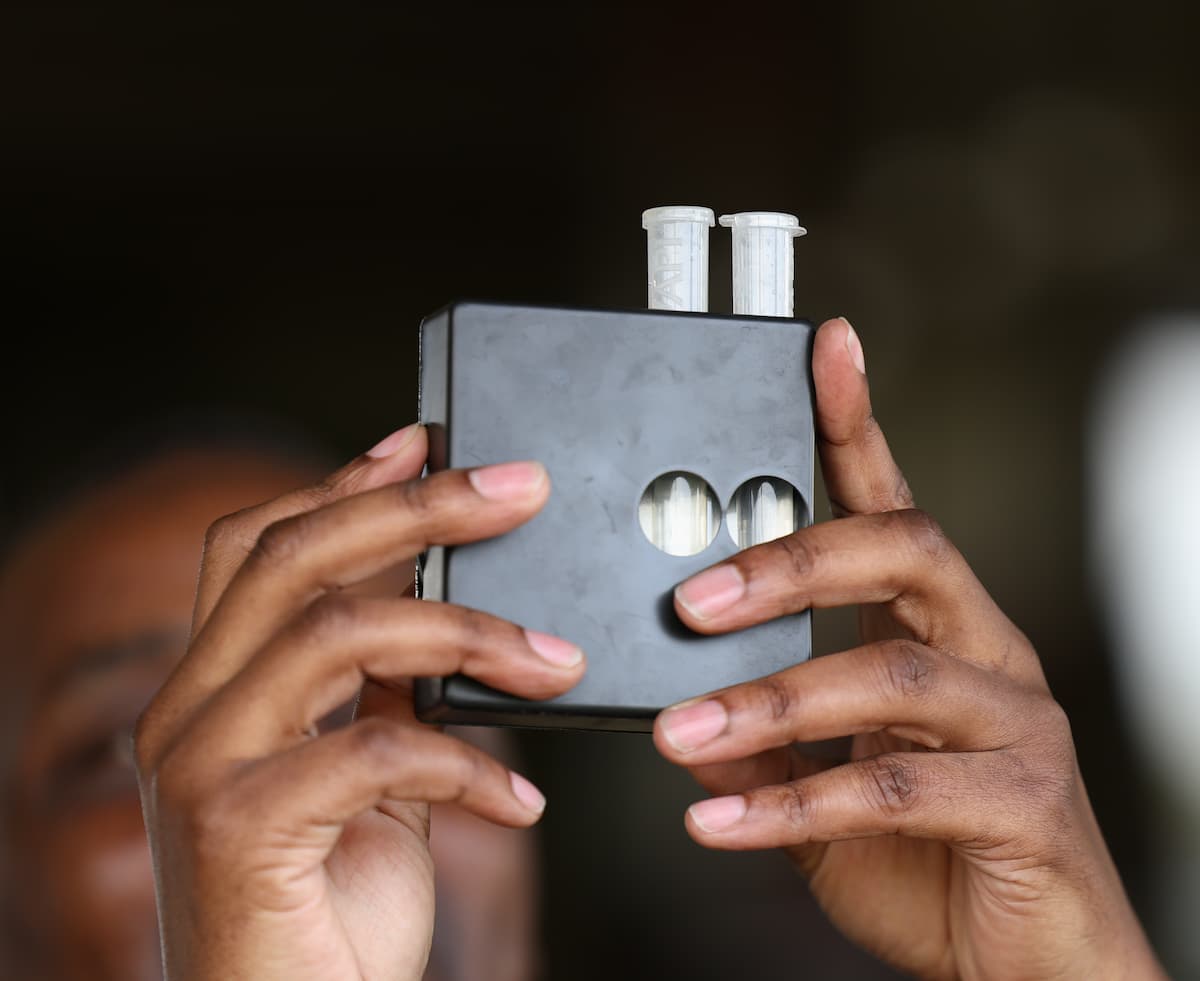 John Maiyo, assistant professor of water quality and co-principal investigator on the project, demonstrates a handheld device used to monitor water quality during aquaculture operations.
Early observations show the fish are feeding well, with visible growth in the first weeks. Continued monitoring will track performance over time.
As the trial continues, the team plans to evaluate final product quality through sensory analysis, including taste, texture, aroma, nutrient composition and overall appeal.
“You cannot introduce a novel fish feed ingredient without understanding its impact on the final product for consumers,” Matuha said. “We are evaluating whether soybean-based diets affect the sensory profile and nutrient composition of largemouth bass.”
Beyond performance and product quality, the research also points to a largely untapped market. Most soybean meal used in the United States currently goes to poultry, swine and cattle, while aquaculture remains a small but growing sector.
Matt Amick, director of market development for the Missouri Soybean Merchandising Council, said partnerships like this help expand awareness and opportunity for both fish producers and soybean growers.
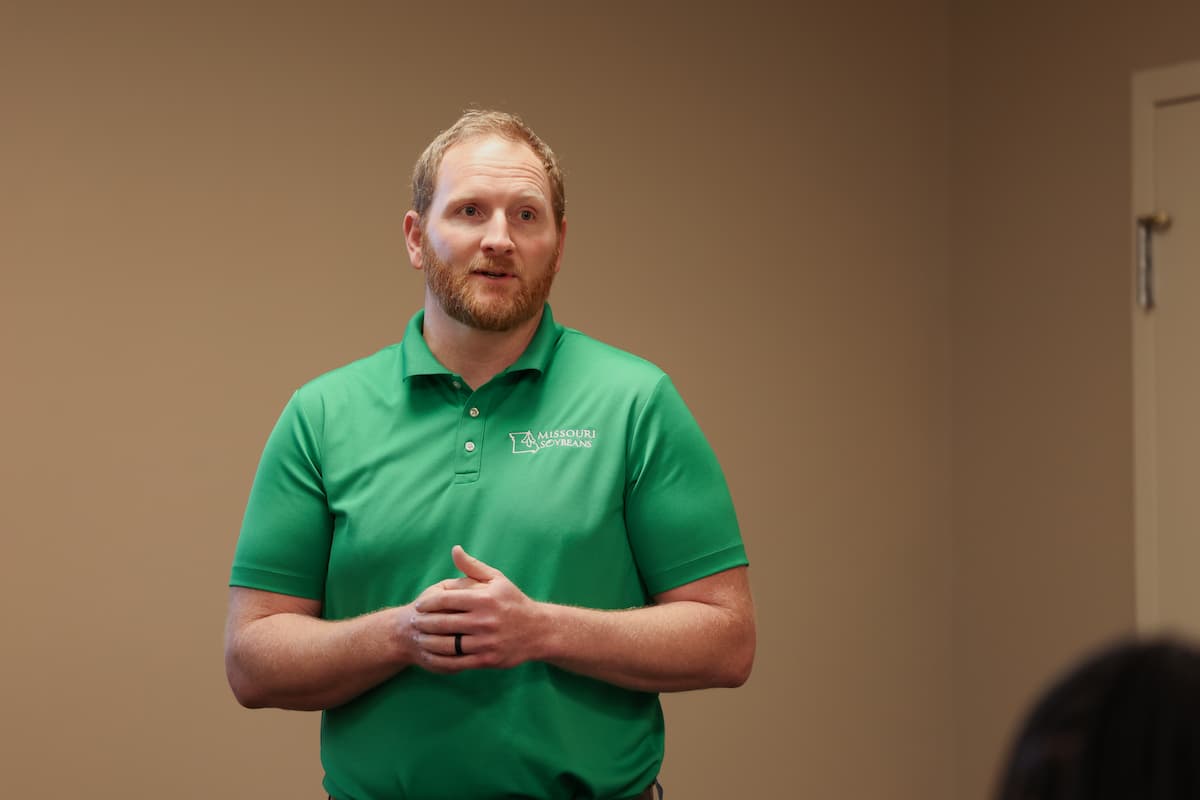 Matt Amick of the Missouri Soybean Merchandising Council speaks during the April 11 field day in Dexter, Missouri, where producers, researchers and industry partners discussed soybean-based feed studies for largemouth bass.
“Moving more aquaculture production within our borders and inland to the Midwest presents diversification opportunities for farmers, new markets for soybean farmers to use soybean meal in feed and better food security for consumers,” Amick said. “While the market for soy in aquaculture is relatively small at this point, on-farm, practical research such as the partnership between the Missouri Soybean Merchandising Council, Soy Aquaculture Alliance, Lincoln University and NuTerra Farms is vital to expanding awareness and growth for fish and soybean farmers.”
He said the field day showed the value of bringing producers, researchers and industry partners into the same conversation.
“It was great to see the dialogue and knowledge-sharing happening between researchers and farmers,” Amick said. “We have to be innovative and find effective ways to support our Midwestern aquaculture farmers if this industry is to grow.”
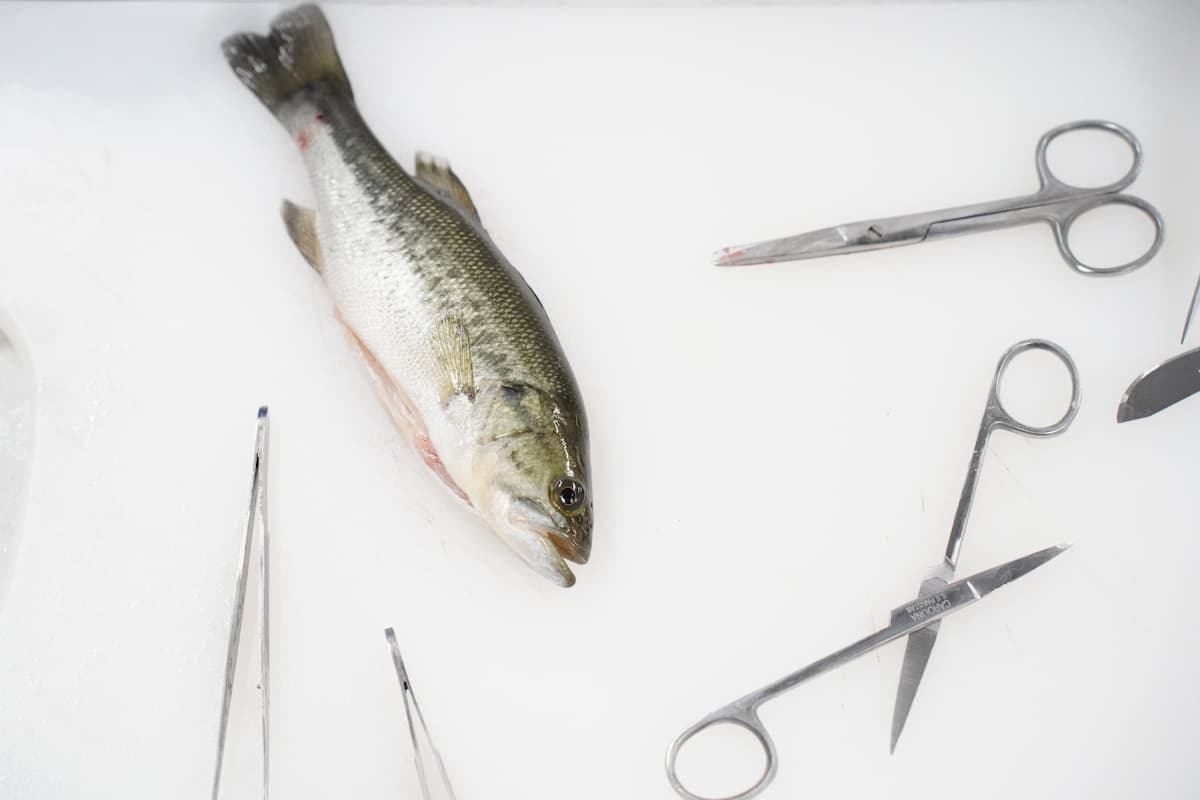 Largemouth bass sampled at Lincoln University of Missouri are part of ongoing research evaluating how soybean-based feeds influence fish growth, gut health, enzyme activity and product quality
Along with the NuTerra Farms trial, LU researchers are continuing related lab studies involving largemouth bass at different growth stages, as well as separate studies involving rainbow trout. Together, the work is helping researchers better understand how soybean-based feeds perform across species, settings and production stages.
For more information on this project, contact Moureen Matuha at MatuhaM@lincolnu.edu.