Strength in Excellence: Celebrating Distinguished Faculty and Staff at Lincoln University
Office of Communications and Marketing
Young Hall
820 Chestnut Street
Jefferson City, MO 65101
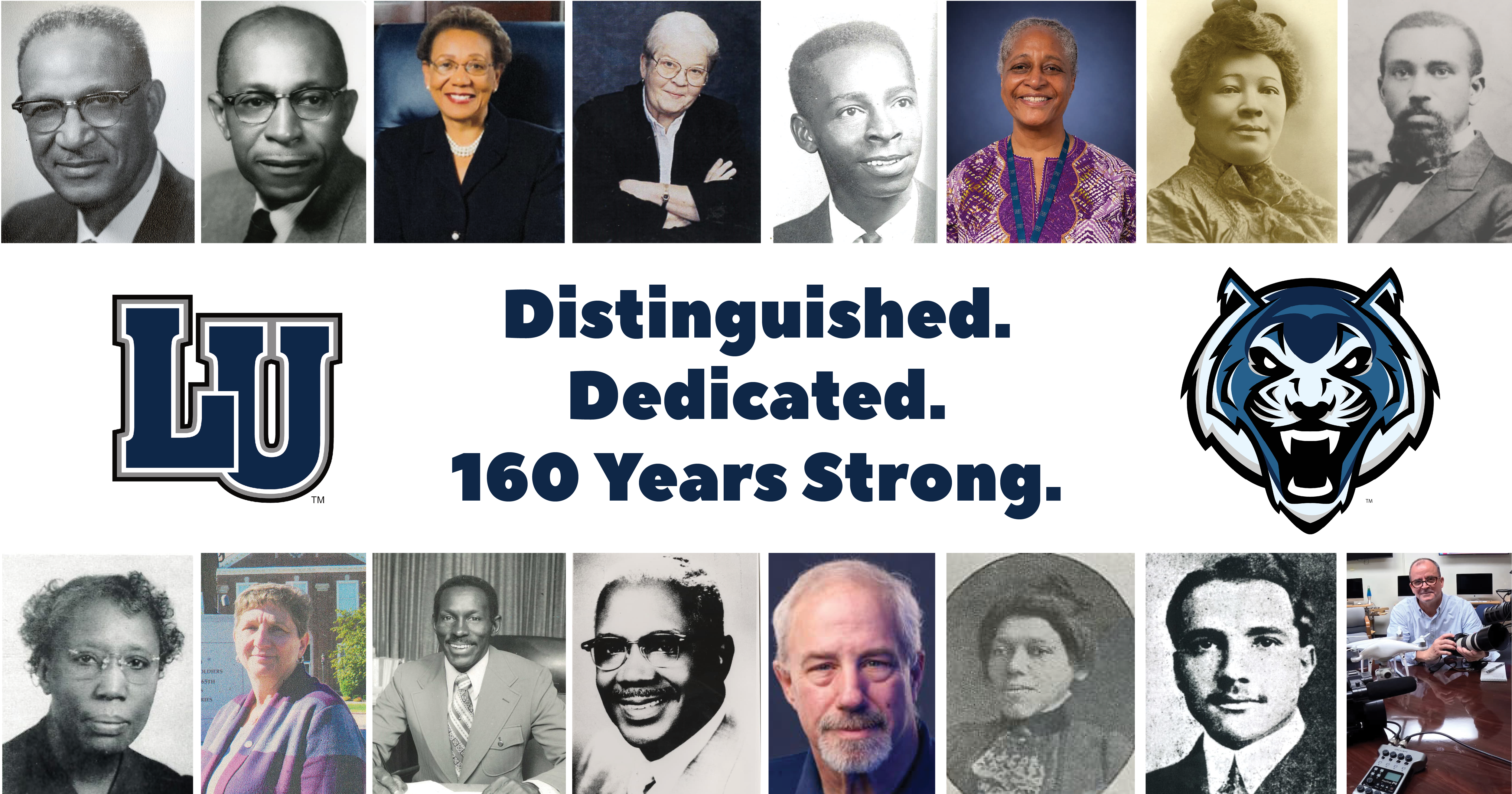 Lincoln University of Missouri honors distinguished faculty and staff. Photos courtesy of the LU Archives.
As Lincoln University of Missouri marks its 160th anniversary, we proudly recognize the faculty and staff whose dedication, leadership and commitment to student success have shaped the university across generations. Spanning decades of Lincoln University history, the individuals featured here reflect the lasting excellence, service and sense of community that define the institution. Through their work in classrooms, offices and programs across campus, they have advanced academic achievement, fostered meaningful connections and upheld the values that continue to guide Lincoln University today.
Honoring LU Faculty
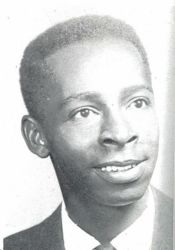 Theodore R. Bryant
Theodore R. Bryant arrived on Lincoln University’s campus in 1962 from Lima, Ohio. Born in Memphis, Tennessee, he attended Pepperdine University and received his A.B. and M.A. in psychology. While visiting his grandmother in Texas, he met his wife, Clara Robertson, and they were married. The couple had three children: Ithaca, Theodore and Clara. Prior to coming to Lincoln, he was director of the Ohio State Mental Hospital. After arriving at LU, he became director of testing and counseling.
During Bryant’s tenure, he started the Psychology Department and created testing programs for Missouri State Highway Patrol cadets. He retired in 1995 and became professor emeritus of psychology. He died in December 1997.
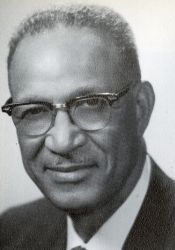 James Freeman
James Freeman, a longtime agriculture leader at Lincoln University, was born in Kansas City, Kansas, in 1904. After earning bachelor’s and master’s degrees in agriculture from Hampton Institute in Virginia, he attended Cornell University, where he earned a Ph.D.
After brief teaching stints in Virginia, North Carolina and Texas, Freeman came to Lincoln University in 1940 as an agriculture professor and quickly became head of the department. In 1967, he was appointed chairman of the School of Arts and Sciences.
A prolific writer, Freeman authored several books and scholarly articles on agriculture. He died in 1974. Three years later, Freeman Farm was named in his honor.
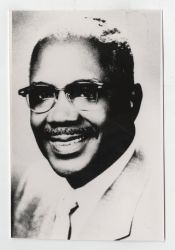 Oscar Anderson Fuller
Oscar Anderson Fuller was the heart and soul of the Lincoln University music department from 1942 to 1974. Born in 1904 in Marshall, Texas, he earned a bachelor’s degree from Bishop College, where his father served as dean. He later studied at the New England Conservatory and the University of Iowa, where he earned a master’s degree and became the first African American to receive a Ph.D. in music.
After teaching at North Carolina A&T State University and Prairie View State University, he came to Lincoln in 1942 and guided the music program to accreditation from the National Association of Schools of Music. Under his direction, the faculty expanded significantly, and degrees including bachelor of music, bachelor of music education and music therapy were added. After retirement, he was named professor emeritus of music.
Fuller was also active in the Jefferson City community, serving on the board of Saint Mary’s Health Care Center, as president of the Kiwanis Club and the Knights of Columbus, and as organist for Immaculate Conception Catholic Church. He died in August 1989.
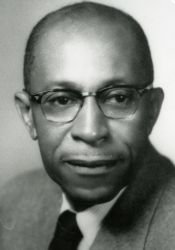 Lorenzo Greene
Lorenzo Greene came to Lincoln University in 1933 as an instructor in history. He spent 39 years at the university, serving as department head and editor of the Midwest Journal.
Before coming to Lincoln, Greene worked with Carter G. Woodson, the father of Black history, beginning with research on New England African American churches. In 1939, Greene led efforts with Lincoln students to aid victims of the Sharecroppers Strike in southeast Missouri.
Greene retired in 1972 and was named professor emeritus. He assisted with an oral history project in 1975. He died in January 1988. In 2012, Lorenzo J. Greene Hall was named in his honor.
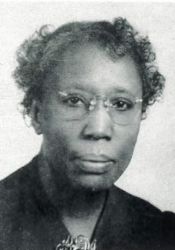 Azalea Martin
Azalea Martin, a native of Valley Falls, Kansas, was a teacher education professor at Lincoln University from 1930 to 1957. She earned a bachelor’s degree from Fisk University and a master’s degree in education from Columbia University in 1930 before joining Lincoln the same year. Martin was one of the original faculty members of the institution known as the “Black Harvard of the Midwest.”
At her retirement in 1957, she was praised by Dr. Sidney Reedy as “an example for all students to emulate.” Martin Residence Hall is named in her honor.
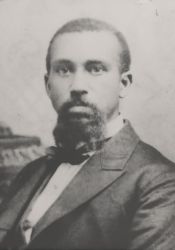 William H. Payne
William H. Payne was born in Covington, Kentucky, in 1844 to free parents. The family moved to Mercer County, Ohio, when he was 4 years old. Payne was educated at Adrian College in Michigan, where he excelled in mathematics and studied advanced mathematics, science, classics and the German and French languages.
He came to Lincoln Institute in 1868 as an instructor and became the first African American principal of the school in 1870. He worked with Missouri Gov. Fletcher, J. Milton Turner and U.S. Circuit Judge Arnold Krekel to strengthen the institution.
After leaving Lincoln in 1871, Payne moved to Louisiana, where he became a successful landowner and expanded holdings to Illinois and Western states. He was a founding member of the Universal Brotherhood and Mutual Aid Department. Payne died in 1926 at the age of 85.
 William Sites
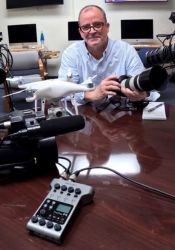
William Sites, an associate professor of journalism, has been on the Lincoln campus since 2014. A Missouri native, he originally planned to become a lawyer but chose journalism after success as a freelance writer. He earned a degree in journalism from the University of North Alabama. After working as a reporter and editor, he founded a community news media company near St. Louis.
As the internet transformed journalism, Sites earned a master’s degree from the Reynolds School of Journalism at the University of Nevada, Reno. While teaching there, he developed a passion for the classroom.
At Lincoln, he transformed the student newspaper, the Lincoln Clarion, into an online publication, myclarionnews.com. He also helped establish the university’s first HBCU drone journalism program and expanded the curriculum to include podcasting. In 2018, he received the Governor’s Award for Excellence in Education.
 Gloria Williams
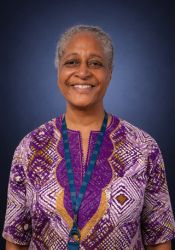
Gloria Williams is an assistant professor at Lincoln University with more than 24 years of experience specializing in Spanish and French. She attended primary school in Borås, Sweden, and St. Jago High School in Spanish Town, Jamaica. She earned a B.A. in Spanish and French from Pacific Lutheran University, a master’s degree in Spanish and an M.Ed. in curriculum and instruction from the University of Missouri–Columbia.
She is a member of the Spanish Honor Society, the Foreign Languages Association of Missouri and the American Council on the Teaching of Foreign Languages. She serves on Lincoln University’s International Study Abroad Advisory Group.
Williams emphasizes a holistic approach to language instruction that includes culture, history and politics. She values student engagement and remains committed to teaching.
 Linda Wyman
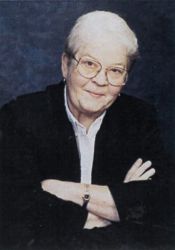
Linda Wyman was an English professor at Lincoln University from 1975 to 2011. A native of Rockford, Illinois, she earned a bachelor’s degree from Southern Methodist University, a master’s degree in English from the University of Missouri and a doctorate from George Peabody College for Teachers. She also studied at the Royal Shakespeare Theatre Summer School in Stratford, England.
Before joining Lincoln, she taught at Christian College, Western Kentucky University and Motlow State Community College. At Lincoln, she chaired the Department of English, Foreign Languages and Philosophy and established an honors program that continues today. She was active in professional organizations, including serving as president and editor of the Missouri Association of Teachers of English and as an officer for the T.S. Eliot Society. Wyman died in 2011.
 Josephine Silone Yates
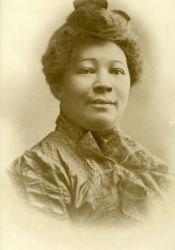
Josephine Silone Yates was active at Lincoln University in the late 19th and early 20th centuries. She was the first woman elected to a professorship at the university. She served as head of the Department of Natural Science from 1879 to 1889 and head of the Department of English and History from 1902 to 1910.
Yates also served as the first president of the Kansas City Women’s League and held leadership roles in the National Association of Colored Women, including vice president, treasurer and president.
Yates Residence Hall for honor students is named in her memory.
Honoring LU Staff
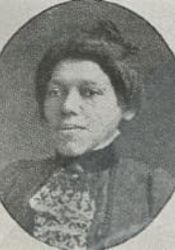 Libbie Coleman Anthony
Libbie Coleman Anthony characterized her work by saying, “The future of the race depends on the training of the children of today.”
Born around 1860 in Missouri, Libbie Coleman was a teacher. She also worked as a state organizer and superintendent of the Department of Colored Work for the Woman’s Christian Temperance Union (WCTU). A practicing Baptist, Coleman, like many of her contemporaries, worked tirelessly in the temperance movement.
On Aug. 14, 1889, she married Elmore Lee Anthony in St. Louis. The couple adopted a daughter, Anna, between 1900 and 1910.
Anthony taught in the Jefferson City Public Schools. In 1892, she joined Lincoln Institute as matron and also taught home economics. Lincoln University later named Anthony Residence Hall in her honor. Of the four New Deal-era buildings constructed at Lincoln, Anthony Hall was the only one named for a woman.
Anthony also participated in the women’s club movement as president of the Colored Women’s Club of Jefferson City during the 1890s. She was described in one article as “strikingly beautiful in her devotion.” She also served as treasurer of the National Federation of Afro-American Women and the National Association of Colored Women.
Anthony died Dec. 12, 1933. Her husband predeceased her in 1926. She was buried beside him in Jefferson City National Cemetery two days after her death.
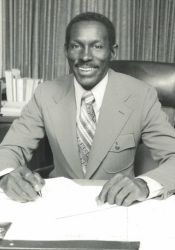 James Frank
James Frank, the 18th president of Lincoln University, was born in Aliquippa, Pennsylvania. After a standout high school basketball career, he enrolled at Lincoln University in 1949. During his collegiate career, he earned All-Conference honors as a guard and served as team captain during his junior and senior years. He graduated in 1953.
After graduation, Frank served as assistant and later head basketball coach at Lincoln until 1959. He later attended Springfield College in Massachusetts, earning a master’s degree in science education and a doctorate in education with an emphasis in college administration.
Frank later taught at Hunter College as an assistant professor of health and physical education. In 1968, he became vice president for academic affairs at Medgar Evers College, where he helped develop academic and administrative policies. He also published numerous articles in professional journals.
On April 6, 1974, Frank became the first Lincoln alumnus to be inaugurated as president of the university. In his inaugural address, he emphasized expanded educational and cultural outreach. During his presidency, the university established an animal research facility, hired 118 faculty members and reorganized its administration.
By 1982, Frank and the Board of Curators disagreed over the university’s direction, and he was dismissed on Oct. 26.
Frank also served as secretary-treasurer of the National Collegiate Athletic Association from 1979 to 1980 and was named NCAA president in 1981, serving until 1982. He was the first African American to hold either position.
After leaving Lincoln, Frank became commissioner of the Southwestern Athletic Conference, serving from 1983 to 1998 and again as interim commissioner from 2001 to 2002. Frank died in 2019. He was married to Zelma Frank for 60 years.
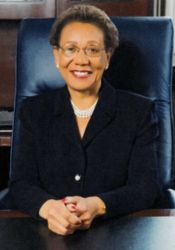 Carolyn Mahoney
Carolyn Mahoney, the 18th president of Lincoln University, is a native of Memphis, Tennessee. She began her undergraduate studies at Mount St. Scholastica College in Atchison, Kansas, and later earned a bachelor’s degree in mathematics summa cum laude from Siena College in Memphis.
She earned a master’s degree in 1972 and a Ph.D. in 1984, both in mathematics, from Ohio State University.
Mahoney worked at Denison University and Ohio State University after completing her doctorate. She was one of the founding faculty members at California State University, San Marcos. She later served at the National Science Foundation and as an administrator at Elizabeth State University.
In 2014, Mahoney became Lincoln University’s first female president. During her tenure, enrollment increased and the university added the Sherman Scruggs Residence Hall. Mahoney retired in 2022.
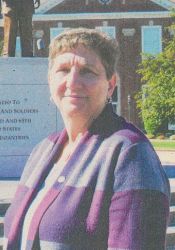 Rose Ann Ortmeyer
Rose Ann Ortmeyer, executive assistant to the president of Lincoln University and recording secretary of the Board of Curators, has been on campus since 1974. A native of Taos, Missouri, she graduated from Blair Oaks High School in 1975 and began working full time as secretary to Thomas D. Pawley, dean of the College of Arts and Sciences.
In 1981, she became administrative assistant to interim president John Chavis. While working full time, she earned a bachelor’s degree in business administration and secretarial science.
Ortmeyer has served under seven Lincoln University presidents and transitioned to part-time status in 2018. Her duties have included managing the president’s schedule, assisting alumni and media, and recording minutes for Board of Curators meetings.
In a 2018 interview, she said, “I’ve made it my mission to get out there and know the faculty, the staff and the students. I guess I became a mentor, a big sister and, eventually, a mom to some of the students.”
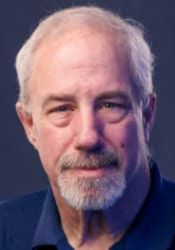 Mark Schleer
Mark Schleer is director of the Archives and Ethnic Studies Center at Lincoln University, where he oversees preservation, research and educational outreach. He earned a bachelor’s degree in history and political science from Central Missouri State University and a master’s degree in history from Lincoln University in 2007.
His interest in archives is rooted in a family connection to the university; his great-great-grandfather’s hardware store employed Lincoln students.
Under his leadership, the archives have expanded programs and resources, including the discovery of a time capsule in Jason Gymnasium in 2009. Schleer has presented “The Black Harvard of the Midwest: A Student’s Perspective” and is currently working on digitizing vertical files, upgrading museum facilities in Page Library and contributing to an upcoming HBCU encyclopedia.
Schleer and his wife, Marguerite, live in Jefferson City and have three sons, five grandchildren and three great-grandchildren.
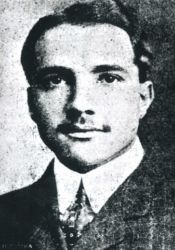 Romeo West
Romeo West was born in 1879 in St. Louis, Missouri. At age 14, he enrolled at Lincoln Institute in the preparatory academy under instructor and future president Benjamin Franklin Allen. After graduating from the academy, he earned a two-year degree in pedagogy from the normal program.
As a student, West was active in athletics and served as captain of the football team in 1899 and 1900. After graduation, he remained at Lincoln as personal secretary to President Allen.
In 1905, West became head librarian, the first man to hold the position. In 1907, he also became head coach of the football and baseball teams. In 1916, he was appointed director of men’s and women’s dormitories.
In 1917, West was killed during a dispute with Theodore Martin, a cafeteria steward. Martin was later acquitted on grounds of self-defense. West was 38 years old at the time of his death.
As Lincoln University celebrates 160 years of history and progress, we extend our deepest gratitude to the faculty and staff whose dedication continues to shape the student experience and strengthen our campus community. Their commitment reflects the enduring spirit of Lincoln — one built on excellence, service and a shared belief in the power of education.
This feature highlights just a selection of the many distinguished faculty and staff members who have contributed to Lincoln University’s enduring legacy and success over the years. Photos and bios are courtesy of the Lincoln University Archives.