
Lincoln University Researcher Studies Ram Fertility, Explores Hemp-Based Feed Impacts
Office of Communications and Marketing
Young Hall
820 Chestnut Street
Jefferson City, MO 65101
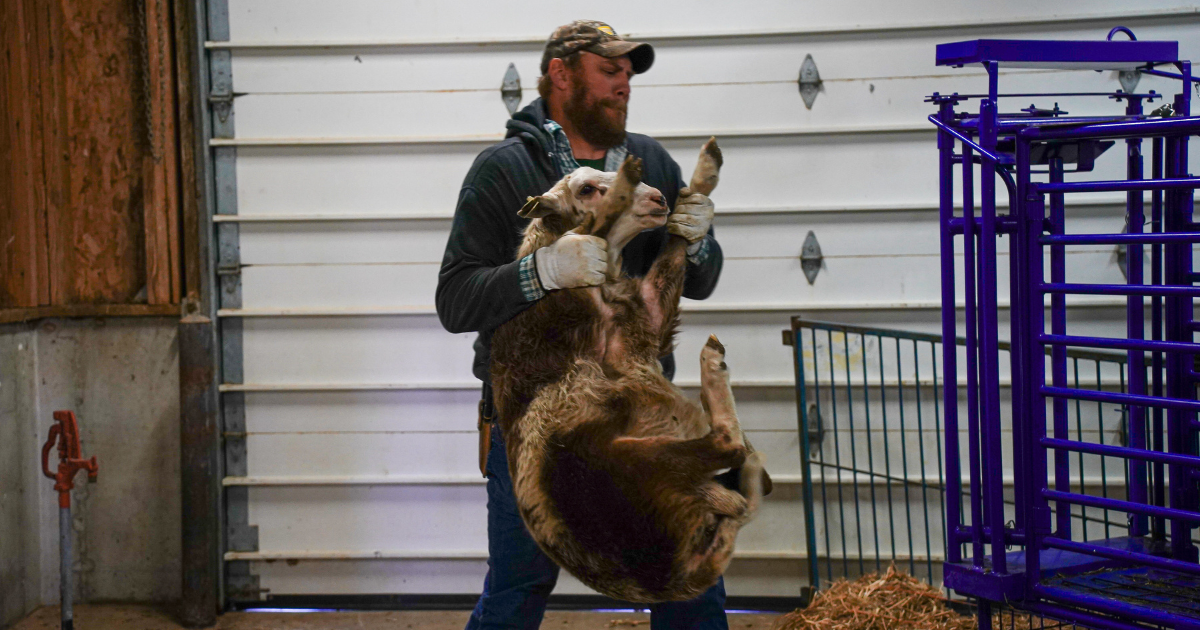 An LU farm worker carries a ram to a table for semen sample collection.
An active research project at Lincoln University of Missouri (LU) is helping researchers better understand ram fertility by studying reproductive samples in the lab. The project will also evaluate how feeding rams spent hemp biomass may affect sperm quality, contributing to a broader effort to expand uses for the university’s hemp institute.
Jessica Epple-Farmer, assistant professor of animal science at LU, leads the ram semen analysis project, working alongside a team of dedicated students and research assistants to evaluate samples. Specializing in reproductive science, she has been with the university since 2020.
Epple-Farmer and her team study semen collected from rams to see how well the sperm move, how healthy they are and whether there is any damage to the cells. The work begins on the farm, where samples are collected using a machine that stimulates the animal and causes semen to be released quickly.
A newly added chute system makes the process safer and more efficient by lifting the animals, allowing for quick transportation of samples to the lab for testing. Timing is critical for these tests, as semen is highly sensitive.
“Everything kills semen — sunlight, soap, temperature change, water,” Epple-Farmer said. “Ram semen is some of the most temperature-sensitive. It does not respond well to the freezing process.”
Because frozen semen does not perform as well, veterinarians often use a minor surgical procedure to place it directly into the reproductive tract. Current research recommends using chilled semen within 24 hours, but Epple-Farmer said early findings show little difference between using it at 24 or 48 hours in some younger animals.
The team has found that freezing and thawing ram semen greatly reduces the cells’ energy levels — something not usually seen in other livestock. Even when samples are only chilled, many sperm cells die, but because each sample contains so many, the loss usually does not have a major impact.
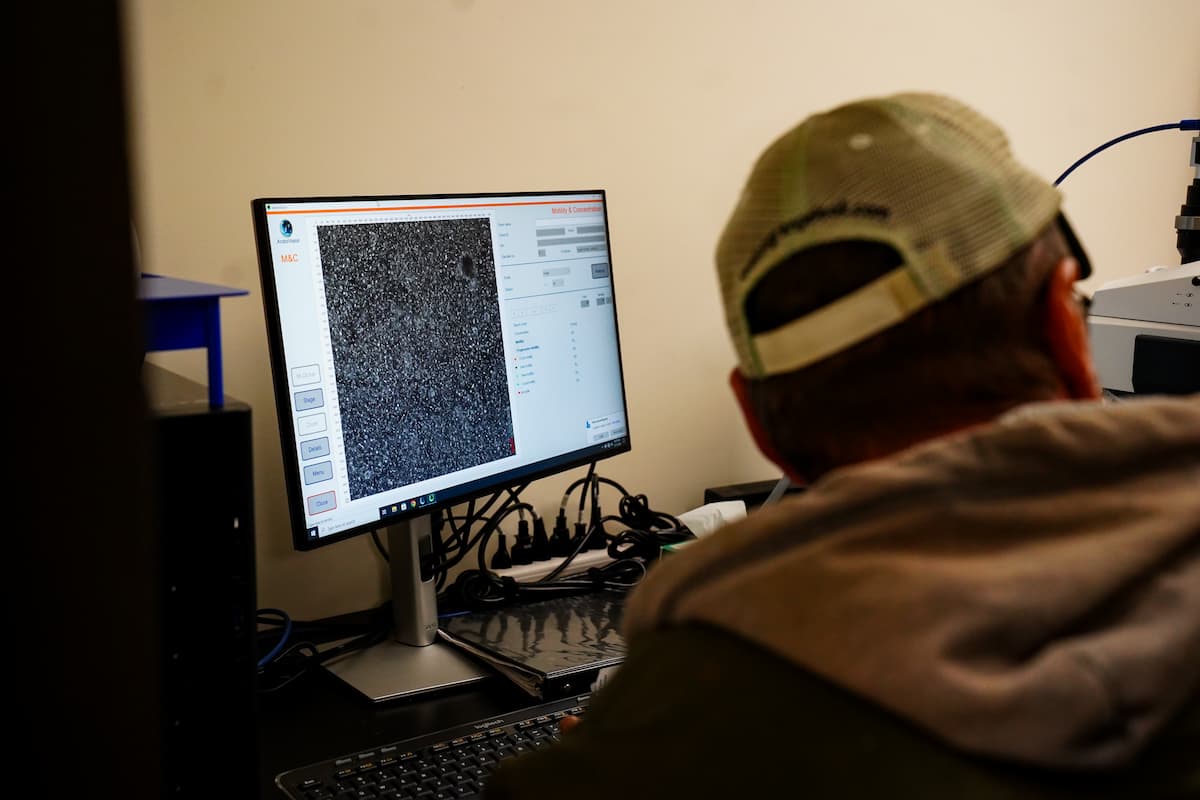 A microscope image displayed on a computer screen shows a ram semen sample being checked for movement.
Future phases of the research will examine the effects of feeding rams spent hemp biomass — a byproduct of cannabidiol (CBD) extraction — as an alternative protein source to soybeans.
“At weaning, we’ll put them on a spent hemp feeding trial,” Epple-Farmer said. “We have a hemp institute here, and we’re trying to promote the uses for hemp.”
While some human studies have linked regular marijuana use to sperm damage, Epple-Farmer said spent hemp biomass does not contain the same active compounds as marijuana and is not expected to harm the animals. If any changes do occur, researchers will study whether the animals return to normal once they go back to a typical soybean-based diet.
“I’m creating a baseline,” she said. “We need to be able to tell the USDA and farmers it’s safe for the animals to consume the spent hemp and for people to then consume the animals.”
The team uses Computer Automated Semen Analysis (CASA) technology to study the samples and is working to improve how they measure cells’ energy levels and check for DNA damage.
Epple-Farmer said some common ways of measuring semen quality may not show all damage inside the cells, meaning testing methods need to be improved.
“We’re making sure we have the techniques down,” Epple-Farmer said.
In early trials, the team was only able to analyze seven samples in a session, but after improving their process, they increased that number to 18 samples per session.
“We needed practice doing all these tests because for one sample they take three and a half hours,” Epple-Farmer said. “Functionally, the time constraints made it challenging to lay out the experiment because we couldn’t get all 64 animals.”
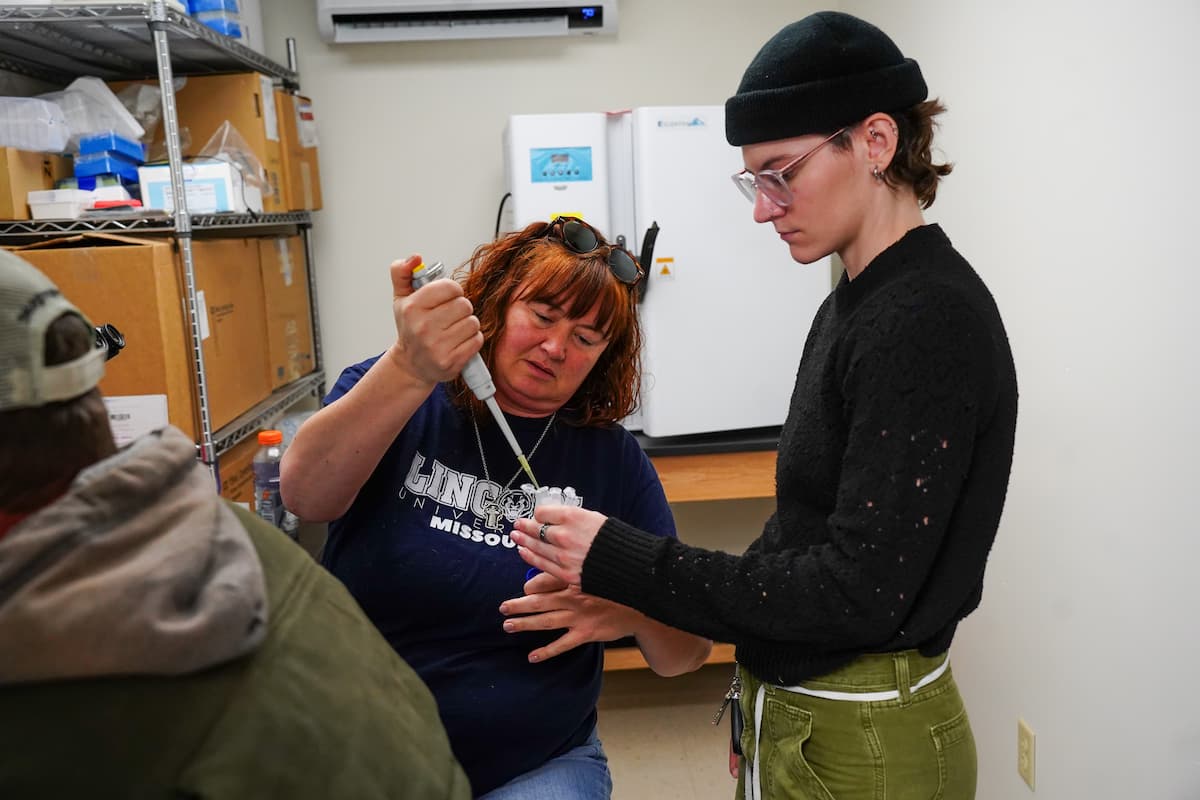 Jessica Epple-Farmer, Ph.D., puts collected semen samples into test tubes.
Samples collected during both breeding and non-breeding seasons are also being compared, providing insight into how fertility fluctuates throughout the year. Rams naturally breed when days are shorter, making them most fertile in the fall and winter.
In addition to semen analysis, the project evaluates the animals’ overall condition, including body conformation, growth rate, breeding behavior and parasite resistance—all factors that help inform breeding decisions.
Lincoln also plans to open a meat processing facility. This development will give researchers access to reproductive tissues from ewes, allowing for even more in-depth studies.
Epple-Farmer’s work highlights the university’s focus on hands-on agricultural innovation. By improving testing methods, studying alternative feed sources and evaluating breeding traits, the project aims to provide functional information for producers while strengthening animal management practices on LU farms.
The findings could also support producers, veterinarians and industry partners looking for data-driven ways to improve animal health, reproduction and long-term sustainability.