
LU Workshop Teaches Composting for Nutrient-Rich Soil
Office of Communications and Marketing
Young Hall
820 Chestnut Street
Jefferson City, MO 65101
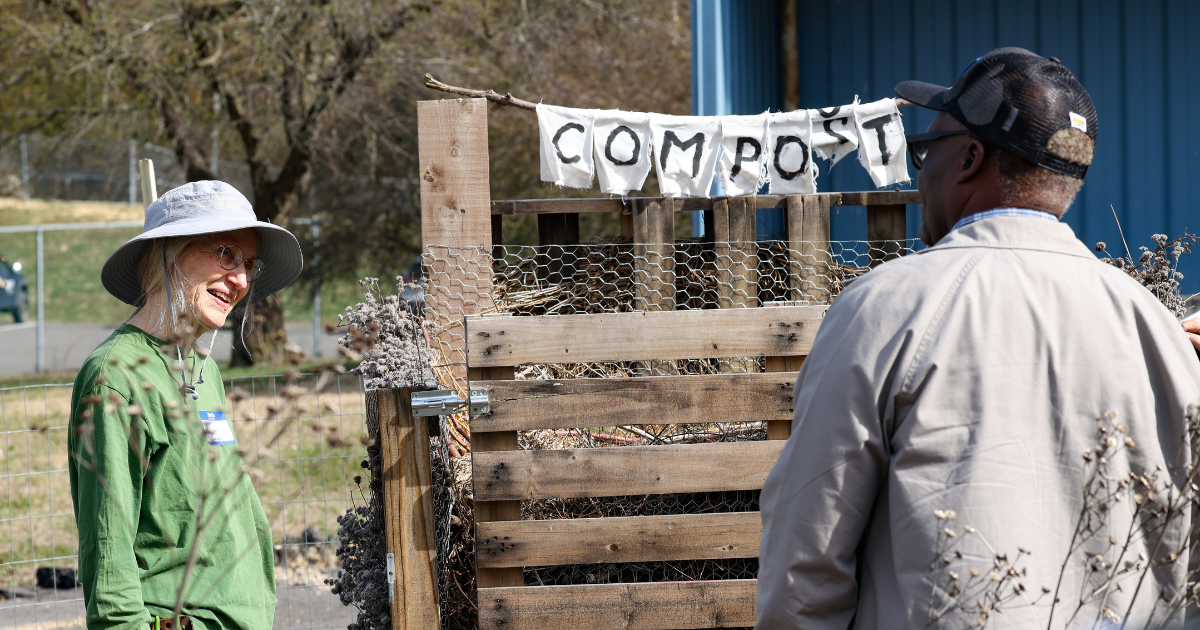 Lea Langdon demonstrates composting concepts while speaking with workshop participants at LU’s Finca EcoFarm.
What if yard debris and kitchen scraps could help build healthier soil? At Lincoln University of Missouri’s (LU) recent workshop, participants learned how composting turns everyday materials into a valuable resource for the garden.
LU Cooperative Extension’s Native and Specialty Crops Program hosted the compost workshop, led by special guest Lea Langdon of Wild Ones and the Missouri Native Plant Society. The event brought together gardeners, community members, students and beginners interested in gaining a better understanding of composting.
“Composting is like helping Mother Nature along,” Langdon said. “We’re mimicking the natural process, helping things break down and decompose.”
But as Langdon explained, the process takes more than simply tossing materials into a pile.
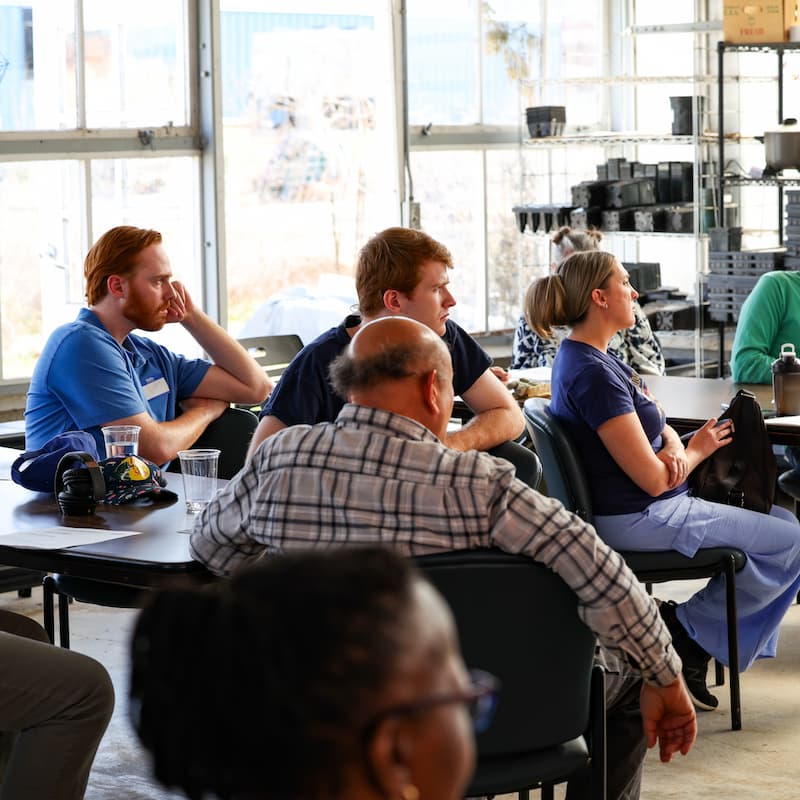 Attendees listen during a composting workshop session inside the Native and Specialty Crops Program’s teaching greenhouse.
Participants learned compost piles rely on a mix of “greens” and “browns.” Greens are usually fresher, wetter materials such as kitchen scraps, coffee grounds and fresh plant material, while browns include drier materials like leaves, straw and shredded cardboard.
Langdon explained that greens supply nitrogen and browns provide carbon, both of which support proper decomposition. A common recommendation is to use two parts browns to one part greens. Animal manure can also be a beneficial addition, though its high nitrogen content typically means more carbon-rich brown materials are needed to keep the pile balanced.
Airflow, moisture and particle size also affect how well compost breaks down. A compost pile should feel damp without becoming waterlogged. When those elements are in balance, the pile develops an earthy smell rather than a sour or unpleasant odor.
Langdon said finished compost returns nutrients and organic matter to the soil, helping improve structure, water retention and airflow. Over time, as gardening and plant growth deplete nutrients in the soil, composting offers a way to replenish them.
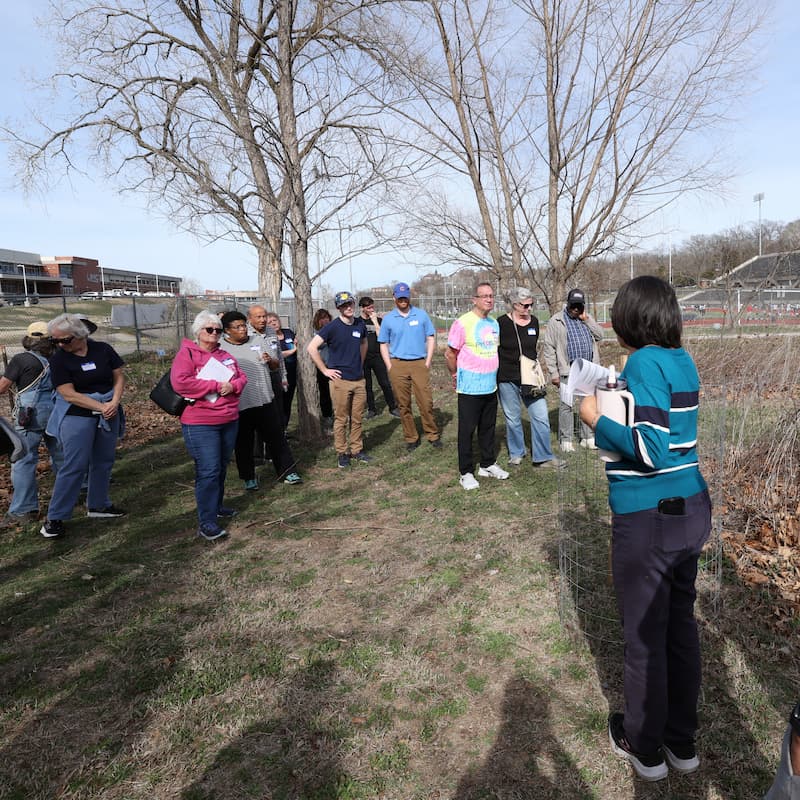 Nadia Navarrete-Tindall speaks with participants during an outdoor portion of a composting workshop.
Langdon outlined several ways to set up a compost system. Some gardeners use simple piles built directly on the ground, while others prefer contained bins, pallet systems or tumblers that help manage space and conditions. Regardless of the setup, turning the compost is important because it brings in oxygen and helps the pile break down more quickly.
The event continued at the Native and Specialty Crops Program’s Finca EcoFarm, an on-campus site used for teaching and demonstrations at Lincoln University. There, participants examined different compost setups and took part in a hands-on demonstration, layering greens and browns to build a compost pile based on the concepts covered during the workshop.
“I saw the flyer for the compost event at the Farmers Market, and I thought it sounded interesting because I want to get back into gardening,” attendee Sharon Williams said. “This is a great way to learn.”
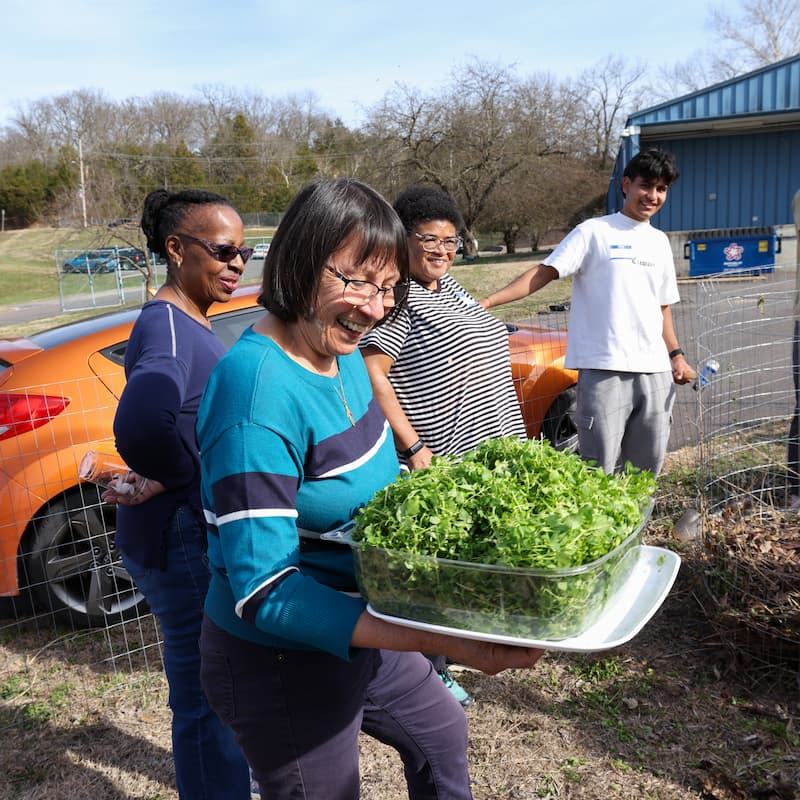 Participants begin building a compost pile in a wire cage (right) as Nadia Navarrete-Tindall brings in green material to help balance the brown-to-green ratio discussed during class.
Held March 15 and supported in part by the National Institute of Food and Agriculture (NIFA) Capacity Building Grant, “Urban Agriculture Learning Hub at Lincoln University,” the workshop reflected the Native and Specialty Crops Program’s commitment to sharing practical, research-based information with the community. By combining instruction with hands-on learning, the program helps gardeners and growers build skills they can apply in their own spaces to support healthier plants and more resilient soil.
To learn more about the Native and Specialty Crops Program, contact State Extension Specialist Nadia Navarrete-Tindall at Navarrete-TindallN@lincolnu.edu.