
King’s Table Men’s Empowerment Experience Creates Space for Reflection and Growth
Office of Communications and Marketing
Young Hall
820 Chestnut Street
Jefferson City, MO 65101
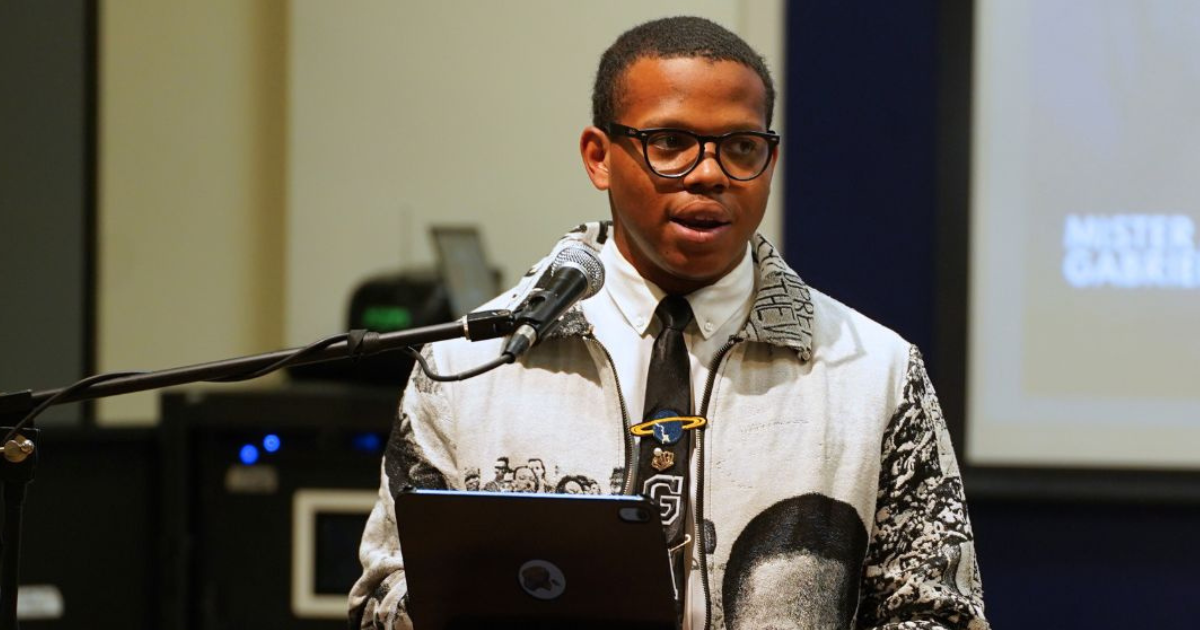 Gabriel Williams welcomes attendees to The King’s Table Men’s Empowerment Experience.
Lincoln University of Missouri (LU) brought together male students and men from the community in February for the inaugural event in a series known as The King’s Table Men’s Empowerment Experience. The event gave men the space to engage in a candid conversation about purpose, mental health and personal growth.
As the first event of its kind organized by a student, LU junior and Mister Junior on the royal court, Gabriel Williams ensured it was open to men of all ages from both campus and the surrounding community. The gathering drew about ten attendees, and Williams said his goal was to create an experience that felt accessible and meaningful for everyone involved.
“I wanted everyone on campus and in the community to benefit from the event,” Williams said.
Williams spent about two months planning the program, intentionally scheduling it in a central campus location during Black History Month to celebrate and empower students at Lincoln, a historically Black university. He said he designed the event to address a gap he has observed in the community.
“The aim of this event was to address the lack of safe spaces for men in the community,” Williams said. “I strongly believe the mental health and well-being of men is not a high priority until a tragedy happens.”
He opened the event by establishing ground rules for discussion.
“There are two quick rules for this space: what is shared here stays here; and no judgment, no interruptions,” Williams said.
Serving as the keynote speaker, Adrian Cyrus Hendricks II, Ed.D., brought both personal and professional ties to the event. A Lincoln alumnus and pastor of Joshua House Church in Jefferson City, Hendricks previously represented the university as its USDA liaison and now serves as the 4-H Youth Development Extension specialist. Williams selected him after hearing him speak at a prior campus gathering.
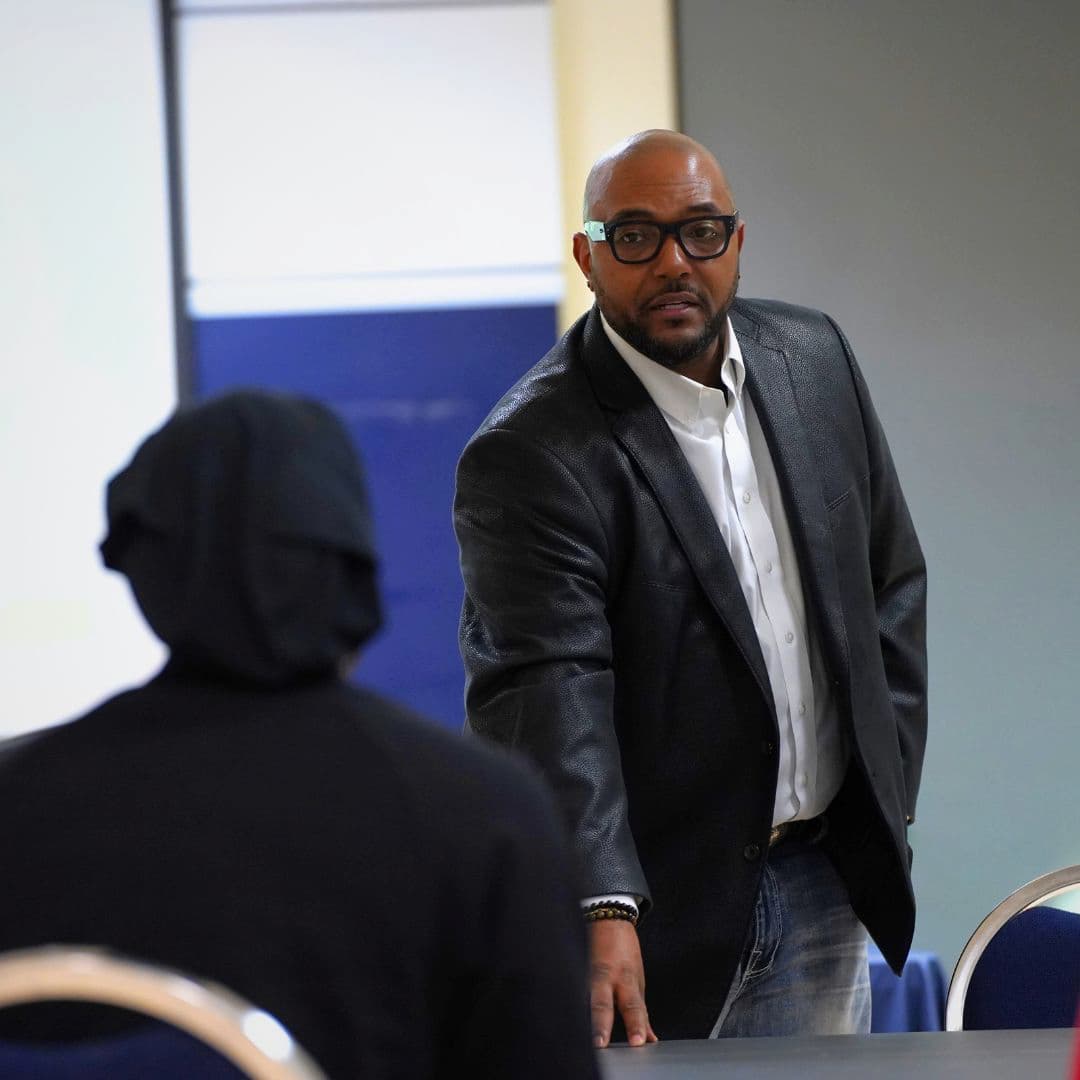 Adrian Cyrus Hendricks II, Ed.D., speaks directly to an attendee of The King’s Table Men’s Empowerment Experience.
“I was beyond inspired,” Williams said. “The choice of Hendricks as a speaker was easy.”
Hendricks, who is married with three children — two Lincoln graduates and one current student — earned his undergraduate degree from LU. He later went on to earn three master’s degrees and two doctoral degrees.
At the start of his remarks, Hendricks asked the audience for permission to speak openly and authentically. He shared his personal journey, describing a difficult past marked by uncertainty and low expectations.
“Nobody had a real expectation I would be anything,” Hendricks said. “It’s a really settling thought, nobody around you has any thoughts about your potential.”
He said he also struggled to see his own potential.
“I didn’t see who I could be,” he said. “Pain shaped my idea of potential — pain, isolation and having to figure it out on my own.”
Academic and financial challenges nearly derailed his undergraduate education. He said a turning point came when a professor intervened and helped him financially, allowing him to remain enrolled. Hendricks eventually earned his undergraduate degree after eight years and later wrote a dissertation on growth mindset, a concept centered on using challenges to reshape thinking and responses to adversity.
In a full-circle moment, Hendricks shared how he later returned to Lincoln as a faculty member, taking over the position of the same professor who once helped him. He worked out of the professor’s former office for 15 years.
Throughout his talk, Hendricks emphasized leadership, integrity and self-awareness. He encouraged attendees to be honest with themselves and to align their words with their actions.
“What you say you will do is tied to your integrity,” he said. “Make sure your word means something.”
Hendricks also engaged the audience with personal questions, encouraging participants to continuously self-reflect and determine how clear they were about their purpose in life while identifying obstacles preventing progress.
After the event, Williams described the experience as “revolutionary,” noting the importance of creating spaces for men to encourage other men, even if they have not traditionally existed on campus.
“I had to realize this was an effective event needed on this campus, no matter if it has never been done before by a student,” he said.
By creating a space where honest dialogue could flourish, Lincoln University highlighted the value of mental health and personal growth, setting a precedent for future student-led initiatives. Through Williams’ vision and Hendricks’ testimony, the event underscored that meaningful change begins with conversation — and that when men are given space to reflect and connect, growth becomes not only possible, but inevitable.