
LU Brings Extension and Research Together to Address Weather Challenges
Office of Communications and Marketing
Young Hall
820 Chestnut Street
Jefferson City, MO 65101
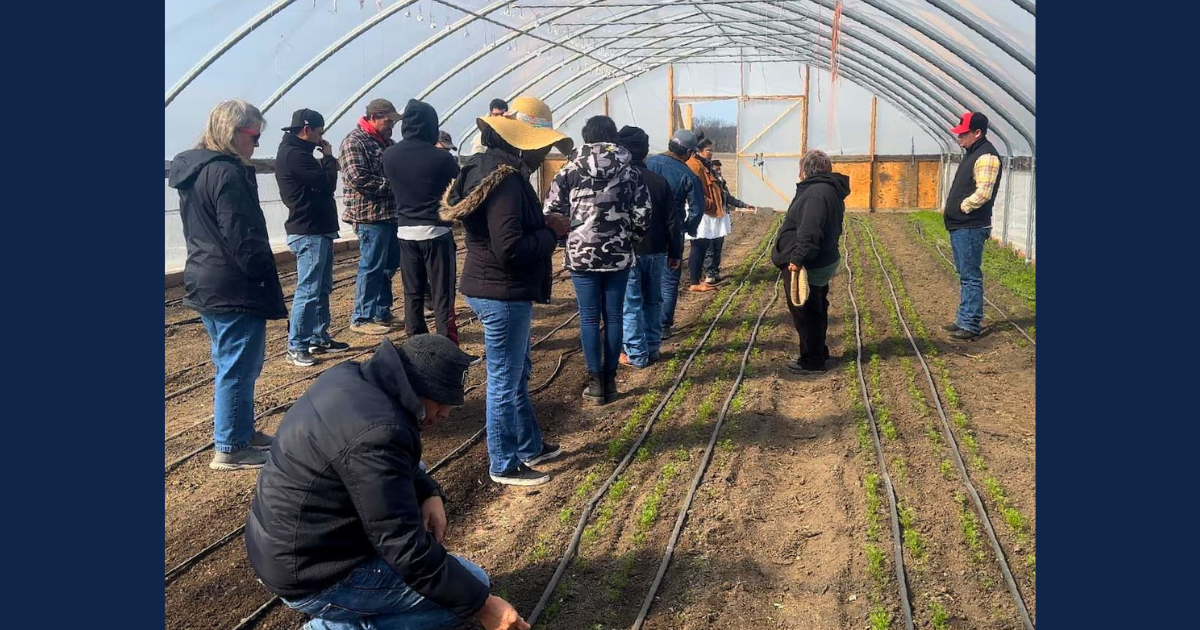 Farmers take part in a learning session with Lincoln University Cooperative Extension, reviewing soil conditions and discussing management strategies informed by producer input.
In the face of increasingly unpredictable weather patterns, the 1890 land-grant system is working collectively to address weather-related challenges affecting farmers, with each institution gathering regional information to compare producer experiences and identify shared concerns.
In support of this multistate effort, Lincoln University of Missouri (LU) launched a project aimed at collecting and implementing producer feedback.
The project, Ecological Resilience and Extreme Weather Events: Impacts on Farmers, Landowners and Communities, brings Cooperative Extension and Research together to gather producer input, document field-level observations and understand how growers interpret sudden weather changes, adjust their management and protect their land over time.
“Producers share a lot about what they’re dealing with,” said Dr. Eleazar Gonzalez, principal investigator for the project and state Extension specialist for LU’s Agricultural Economics and Marketing Program. “Listening to their experiences helps us understand what is happening on their farms and what support will matter most.”
The research component of the project is led by Dr. Ye Su, principal investigator and Cooperative Research faculty member for Agribusiness, who reviews producer responses to identify patterns in experiences, attitudes and field-management decisions. This work is complemented by a North Central Region – Sustainable Agriculture Research and Education (NCR-SARE) project led by Gonzalez with small producers with limited resources, which provides additional evidence about long-term field practices, adoption challenges and the weather-related pressures growers report.
Producers who participate in LU’s data collection efforts describe how rapid weather changes affect their fields, what adjustments they already use and what support would help them remain productive. Early results show consistent themes across Missouri: growers recognize increasing variability in conditions and express interest in methods that strengthen soil and support more reliable harvests.
Findings from LU’s analysis and field observations highlight the connection between sudden weather stress and the need for stronger soil systems. Producers are responding by adopting approaches that build and protect soil structure — methods to help fields hold moisture during dry periods, shed excess water after heavy rain and support crops through temperature swings. These soil-focused practices give producers more control over how their fields respond to unpredictable conditions, providing a steadier foundation as weather patterns become more challenging to predict.
“Producers are more likely to adopt a practice when they see direct results on their land,” Su said. “Once they recognize that a method improves their soil or protects their operation, it becomes a natural choice.”
As producers share these concerns, LU Cooperative Extension uses the information to shape workshops, demonstrations and individualized support. Gonzalez leads learning sessions focused on soil-building practices, moisture retention and long-term field management strategies grounded in producer feedback. He also conducts small-group discussions with farmers who operate smaller or resource-limited farms to understand barriers such as limited equipment, time constraints and difficulty navigating agricultural programs.
To address producer requests for more practical, on-site guidance, LU Cooperative Extension expanded its use of demonstrations and farm visits. A mobile teaching trailer allows specialists to meet producers on their land, offering farm assessments, identifying small-farm business models and providing step-by-step instruction on adopting sustainable practices to protect their natural resources.
“Producers want information that matches their needs,” Gonzalez said. “Our sessions are built around the concerns they shared with us — what they can manage, what they can afford and what will actually help their fields hold up during tough weather.”
Together, Cooperative Extension and Research are building a clearer picture of how shifting weather patterns affect Missouri producers and the decisions they make. By turning producer feedback into field-tested workshops, demonstrations and practical support, Lincoln University helps farmers strengthen the stability of their operations and prepare for changing conditions. This coordinated approach reflects the university’s commitment, as an 1890 land-grant institution, to advancing agricultural and natural resources programs that help communities adapt, recover and remain strong in the face of environmental challenges.