
Lincoln University of Missouri Presents Native Plant Academy in Kansas City
Office of Communications and Marketing
Young Hall
820 Chestnut Street
Jefferson City, MO 65101
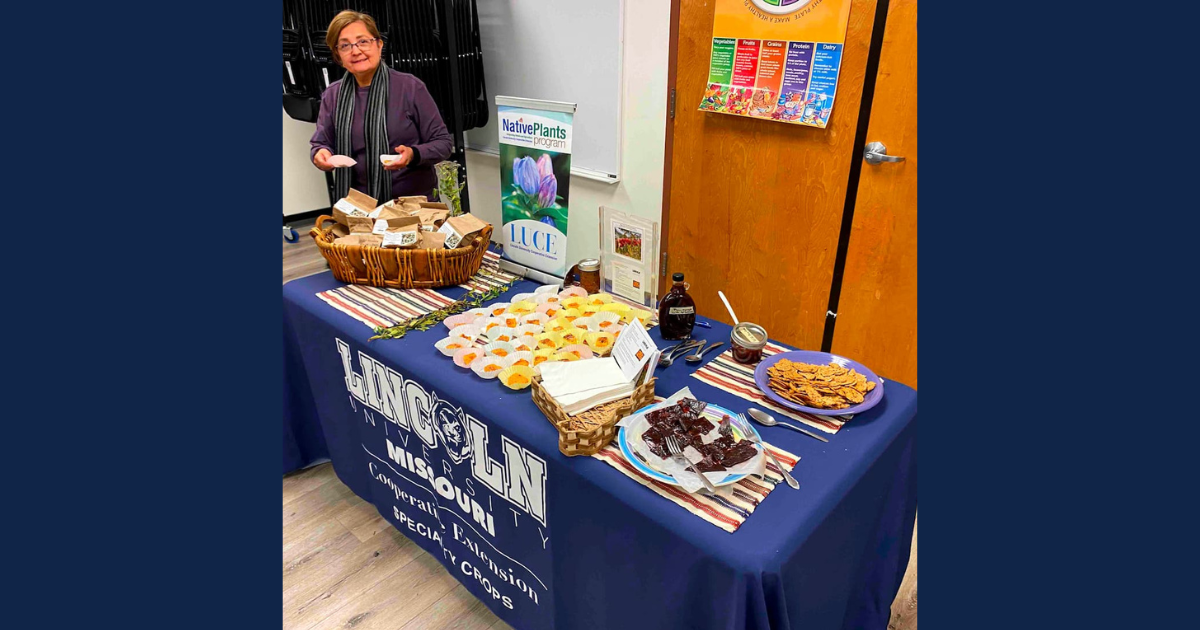 Volunteer Patricia de Magana serves native food samples at the Native Plant Academy.
Lincoln University Cooperative Extension (LUCE) wrapped up its Native Plant Academy series in Kansas City, concluding three weeks of practical training on pollinator gardening, companion planting and native edible plants.
Developed by LUCE’s Native and Specialty Crops Program, the Academy began in 2021 with support from the Missouri Department of Conservation and the Missouri Prairie Foundation.
“We created the Native Plant Academy to help people learn about native plants and understand why they matter,” said Dr. Nadia Navarrete-Tindall, who leads the Native and Specialty Crops Program. “The goal from the beginning was to introduce people to native plants and their importance.”
Community input guided the decision to bring this year’s program to Kansas City. Feedback collected through surveys and conversations with Kansas City Black Urban Growers showed strong interest in native plants and their practical uses. In response, LUCE hosted the series at its Kansas City Urban Impact Center, a community-based Extension site serving residents across the metro area.
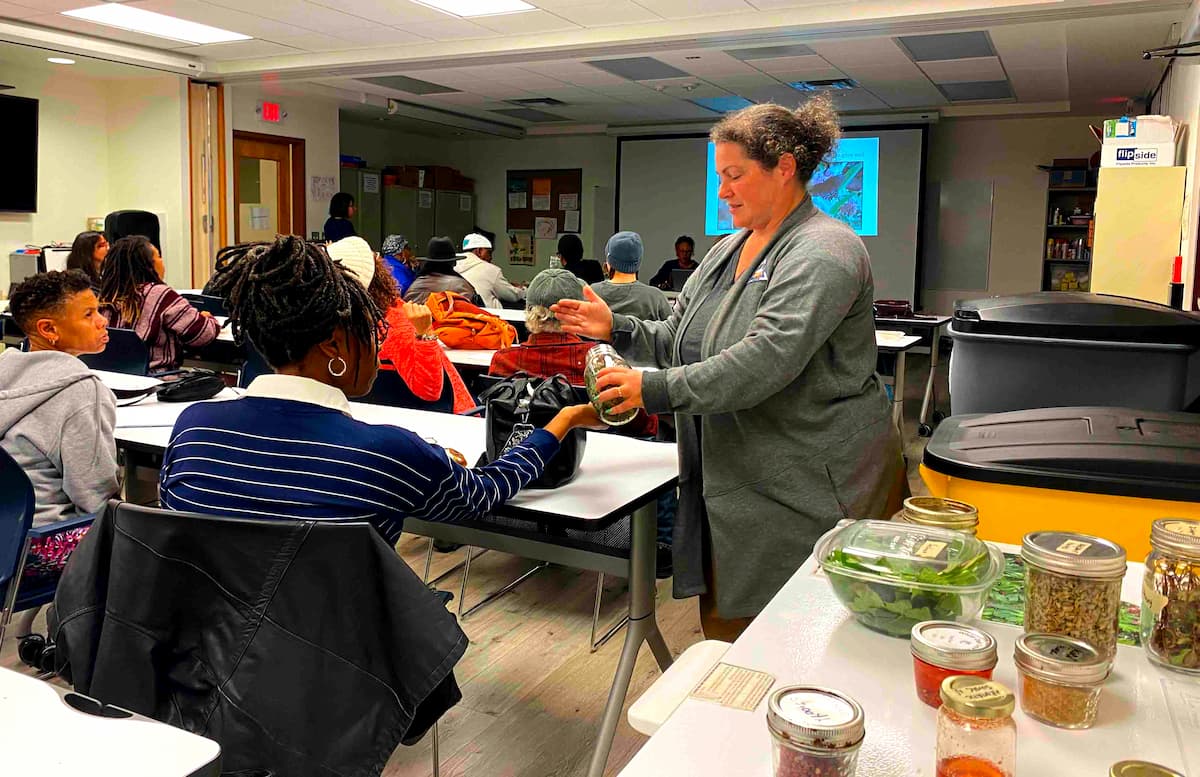 Missouri Department of Conservation’s Ginger Miller provided additional edible native samples to participants.
“We wanted to be very intentional about who we reached with these workshops,” Navarrete-Tindall said. “The surveys showed us that growers in Kansas City were eager to learn about native plants, especially how they can benefit pollinators and food production.”
Tina Wurth, LUCE educator with the Native and Specialty Crops Program, kicked off the series with a session on pollinators, showing how native flowering plants attract bees and butterflies, extend bloom periods and support healthy garden ecosystems.
A shift in focus came with the second session, which examined companion planting with Wurth. Participants looked at how pairing native species with vegetables can support beneficial insects, improve soil structure and create more resilient gardens.
The final class, offered by Navarrete-Tindall, brought attention to native edible plants. Participants learned identification, cultivation, harvest timing and preparation techniques for species commonly found in yards, parks and community gardens. The session ended with a tasting featuring sweet bread flavored with wild plum, wild plum jam on crackers, wild plum leather and apple cider infused with spicebush. Participants also received small bags of dehydrated hairy mountain mint for tea, collected from plants grown at LUCE’s Finca EcoFarm.
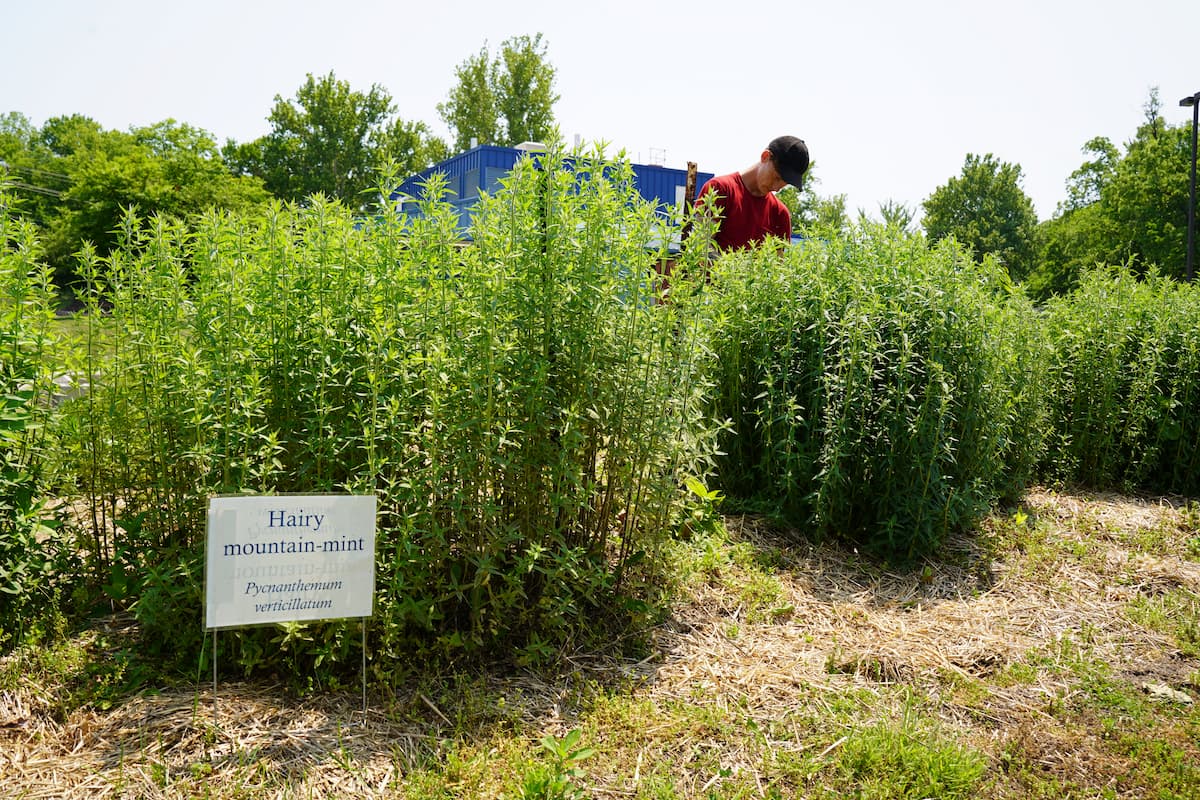 Summer-seasonal photo of hairy mountain mint at LUCE’s Finca EcoFarm, an educational hub for the Native and Specialty Crops Program.
Navarrete-Tindall noted participants often stayed after each session to ask questions, compare ideas and talk through how they planned to use native plants in their gardens and community spaces. Several also asked about upcoming classes.
She said the Academy will continue to evolve as interest in native plants grows across Missouri. She hopes future sessions reach even more communities and help residents see the role native species play in pollinator support, soil health and local food traditions.
“People want to learn more about native plants,” she said. “We’re glad to offer a place where they can start.”
For more information about the Native Plant Academy, contact Dr. Nadia Navarrete-Tindall at navarrete-tindalln@lincolnu.edu.