
Lincoln University Earns NASA Grant to Expand Student STEM Research Opportunities
Office of Communications and Marketing
Young Hall
820 Chestnut Street
Jefferson City, MO 65101
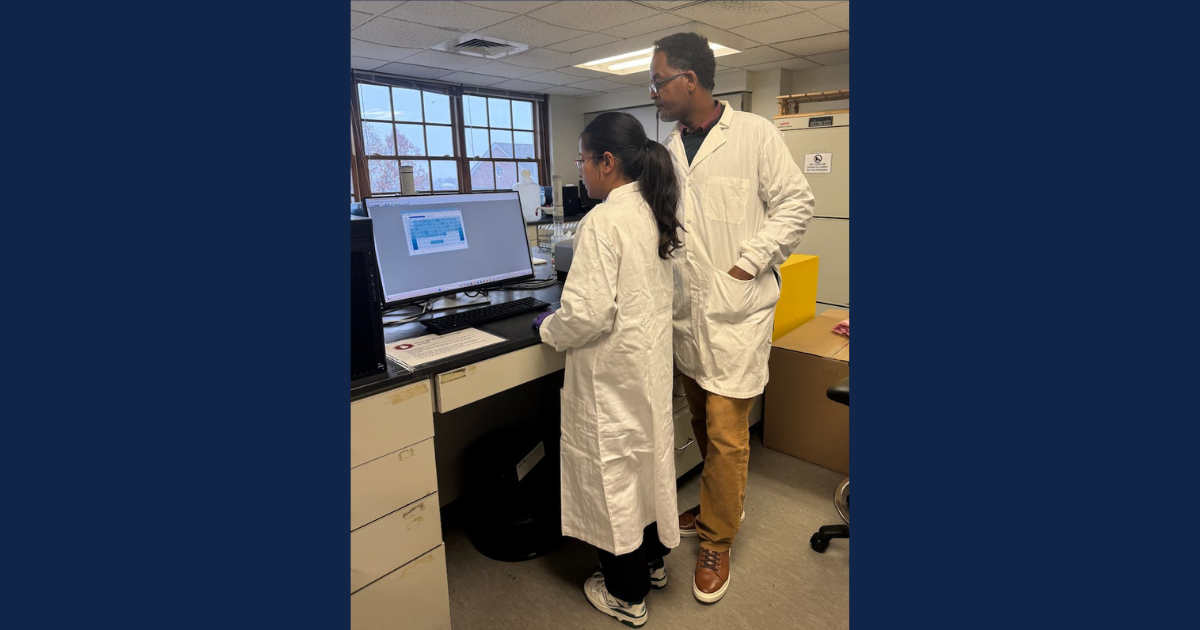 Lincoln University student works with Dr. Tunsisa Hurisso in a science lab.
Lincoln University of Missouri (LU) will play a key role in a $2.5 million NASA-funded project aimed at turning human waste into sustainable materials for use in space while also giving students from various backgrounds hands-on research opportunities.
The three-year project, which runs from Aug. 1, 2025, through July 31, 2028, will send undergraduate interns from Lincoln’s College of Agriculture, Environmental and Human Sciences to St. Louis and Florida for training in anaerobic digestion (AD), a process used to convert human waste into organic acids. Those AD-processed organic acids can be transformed into materials, including protein-rich biomass as a food source and natural products such as β-carotene, that potentially support long-term space missions.
Lincoln has been awarded $103,524 as part of the multi-institution collaboration, which involves eight scientists across six institutions in Missouri, Delaware and Florida. Only two proposals were selected nationwide.
Dr. Tunsisa Hurisso, Lincoln’s principal investigator on the project, said the university’s role centers on student development and broadening participation in science, technology, engineering and mathematics (STEM) fields. Each summer, two undergraduate students will spend three weeks working with researchers at Washington University in St. Louis and Saint Louis University before traveling to NASA’s Kennedy Space Center in Florida for additional training.
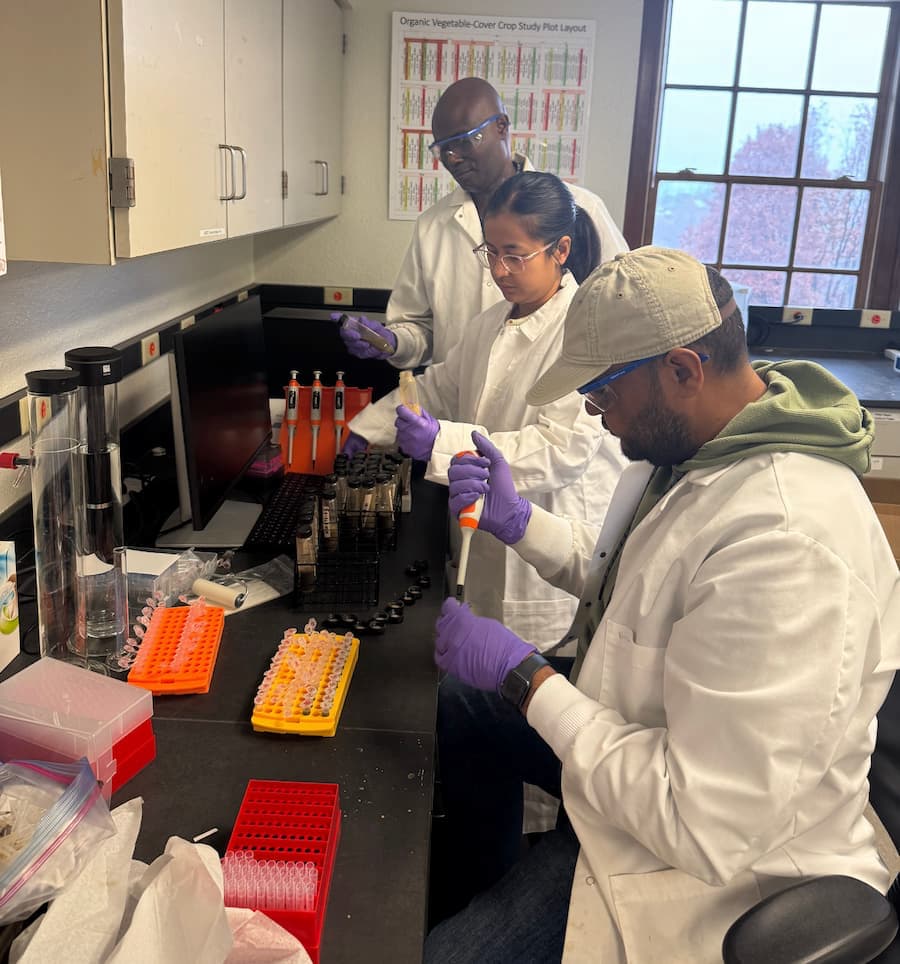 Lincoln University students run experiments for the NASA grant.
Parallel with the nation, Missouri’s food and the agricultural industry faces a degree workforce shortage – underscoring an urgent need to build a robust domestic STEM workforce.
“The idea is that less and less students from various communities, such as 1890 institutions, are participating in science, so how can we increase that interest?” Hurisso said. “Our goal is really to give our students hands-on experience and create some sort of impression.”
Hurisso emphasized how agriculture extends beyond farming crops and raising livestock, and can include fields like biomanufacturing and space research. One Lincoln graduate is already pursuing a graduate degree at Washington University and working as a research assistant on the NASA project, which Hurisso said illustrates the type of opportunities available for our students.
“Maybe one of those students will end up working at NASA or go to graduate school at Washington University or elsewhere to advance their STEM education. That’s really the goal here,” he said.
Alongside the student internships and workforce development, research activities at Lincoln will also focus on analyzing metabolite samples using state-of-the-art Ultra-High Performance Liquid Chromatography coupled with tandem Mass Spectrometry (UHPLC-MS/MS) technique.
These analyses provide both qualitative and quantitative insights into cell metabolisms under space conditions (such as low gravity and low temperature).
For Hurisso, the project is not only about advancing science but also about opening doors for Lincoln students.