Preserving Lincoln's Legacy: A Q&A with University Archivist Mark Schleer
Office of Communications and Marketing
Young Hall
820 Chestnut Street
Jefferson City, MO 65101
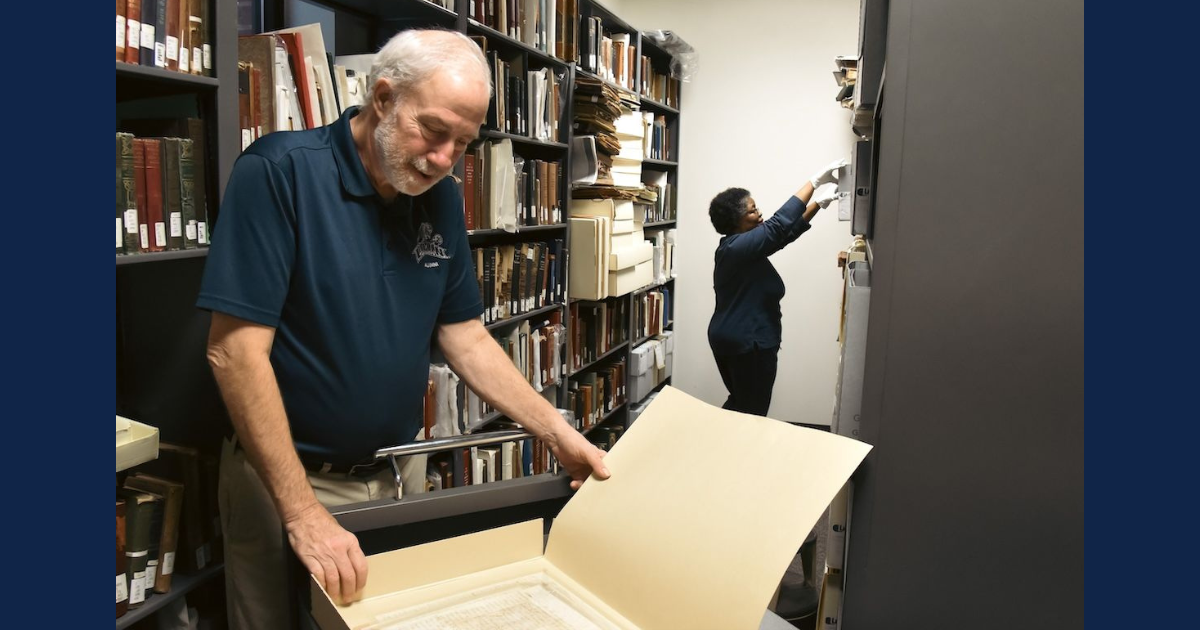 University archivist Mark Schleer discusses preserving Lincoln University's history, helping families and researchers uncover the past and why the archives matter for future generations.
A Harriet Tubman book bearing her mark. More than 68,000 digitized images. Records that help families uncover connections to Lincoln University dating back more than a century.
Those are just some of the historical treasures and stories preserved by the Lincoln University Archives. Since its founding in 1866, Lincoln University has built a rich history that continues to shape the institution today, and preserving that history is the mission of the Archives.
In this Q&A, University Archivist Mark Schleer discusses the remarkable collections housed in the Archives — including Harriet, the Moses of Her People, a book that has been part of Lincoln's collection since 1886 and bears a mark made by Harriet Tubman during her 1893 visit to Jefferson City — along with the work of preserving historical materials and helping students, alumni, families, researchers and the public discover connections to Lincoln's past.
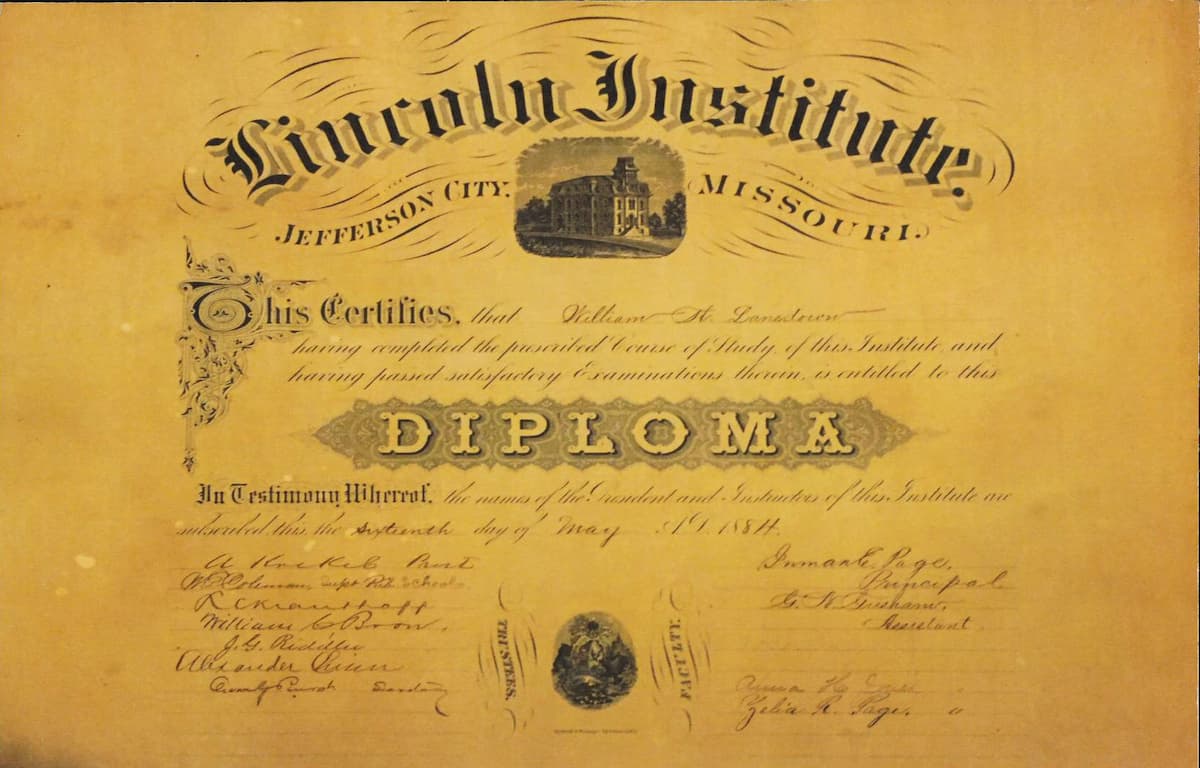 William Lansdown 1884 diploma. Jefferson City native, born enslaved, Lansdown graduated with a 60-hour degree in Pedagogy, commonly known as Teacher Education.
What does a typical day look like in the archives?
I've heard the expression that archivists are the stewards of history, and I really like the way that sounds. It's my duty to make sure history stays safe, gets explored and is shared.
There's not really a typical day in the office, but there are things that are worked on continuously. Right now, I have about 18 items on my to-do list. Most of those are long-term projects, such as digitization and collection development. There are others that need to be completed by a certain date, such as exhibits and reports. The top priority is patron requests, which we receive daily. Some are easy to take care of, while others require a bit of research. With the recent retirement of my longtime assistant, Ithaca Bryant, I will now be handling those requests myself.
Sometimes I have to improvise. For example, Microsoft will discontinue its Publisher application this fall, and the Archives have been using it for displays and exhibits since 2002. During that time, we amassed more than 4,000 Publisher documents, and I had to convert them all to PDFs or JPEGs. There was no clear-cut solution from Microsoft on how to do this, so I did a little hunting on the internet and found a website where I could convert them in large batches. I got it done in one day. That was a relief!
What first drew you to archival work, and what do you enjoy most about it?
I came to Lincoln in 2006 to earn a certification in high school social studies and complete my master's degree in history because I wanted to be a high school history teacher. I took a job in Page Library during my last semester of graduate school, and I was asked if I wanted to become the night librarian. I've always liked libraries, and I couldn't turn the offer down.
I did that for two years, helping students while also using my history background to assist in the Archives. After two years, my predecessor, Carmen Beck, left, and Library Director Elizabeth Wilson offered me the position.
What I enjoy most about working in the Archives is being able to find not only information but also images of the university's heritage. Exploring and analyzing events and personalities in the school's history — and sharing them with others — keeps me motivated. I am constantly learning something new about Lincoln.
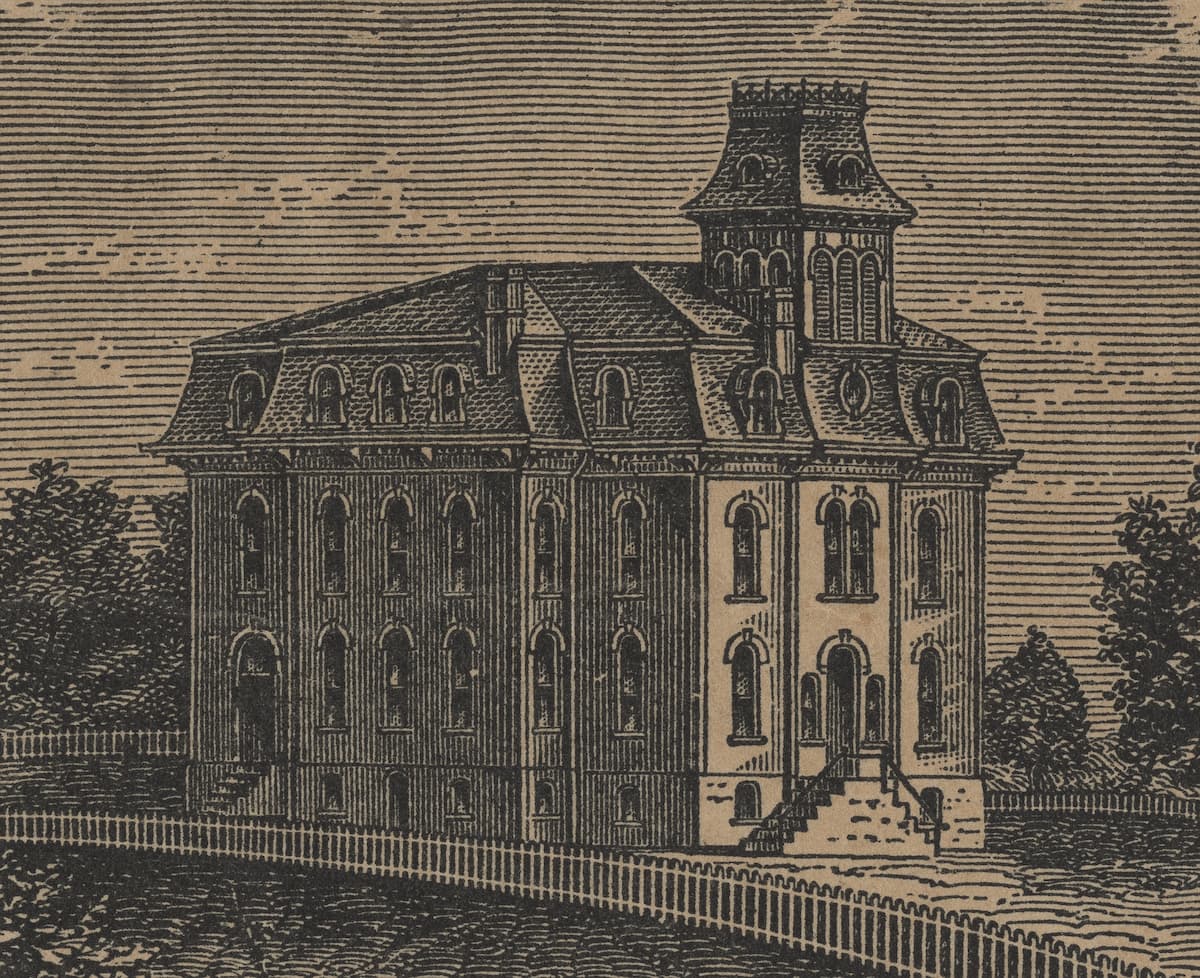 Memorial Hall, the first building on Lincoln University’s current campus. This image was taken from William Lansdown’s 1884 diploma.
How would you describe what the Lincoln University Archives does?
According to our mission statement, we maintain, preserve and make accessible the holdings and heritage of the institution while conducting research and outreach to further and promote the university's image. We keep it organized, make sure it's safe and let people see it.
Why is it important to preserve Lincoln University's history?
Lincoln is unique. No other institution of higher learning was founded and funded the way we were — by formerly enslaved Civil War soldiers. That bold beginning and the university's ability to overcome many obstacles to become what it is today are inspirational, and they're something we should be proud of.
Personally, I feel it is my duty to ensure students have knowledge of and appreciation for not only the founding of our school but also how we have succeeded for 160 years. I hope it gives them an appreciation for the place they will call home for the next four years and helps them feel welcome, secure and successful at Lincoln.
How does the work you do help alumni, families, researchers and the broader community?
The archives' holdings cover a variety of topics, including institutional history, African American history, the evolution of education in general and the history of HBCUs. Many landmark events happened at Lincoln. We're the oldest 1890 land-grant institution, the birthplace of HBCU journalism, and alumnus Lloyd Gaines' historic U.S. Supreme Court case paved the way for educational integration in the United States. We have a lot to share!
What kinds of research requests do you receive most often?
The three main types of requests come from researchers looking for information about the university, including coursework, events and people; family members trying to locate relatives; and students requesting information about Greek organizations.
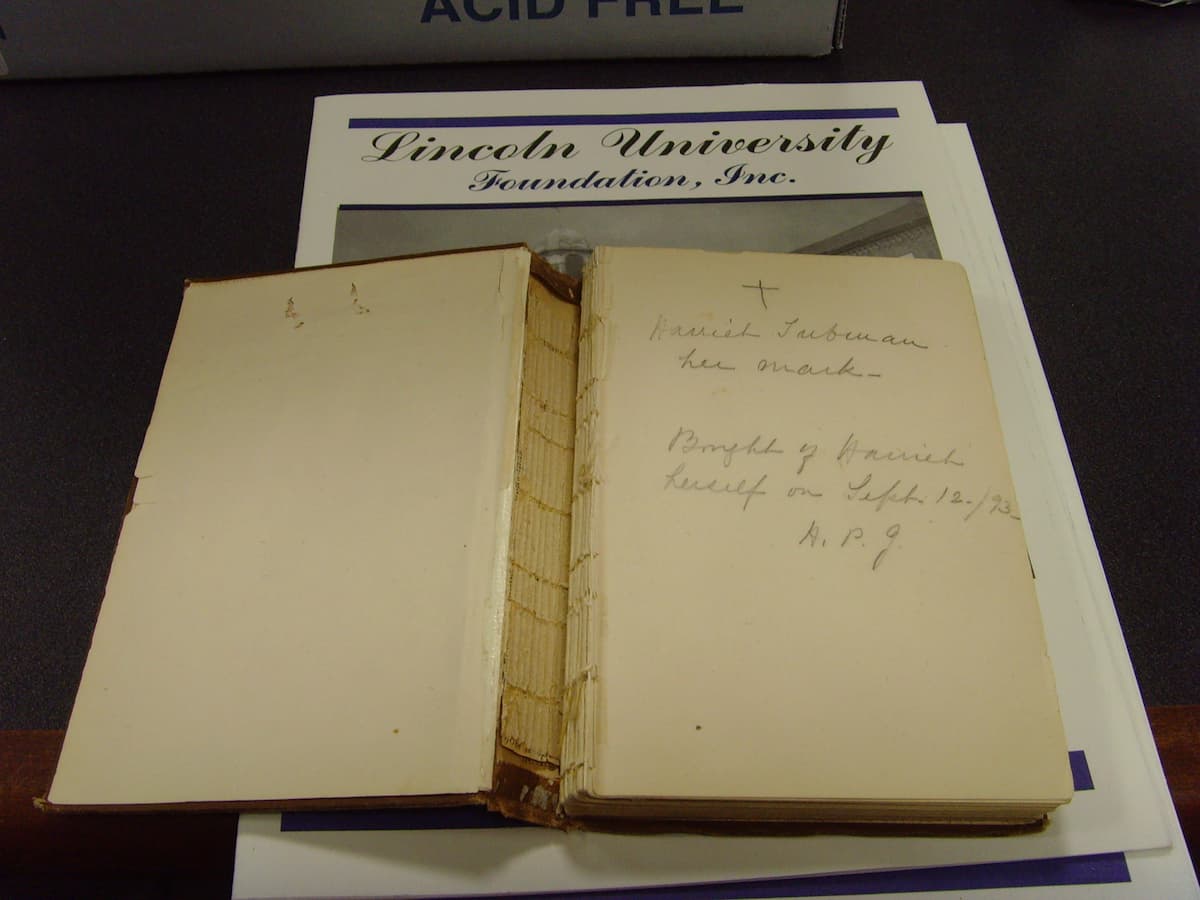 The Harriet Tubman book before its restoration in 2025.
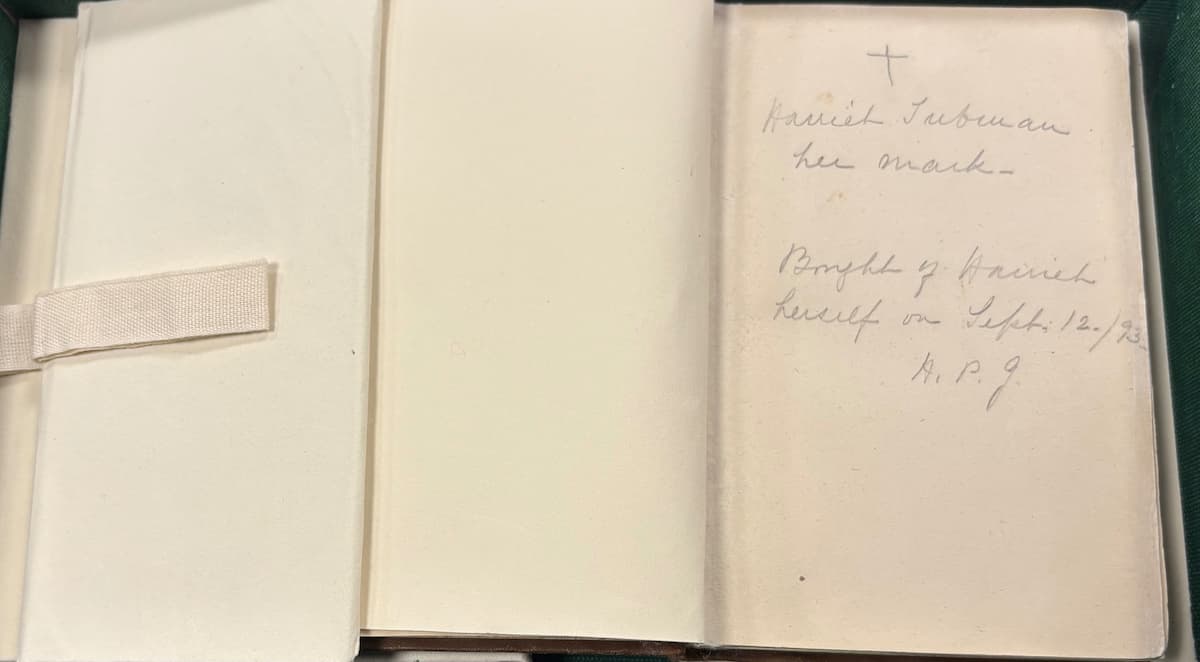 The Harriet Tubman book after its restoration in 2025. The book is the most iconic item in the Lincoln University Archives collection.
What resources do you rely on when researching former Lincoln Institute and Lincoln University students?
Student registers, yearbooks, alumni directories, university bulletins and vertical files, which contain materials such as newspaper articles that are not official university records.
Some of these records, like the student registers, require page-by-page review because they're handwritten in cursive. What does that process involve?
Luckily, the same person was in charge of registering students from 1879 through 1900, so it's just one person's handwriting throughout the pages, and the penmanship is impeccable. I've been reading these books for 17 years, and I've grown accustomed to it. My student workers are amazed that I can decipher it.
What are some of the most valuable collections available in the archives?
Probably the most valuable item is Harriet, the Moses of Her People. We have had that book since 1886, and when Harriet Tubman was in Jefferson City in 1893, she made her mark on the inside of the cover. It's quite an iconic item for an HBCU to have in its holdings.
We also have a complete run of the Midwest Journal, an institutional publication established by Dr. Lorenzo Greene in the late 1940s that continued through the following decade. Contributors included not only Lincoln faculty and staff but also W.E.B. Du Bois and other African American scholars.
The Thomas Hart Benton mural on the main floor of Page Library, depicting the founding of Lincoln, is also a major attraction for visitors.
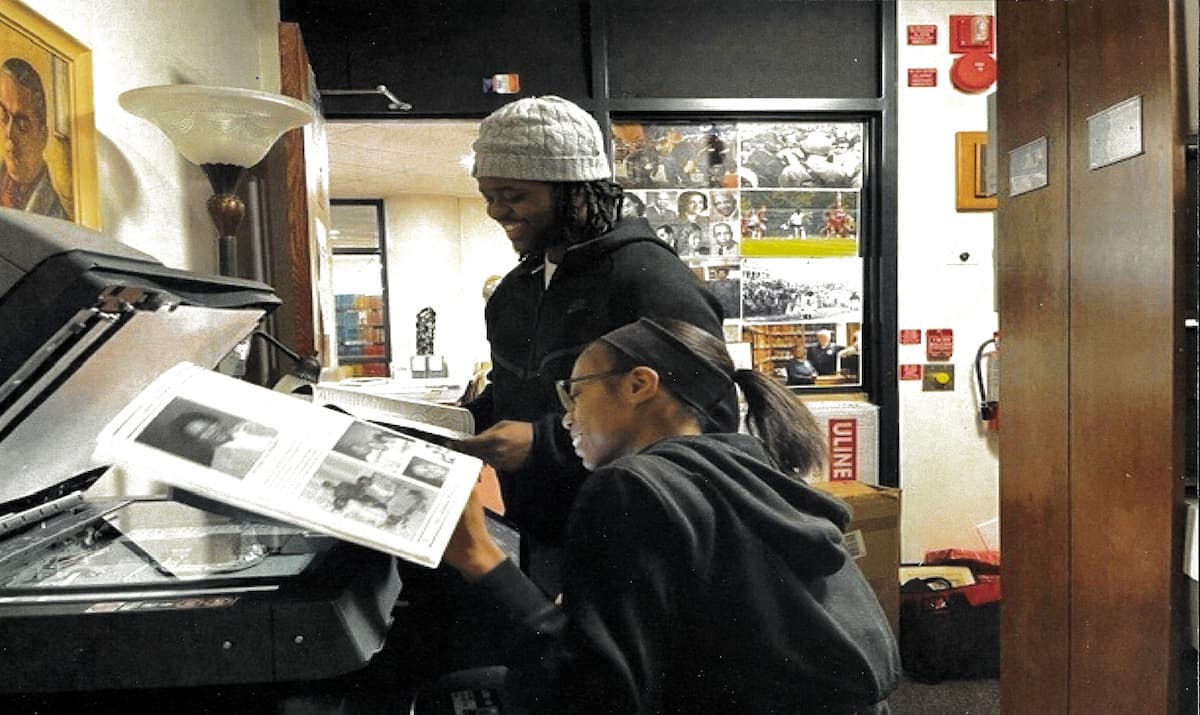 Student workers Troy and Ronita digitize materials in the Lincoln University Archives.
The archives contain more than 68,000 digitized images. What are some of the most fascinating or unexpected items people can find?
We have a rather large collection of images of the local neighborhood and business district known as "The Foot," which was vital to the African American community for many years and played an important role in the growth and progress of the university.
When we celebrated 100 years of Homecoming last year, we were able to find portraits of every Homecoming queen except one. I'm still on the lookout for that one!
You said that sharing historical photographs is often "the icing on the cake." Why are those moments so meaningful?
When I can provide descendants with an image of someone who attended Lincoln more than 100 years ago that they've never seen before, and I get to witness their reaction to seeing that connection with their family, I feel that I have done my duty — not only for the institution but for helping others.
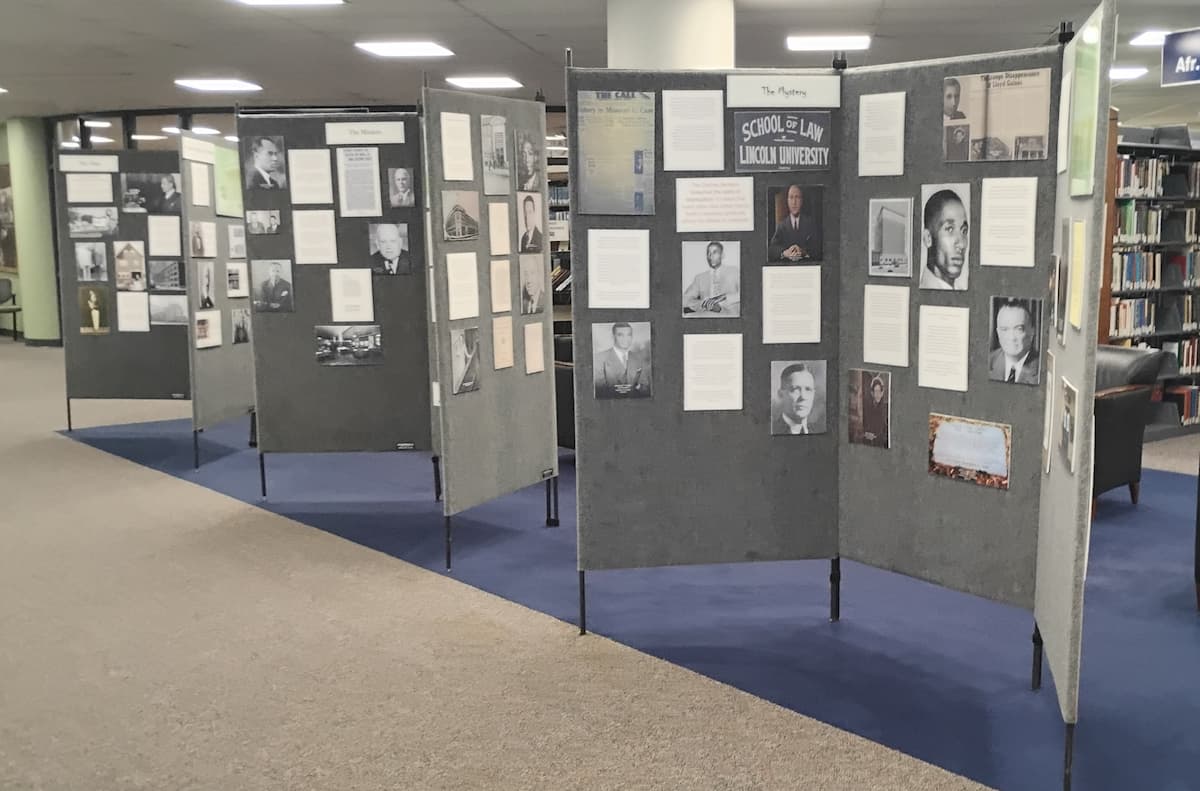 Lloyd Gaines exhibit honoring the Lincoln University alumnus and civil rights pioneer. Gaines is one of the most frequently requested topics in the Lincoln University Archives.
Have you ever found something that surprised even you?
We've opened two time capsules — the first in 2009 from Jason Gymnasium and the second in 2011 from underneath the fountain in front of Martin Luther King Hall. It's kind of like Indiana Jones.
What resources are available for alumni, descendants, students or community members who want to learn more about Lincoln University's history?
Everyone is welcome to visit the Archives in person, but many requests also come by phone or email.
On the university website, there are links to yearbooks and The Clarion student newspaper, which is now published online.
There are also several exhibits available through the Blue Tiger Commons repository, although we have been unable to add new content because of staffing reductions.
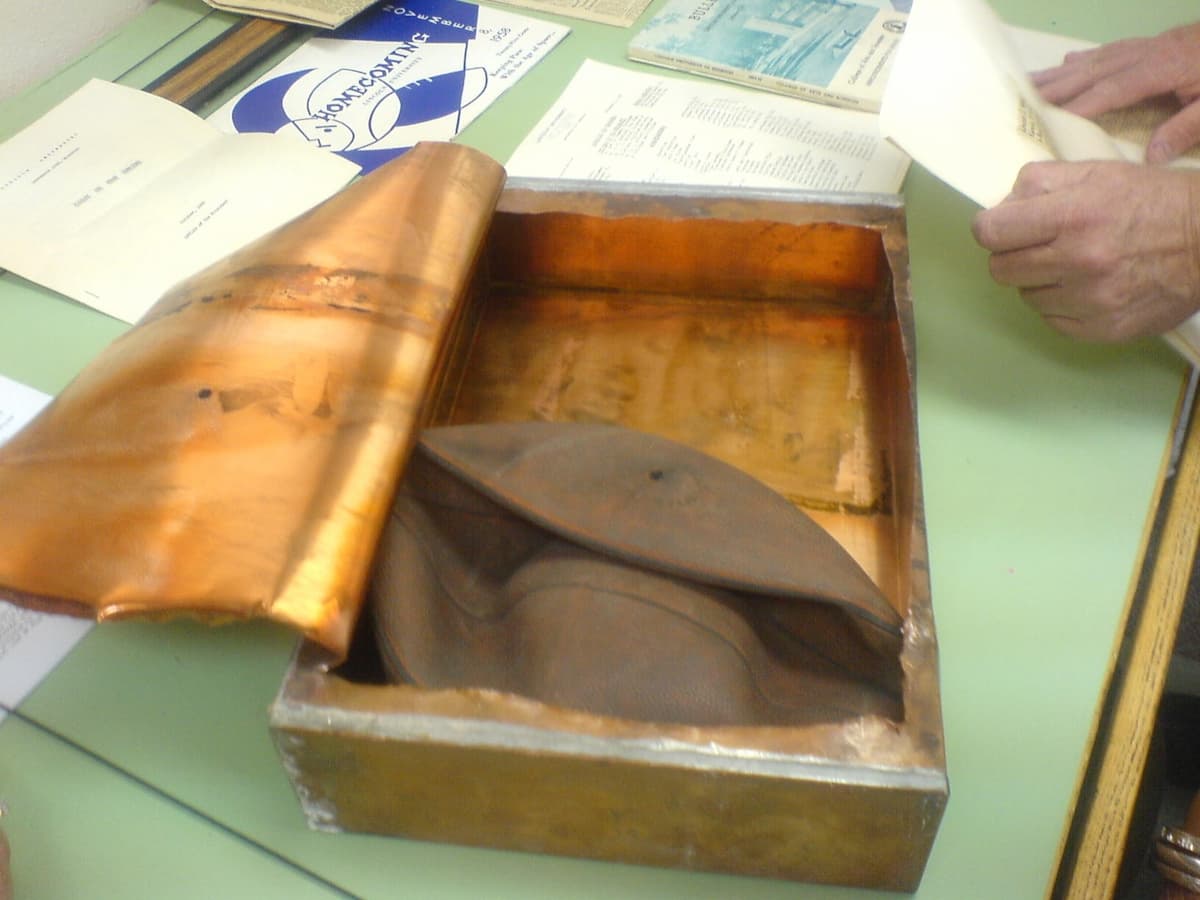 Contents of the Jason Gym time capsule, which included Lincoln University literature from 1958 and a deflated basketball.
If someone thinks they have a family connection to Lincoln Institute or Lincoln University, how can the archives help?
Providing as much information as possible greatly improves our ability to locate information about family members. Names, years of attendance or employment, hometowns and similar details are all helpful. The archives have had a strong success rate in locating alumni for their families using information like that.
What advice would you give someone who is just beginning to research their family's connection to the university?
Calling the Archives is a good first step. If we can find a connection, we can branch out and see what else we can learn about family members. I'm currently researching the Wrens from East St. Louis and have found 15 Lincolnites in their family dating from the 1950s through the 1980s.
What do you hope people take away after visiting or working with the Lincoln University Archives?
I hope they leave with a sense of fulfillment and find the answers they were seeking. I am very passionate about the history and heritage of my alma mater, and I am very sincere about sharing it.
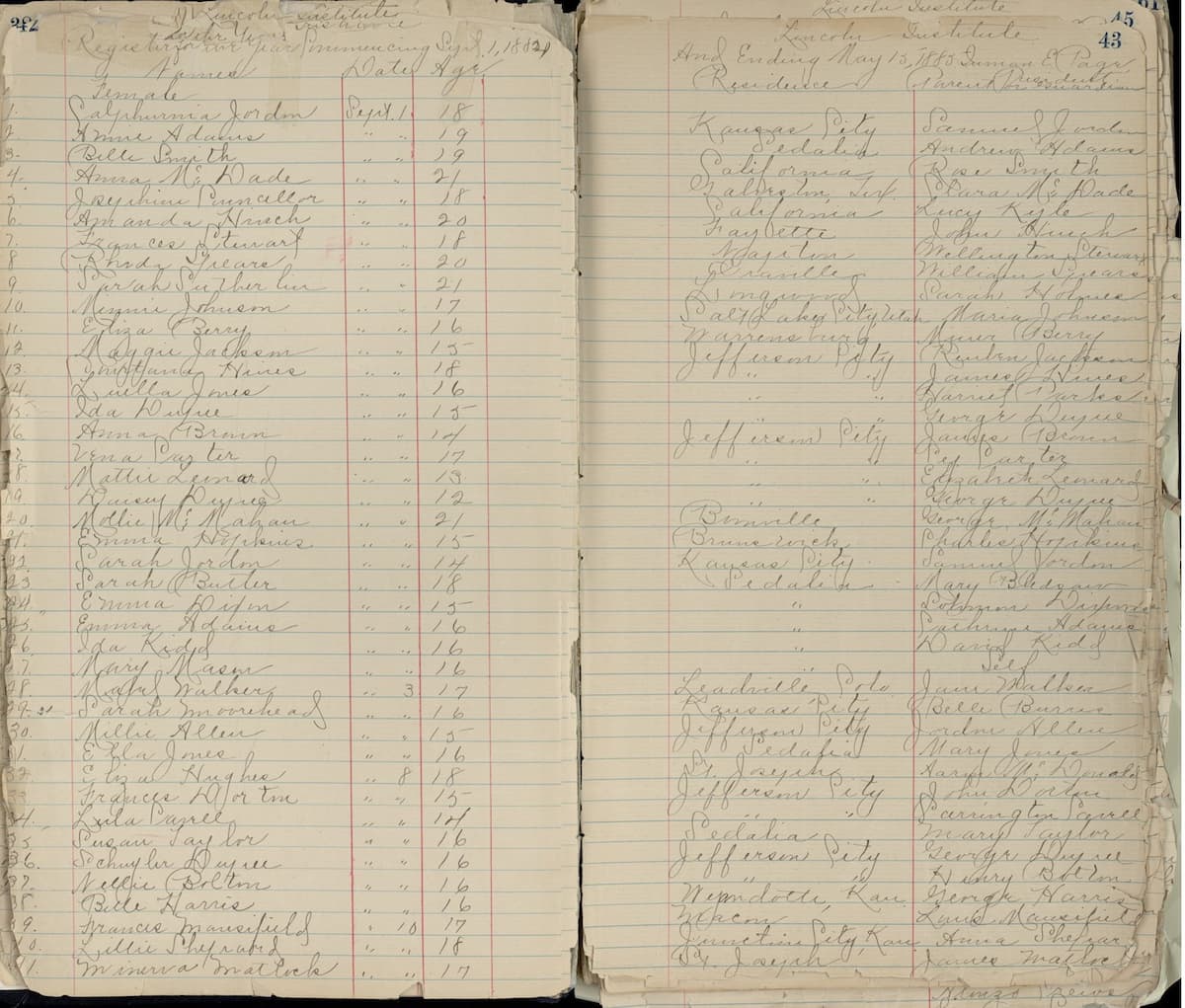 Student register spanning 1879-1904. The volume provides an invaluable gateway to the early years of Lincoln University.
Is there anything people are often surprised to learn about the archives or the work you do?
A lot of people ask me how I keep all those facts in my head, but I've been doing this for quite a few years now, and I've never gotten tired of sharing them with anyone willing to listen.
When people hear the word "archives," they often think of filing papers and putting boxes on shelves. That's certainly part of it, but the reason for all those documents and boxes — and how they got there — well, there's a story behind that.
If you could encourage people to do one thing to help preserve their own family or community history, what would it be?
There's an expression in archiving: "You can only throw away something once." If you think a document or photograph may be important, keep it. If you think it's very important, put it somewhere safe.
Also, exploring online resources and contacting local organizations for assistance can make researching families and communities much easier. Help is there.
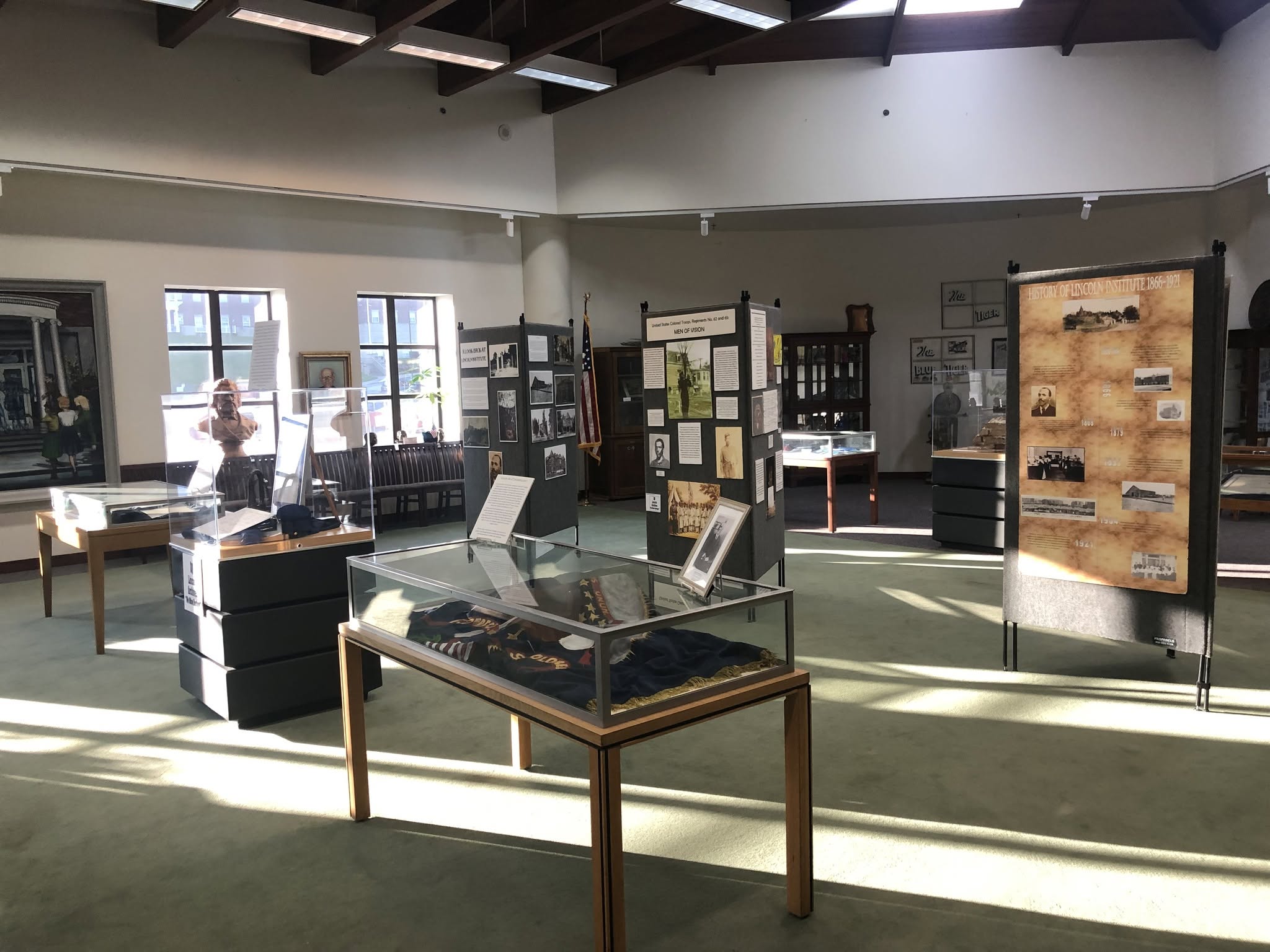 Ethnic Studies Room Museum, a work in progress featuring the early years of Lincoln University. The museum has been developed entirely without funding.