
LU CAEHS Research Seminar
"Techniques to Make a Sheep and Goat Business Profitable"
Establishing a profitable sheep or goat enterprise starts with choosing a clear business model — such as breeding, fattening or a combined operation — that fits local market demand, available land and capital cash cycles. Feed accounts for 50–70% of the total cost of raising sheep and goats, so profitability depends on controlling input costs and making the most of forage.
Key practices include rotational grazing with simple polywire fencing, stockpiling fescue for winter, limiting grain supplements, buying in bulk and mixing feed at home, which costs about 36% less than ready-made rations.
Producers should choose parasite-resistant, low-maintenance breeds, keep records and cull unproductive or diseased animals. The presentation will also cover breeding and lambing time, replacement female selection, biosecurity, guardian dogs, marketing and careful capital investment.
Ultimately, long-term financial sustainability requires meticulous individual record-keeping (tracking cost per head, health interventions and birth rates) to evaluate production parameters accurately and preserve net profitability across market cycles.
About the presenter:
Dr. Mohan Acharya is a State Extension Specialist in ruminants at Lincoln University in Jefferson City, MO. He received his M.S. and Ph.D. in Animal Science from the University of Arkansas, where he worked as a postdoctoral research associate before joining Lincoln University.
His current Extension programs cover sustainable grazing systems, silvopastural grazing and parasite control in sheep and goats. Dr. Acharya is committed to practical, producer-focused education.
Last year he organized or co-organized fencing field days, a webinar series, a train-the-trainer event and lecture series across Missouri.
His current programs cover cost-saving strategies — from rotational grazing and home-mixed feed to culling, record keeping and marketing — to help sheep and goat producers build more profitable, forage-based operations for keeping input costs low.
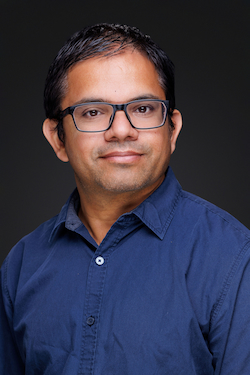
Photo of Dr. Mohan Acharya