

Master of Science in Sustainable Agriculture Program
Become a leader in sustainable agriculture, a discipline that harnesses science to address some of the world’s critical issues.
The demand for skilled agriculture professionals is growing, and Lincoln University’s Master of Science in Sustainable Agriculture prepares you to meet it. Our program equips students with the knowledge and hands-on skills needed for successful careers in government agencies, private industry, nonprofits, research, teaching and agricultural entrepreneurship.
You’ll gain practical experience by leading innovative research projects in areas like small ruminants, parasitology, aquaculture, poultry science and cropping systems, all supported by Lincoln’s state-of-the-art laboratories and farms — including the conventional George Washington Carver Farm and the certified organic Alan T. Busby Farm. Graduate studies here empower you to develop solutions for today’s agricultural challenges while building a professional network that propels your career.
Delivery Format

Program Length

Start Terms

Program Basics
The LU sustainable agriculture graduate program prepares individuals for advanced agriculture careers in government agencies, private enterprises and nonprofits. The knowledge and skills gained during graduate studies equip you for success in production agriculture, entrepreneurship, consultancy, research, teaching, service and others, and enable solutions for a variety of issues facing modern agriculture.
Key strengths:
- Small classes (5-25 students)
- Research farms and labs
- Faculty with diverse expertise in animal science and livestock, microbiology, GIS, economics, plants and soils and natural resources.
- Graduate students are often offered research assistantship stipends to help fund their studies.
Students pursuing a Master of Science in sustainable agriculture learn by participating in and leading innovative research projects in various focus areas (small ruminant parasitology, aquaculture, poultry science, cropping systems, etc.). Lincoln’s well-equipped laboratories, including the conventional George Washington Carver and certified organic Alan T. Busby farms, support research endeavors.
Graduates of this program will be able to:
- Develop innovative research methods
- Develop agriculture and food production processes to achieve economically and environmentally sustainable production.
Core Required Courses (15 hours with thesis option, 10 hours for non-thesis option)
- AGR 503 Experimental Design & Data Analysis (3)
- AGR 507 Scientific Writing (online) (2)
- AGR 509 Plant Nutrition and Management (3)
- ARG 511 Advances in Sustainable Agriculture (3)
- AGR 515 Soil Management for Sustainability (3)
- AGR 590 Graduate Seminar in Agriculture (1)
- AGR 599 Thesis Research - thesis option only (6)
- Bachelor’s degree from an accredited institution.
- Minimum cumulative GPA of 2.75
- Completed LU graduate application packet.
- Statement of purpose related to your program of interest.
- Letters of recommendation (3)
- Class scheduling: In-person with hybrid course options.
- Typical course load per semester: 9 credit hours (3 classes).
- Online learning platform: Canvas.
How to Apply
- Complete online application at LincolnU.edu
- Submit all required documents (transcripts, letters of recommendation, goal statement, resume)
- Pay a $30 application fee
- Application review by Graduate Studies and program faculty
- Once all documents are submitted, we request 10 business days for departments to review the application packet and respond.
- Admission decision notification
- Applicants will receive a notification letter with information regarding their admission status via their personal email. If admitted, this letter will include information regarding their student ID and University e-mail.
- Schedule a meeting with an advisor.
Don't know where to start? Contact Grad Studies at GradSchool@LincolnU.edu for guidance.
The federal financial aid eligibility deadline is July 1
Learn more about financial aid options
Graduate Studies Cost Calculator
Looking for a hands-on opportunity that will help pay for college and contribute to your professional career?
Learn more about our graduate assistantship opportunities!
Gain practical, hands-on experience at three Lincoln University farms, including the organic Alan T. Busby Farm — one of the largest certified research farms in the Midwest.
- Lincoln’s farms incorporate aquaculture, large and small ruminant production, greenhouses, vegetable and fruit production, integrated pest management and selected agronomic crops.
- Learn in state-of-the-art labs (including chemistry and microbiology), a global information system (GIS) laboratory, and more.
Career Outcomes and Opportunities
- Common career paths: Research institutions, private and public companies
- Employment sectors: Government, industry, research, universities, food and agriculture industries
- This program prepares you for eligibility for Ph.D. programs
What Lincoln Students Say
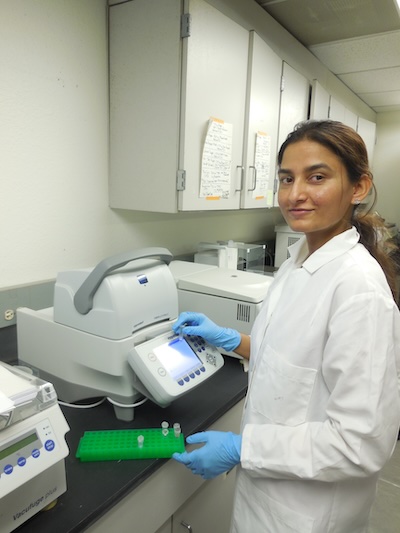
“Faculty-student relationships are outstanding. Faculty guides and motivates you during classroom instruction and in every step of the research activities for excellence.”
— Nikita Bhusal ’22, MS in Sustainable Agriculture (Nepal)
Frequently Asked Questions
Contact Us
Graduate Studies Office
E: GradSchool@LincolnU.edu
P: (573) 681-5380